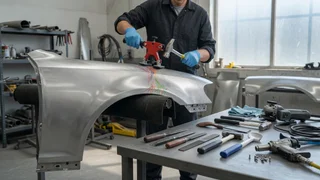
Repair aluminum auto body dents
Repairing a dent in an aluminum auto body panel is different from straightening a conventional steel skin. Aluminum work-hardens quickly, springs back with more energy, and reacts badly to careless heat or cross-contamination from steel tools. The goal is not simply to make the outside look flat; the repair method must protect the substrate material, preserve panel alignment, and leave a surface ready for coating compatibility and long-term corrosion protection.
Essential answer
Aluminum body dent repair addresses damage to exterior panels made from an alloy rather than traditional stamped steel. The essential answer is that minor, shallow damage often responds to paintless dent removal, while deeper creases, stretched metal, or tears usually require conventional body work adapted to aluminum. The correct repair method depends on where the dent sits, how sharply the panel folded, and whether the paint film is intact.
The scope of this work includes hoods, doors, fenders, deck lids, and structural skins on vehicles designed with weight-saving aluminum closures. Because aluminum has a different modulus and forming history than steel, the same visible dent may hide more stored stress. That material behavior influences whether a technician can slowly massage the panel back or must cut, reshape, and refinish the area with compatible primers and fillers.
Diagnosing a problem
When diagnosing a damaged aluminum panel, first inspect the paint surface and the backside access path. A shallow, smooth dent with unbroken paint and no exposed metal is a candidate for controlled low-force lifting. Cracked paint, a sharp crease, or a visible tear means the metal has likely stretched beyond what simple realignment can correct, and continued flexing may worsen the fracture or delaminate nearby coating.
Corrosion risk changes the diagnosis. Bare aluminum exposed by scratched paint forms an oxide layer, but trapped moisture, road salt, or steel dust from grinding equipment can create more aggressive galvanic activity. If the damage crosses a hem flange, body seam, or bonded joint, stopped use is not automatically required, but the vehicle should be kept dry and evaluated before water intrusion reaches adhesives, fasteners, or adjacent electrical connections.