Brake Lights Not Working but Tail Lights Do: Causes and Safe Checks
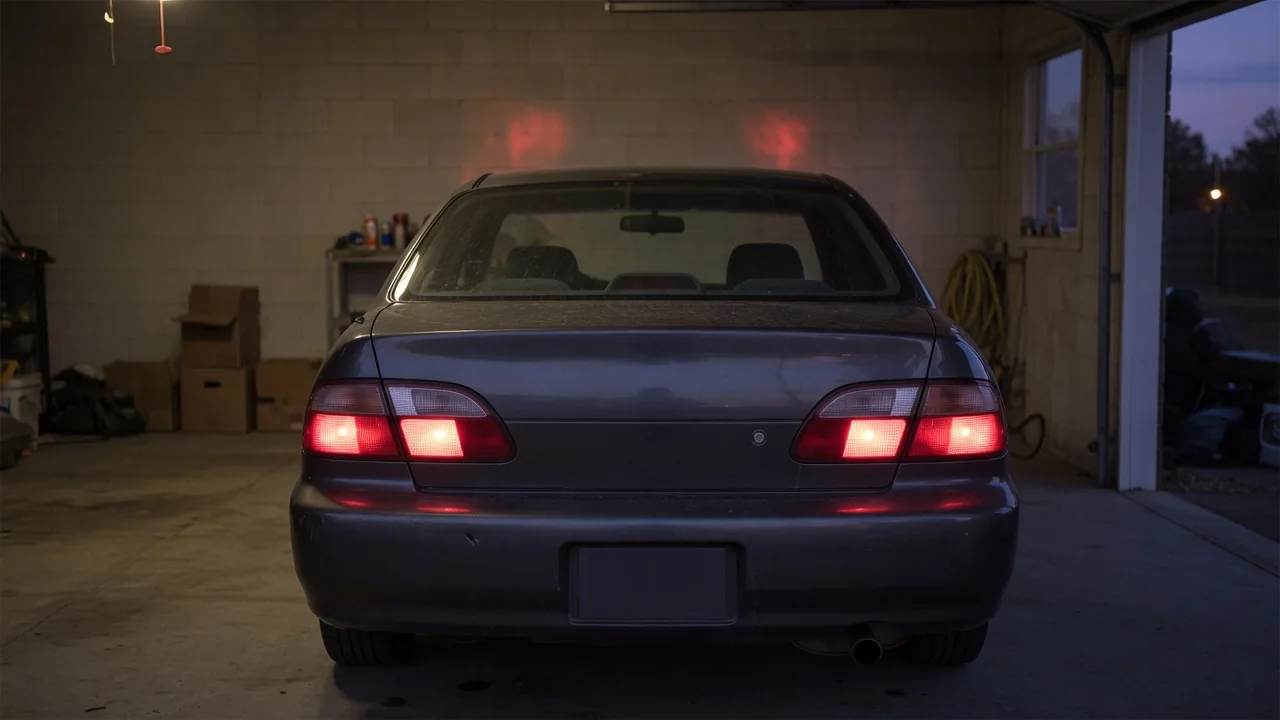
If your tail lights are working but your brake lights are not, the fault is usually in the part of the rear lighting circuit that responds to the brake pedal. This is a common pattern with several possible causes, including a burned filament, a failed switch or a blown fuse. Each one can be checked safely and in a logical order before you replace parts.
Why Tail Lights Can Work While Brake Lights Stay Dark
Tail lights and brake lights often share a housing, but they get power in different ways. The tail lamps turn on with the parking lights or headlights, either directly or through a module. The brake lights are triggered by the brake pedal, usually through a brake light switch that closes as the pedal moves. Because these are separate signal paths, one can fail while the other keeps working. A lit tail lamp at night tells you little about what happens when you press the pedal.
Many vehicles use a dual-filament bulb, with a dim tail filament and a brighter brake filament in the same glass. One filament can break while the other still glows normally. Other designs use separate bulbs or an LED tail light assembly with no replaceable filaments. Working tail lights show that the housing gets some power and ground, but they don't prove the brake signal reaches it. Layouts vary by make, model and year, so check the owner's manual or service information for your vehicle.
How to Confirm the Symptom Safely Before Guessing
Park on level ground, put the transmission in park, set the parking brake, and if the engine has to run, make sure the area is well ventilated. The clearest check is to have a helper press the pedal while you stand safely to one side behind the car. If you're alone, park with the rear close to a garage door or wall at dusk and watch the red reflection in your mirrors as you press the pedal. Note whether all brake lights stay dark, only one side, or only the third brake light.
Also note whether the failure is constant or comes and goes. Intermittent faults often involve loose connections, a worn switch or wiring that flexes. See whether the behavior changes with the headlights on or off. If a brake lamp looks dim only with the tail lights on, or the tail lights flicker when you brake, a ground or socket problem becomes more likely. Then test the turn signals and hazard lights, because on some vehicles the same filament or circuit handles braking and turning.
Likely Causes When Every Brake Light Is Out
When every brake light is out, including the center high-mount stop lamp, start with the parts the whole circuit shares. The brake light switch is usually mounted near the top of the brake pedal arm, and pedal movement operates it. If the switch fails internally or slips out of adjustment, it may never close, and every brake lamp stays dark at once. On some vehicles the same switch also feeds other systems, so a faulty switch can cause symptoms beyond the lights.
A blown stop lamp fuse can cut power to the switch and to every brake lamp it feeds. The owner's manual shows where the fuse boxes are and usually identifies which fuse protects the stop lamps. If a replacement fuse blows again, there is likely a short that needs to be traced. A worn or missing brake pedal stop pad can leave the switch plunger with nothing to press against, and a loose connector or chafed wire can block the signal. Work through these possibilities in order.
When Only One Side or the Third Brake Light Fails
If only one side is dark, a failed brake filament or bulb is a common reason. A dual-filament bulb can look fine at a glance while the brake filament is broken or has sagged out of place, so swapping in a known-good bulb of the correct type is more reliable than looking at it. Check the tail lamp socket too. Corrosion, melted plastic, loose or spread terminals, and moisture inside the lamp housing can all break contact for one function while the other keeps working.
Bulb type matters. A single-filament bulb installed where a dual-filament bulb belongs can leave the tail light working with no brake function at all. Many LED tail light assemblies have no serviceable bulbs, so a failed section often means replacing the whole unit. A bad ground can cause odd behavior, such as dim brake lights, lamps that glow faintly when they should be off, or one function backfeeding into another. If only the third brake light fails, check its own lamp, connector and wiring.
Related Symptoms That Point Toward the Brake Signal Circuit
On many vehicles, the brake pedal signal does more than turn on the lamps. It may cancel cruise control, release the shift interlock so the shifter can leave park, and tell the stability or traction systems that you are braking. If cruise control won't set, the shifter sticks in park, or stability warnings appear along with dark brake lights, the shared brake signal circuit is a stronger suspect than a single bulb. Some vehicles also show a dashboard warning or store a related trouble code.
Code meanings vary by manufacturer, so check any stored code against service information for your specific vehicle, not a generic list. A code is a clue to interpret, not proof that a particular part has failed. On newer vehicles, a body control module or lighting module may read the switch and command the brake lamps. That means the fault could be in inputs, outputs or software, none of which you can see by looking at the lamps. These clues help narrow the search but can't confirm a diagnosis on their own.
Safety Risks and When to Get Professional Testing
Driving without working brake lights gives the drivers behind you no warning when you slow down, which raises the risk of a rear-end crash, especially in traffic or at night. It may also break local vehicle equipment laws, so get it repaired promptly. Avoid shortcuts such as bypassing the brake light switch, jumping a fuse or splicing into another circuit to force the lamps on. These workarounds can create a fire risk, leave the lights stuck on or confuse systems that need an accurate brake signal.
Bring in a technician if the lights stay dead after a correct bulb and fuse check, if the stop lamp fuse keeps blowing, if the failure is intermittent, or if the vehicle uses modules and sealed LED assemblies. Professional testing usually starts with the wiring diagram for your exact vehicle. The technician then checks for voltage at the switch and at each lamp with the pedal pressed and confirms the grounds are good. On module-controlled systems, a scan tool can show whether the module sees the pedal input.