BMW Engine Oil Low or at Minimum: What It Means and What to Do
The short answer
If your BMW reports that the engine oil level is low or at minimum, the engine needs oil topped up soon. In most cases it is not an immediate emergency, but you should not keep driving long distances without adding oil. The main exception is a red oil warning, which usually signals low oil pressure rather than a low level. If you see a red oil warning, stop as soon as it is safe and switch off the engine.
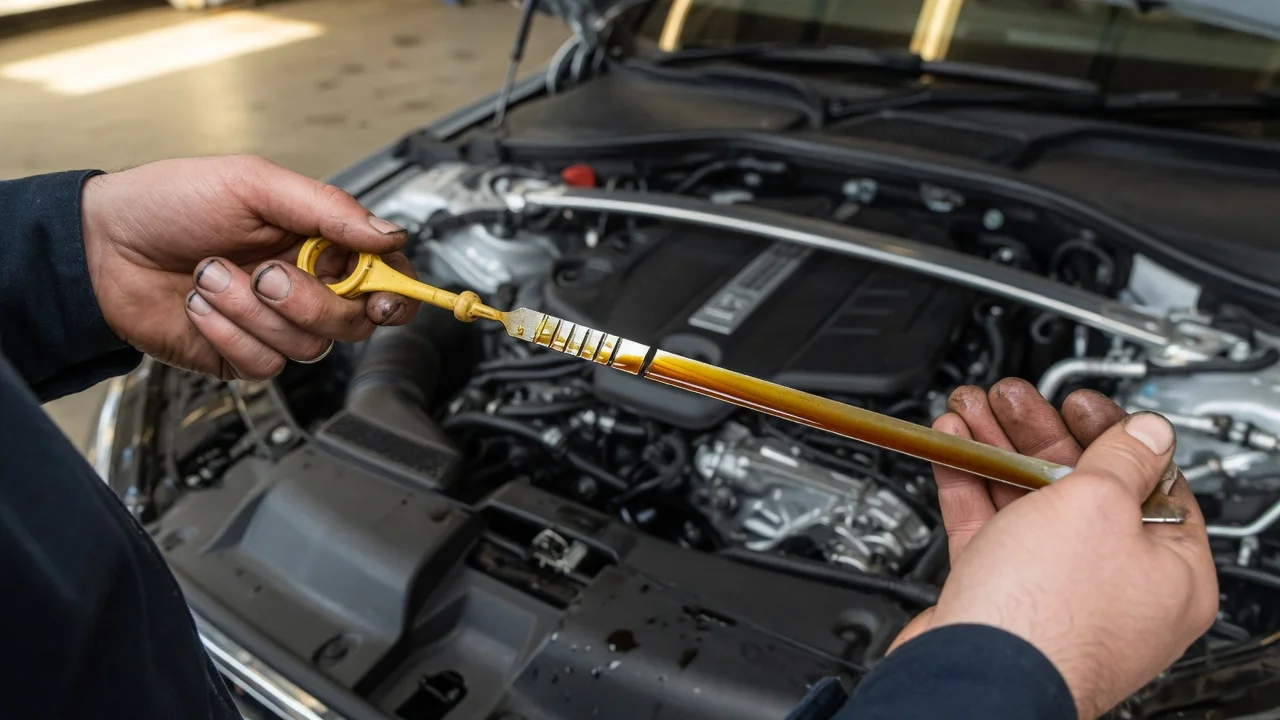
The details depend on the model year, engine and market. Many BMWs built since the mid-2000s have no traditional dipstick and measure oil electronically, while older models and some engines still use a dipstick. Your owner's manual is the authoritative source for your specific car.
Yellow warning versus red warning
BMW generally uses warning colors to show urgency, and this distinction matters more than anything else in this article.
Warning | Usual meaning | What to do; Yellow or amber oil can, or a message that the level is at or below minimum | Oil level is low; the engine still has oil pressure | Add the recommended oil at the next reasonable opportunity, typically within the next stop or short drive; Red oil can | Oil pressure is too low, which can quickly damage the engine | Stop safely, switch off the engine, do not restart until the cause is found, and arrange assistance if needed
Exact wording, symbols and recommended actions vary by model and software version. Treat the text shown in your instrument cluster or central display as the instruction for your car.
What "minimum" means on the BMW oil gauge
On BMWs with electronic oil measurement, the display shows the level on a scale between minimum and maximum. At minimum, the engine has the lowest amount of oil the manufacturer considers acceptable. On many BMW engines the gap between minimum and maximum is roughly 1 liter, or about 1 US quart, and the car's message often asks the driver to add about that amount. This is not universal, so check the quantity your car's display or manual specifies before pouring.
How to check the level on a BMW without a dipstick
Electronic oil level readings are only reliable under the conditions BMW specifies. The procedure differs between generations, but it typically involves the following.
Park on level ground. Have the engine at normal operating temperature, usually after a drive of several miles. Open the vehicle status or service menu in iDrive or the instrument cluster and select the engine oil level measurement. On models that run a static measurement, leave the engine idling and wait while the system completes the reading, which can take a few minutes. On some newer models the level is measured continuously while driving, and a reading may not be available immediately after a top-up.
If the system shows that no measurement is available, it usually needs more driving time or the right conditions before it can produce a value. A reading taken immediately after adding oil may not reflect the true level, because oil takes time to drain back to the sump.
Topping up correctly
Use an oil that meets the BMW specification listed for your engine in the owner's manual or on the oil filler cap area. BMW uses several Longlife approvals, and the correct one depends on the engine and market. Add oil in small amounts rather than the whole container at once. Allow the system to re-measure, or recheck with the dipstick if your car has one, before adding more. Do not exceed the maximum mark.
Overfilling is a real risk on cars without a dipstick, because it is easy to pour in more than the measurement system can immediately confirm. Too much oil can cause aeration, seal stress or emissions-system problems. If the display shows the level above maximum, have the excess removed rather than continuing to drive for extended periods.
Why a BMW might be low on oil
Some oil consumption between services is normal for many modern engines, including turbocharged BMW units, so a single top-up between oil changes is not necessarily a sign of a fault. BMW publishes or communicates acceptable consumption limits for its engines, but those figures were not supplied for this article and vary by engine, so ask a BMW dealer or check the manual for your specific powertrain.
Frequent warnings, a fast drop in level, visible leaks under the car, blue smoke from the exhaust or a burning smell are reasons to have the car inspected. Leaks from gaskets and seals, turbocharger issues and internal wear are among the possible causes, but only a diagnosis can identify which applies.
Information not covered here
No model-specific data was available for this guide. Oil capacities, the exact quantity between minimum and maximum, the correct BMW oil specification, the measurement procedure for each iDrive generation and BMW's consumption limits for individual engines are not stated here and should be confirmed in the owner's manual or with a BMW service center for your vehicle's model year, engine and market.