Bluetooth Adapters for Car CD Stereos
The short answer
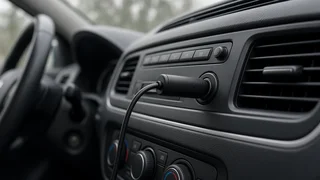
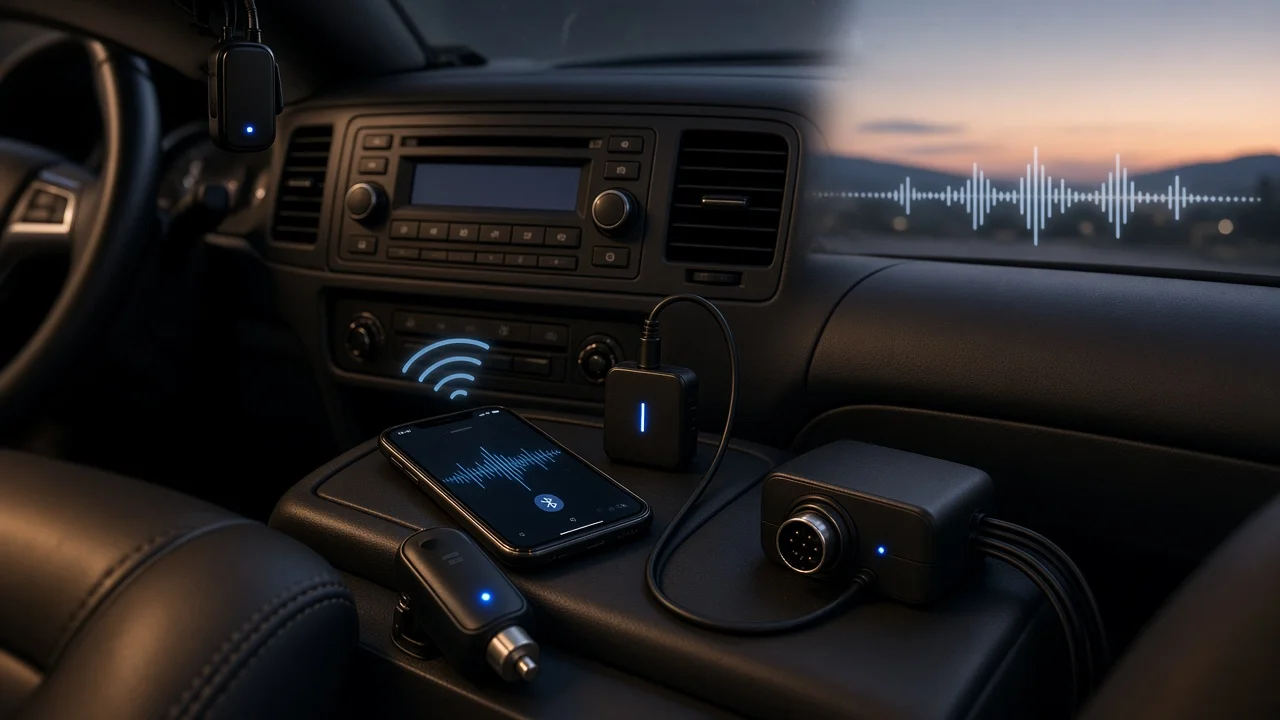
A CD-only car stereo can usually get Bluetooth audio, but not through the CD slot. Unlike cassette adapters, no adapter can be inserted like a disc, because a CD player reads an optical disc rather than an incoming signal. The right adapter depends on which inputs your stereo already has. If it has a 3.5 mm auxiliary (AUX) jack, a Bluetooth AUX receiver is usually the simplest choice with the best sound. If it has no AUX jack, a Bluetooth FM transmitter works with almost any radio but gives up some sound quality. If the factory stereo has a CD changer port on the back, a vehicle-specific interface module may give the cleanest result, but compatibility depends on the make, model year and head unit.
Start by checking what your stereo has
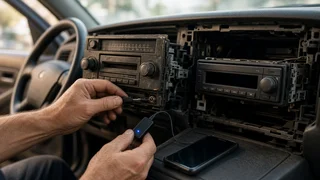
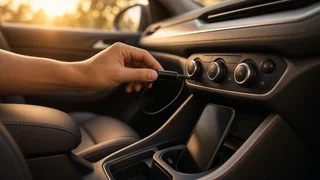
Look at the front panel, the glovebox and the center console for an AUX jack or a USB port. Check the owner's manual or the stereo's model number to see whether it supports an external CD changer. On many factory stereos, that connection sits behind the unit and is not visible without removing the stereo. These answers determine which adapter types are available to you.
The main adapter types compared
Adapter type | What it needs | Strengths | Trade-offs; Bluetooth FM transmitter | A working FM radio and a 12V power socket or USB power | Works with nearly any car radio and installs in seconds | Sound quality depends on finding a clear FM frequency, and interference is more likely in areas with many stations; Bluetooth AUX receiver | A 3.5 mm AUX input and a USB power source | Wired connection to the stereo, generally cleaner sound than FM, and inexpensive to try | Can pick up engine whine or hum (ground loop noise), and leaves cables in the cabin; CD changer port interface module | A stereo with a compatible changer input, plus a module made for that vehicle or head unit | Integrated look, no FM interference, and some modules allow track control from the stereo buttons | Must match the specific vehicle and stereo, usually requires removing the head unit, and features vary by module; Replacement CD receiver with built-in Bluetooth | A dash opening that fits an aftermarket unit, plus the correct wiring harness and dash kit | Native Bluetooth, often with integrated calling | Most work and cost, and may affect factory features such as steering wheel controls unless an adapter is used
A note on USB ports
Some CD stereos have a USB port, but plugging in a small Bluetooth dongle usually won't add wireless audio. Many head units only read music files from storage devices or charge phones through that port. Unless the stereo's documentation says it supports a Bluetooth accessory over USB, plan on one of the options above.
Hands-free calling: what to check
Streaming music and making calls use different Bluetooth profiles. A2DP (Advanced Audio Distribution Profile) carries music. HFP (Hands-Free Profile) carries two-way call audio. Some low-cost adapters support only music, so confirm HFP is listed if you want to take calls through the car speakers.
Microphone placement: a microphone built into an FM transmitter in a low power socket sits far from the driver and may pick up road noise. Adapters with a separate clip-on microphone on a cable can usually be mounted closer to your mouth, such as near the sun visor or steering column. Call controls: look for an easy-to-reach answer and hang-up button you can press without looking away from the road. Audio switching: check whether the adapter automatically changes from music to call audio and back again. Noise reduction: echo cancellation and noise suppression features help the person on the other end hear you more clearly, but marketing claims are not a substitute for independent reviews. Local rules: hands-free and phone-use laws vary by state, so check the rules where you drive.
Pairing and everyday convenience
Auto-reconnect: the adapter should rejoin your phone automatically when you start the car, without re-pairing. Multipoint: if two people share the car, multipoint support lets the adapter remember or connect to more than one phone. Power behavior: some vehicles keep the 12V socket powered with the ignition off. An adapter that stays on can drain the battery slowly or remain connected to a phone after you leave the car. Check how your socket behaves and whether the adapter has an off switch or auto-sleep. Codec support: codecs such as AAC and aptX can improve wireless sound quality, but only if both your phone and the adapter support the same one. Over FM, the radio link usually limits quality more than the codec does.
Fixing common sound problems
With an AUX receiver, a whine that rises and falls with engine speed usually points to a ground loop. An inexpensive ground loop isolator placed inline on the audio cable often reduces it. With an FM transmitter, static or fading usually means another station is bleeding through. Try a frequency with no broadcast station in your area, and expect to change it when you travel between regions.
Compatibility caveats for changer port modules
Changer port modules are the most vehicle-specific option. The same model of car can use different head units depending on model year, trim level and whether it has a premium audio package, and the changer connector or communication protocol may differ between them. Before buying, match the module to your exact year, model, trim and stereo part number, and confirm whether a factory CD changer already occupies the port. Also confirm which features the module supports, such as calling, track skipping and song text on the display, because these differ between products.
Choosing your next step
Stereo has an AUX jack: start with a Bluetooth AUX receiver that supports HFP and includes a separate microphone if calls matter to you. No AUX jack, and you want a quick, removable setup: choose a Bluetooth FM transmitter, and accept that sound quality depends on local FM conditions. Factory stereo with a confirmed changer input, and you want a clean installation: look for an interface module listed for your exact vehicle and stereo, or have an installer confirm the fit. You want built-in calling and a long-term solution: consider replacing the head unit with a CD receiver that has Bluetooth, along with the correct harness and steering wheel control adapter.
What this guide does not cover
No specific products, prices or test results were available for this guide, so it does not rank individual adapters or quote costs. Compatibility for any particular vehicle should be confirmed against the adapter maker's fit information for your model year, trim and stereo before you buy.