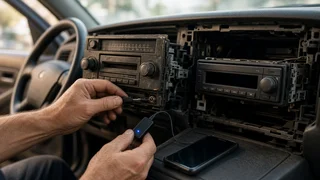
Best Bluetooth AUX Adapters for Cars
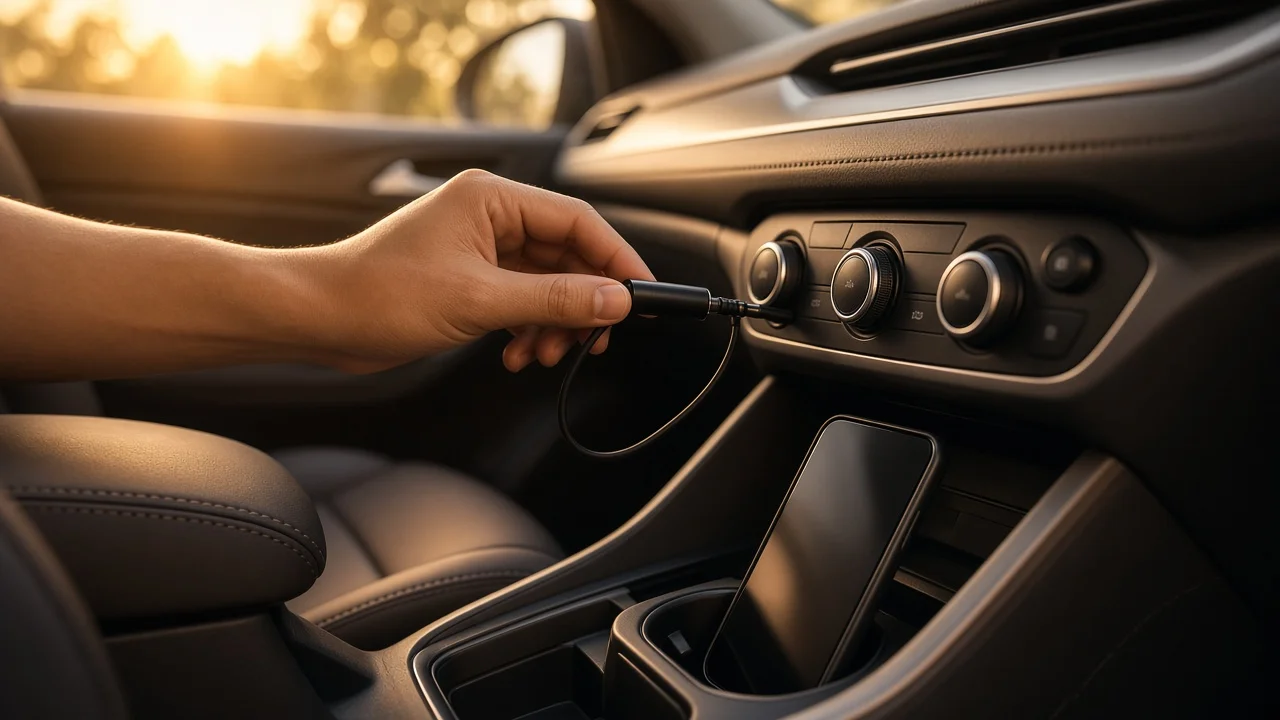
A Bluetooth AUX adapter adds wireless audio to a car that has a 3.5 mm auxiliary (AUX) input but no built-in Bluetooth. The adapter pairs with your phone, receives the audio wirelessly, and sends it to the car stereo through a short cable plugged into the AUX jack. Many models also include a microphone so you can take hands-free calls through the car speakers. This article does not rank specific products. No verified test data, specifications or prices were available, and assigning numbered positions without comparable evidence would be misleading. Instead, it groups adapters by design, explains when each type fits, and lists the checks to make on any model you are considering, including Mpow-branded adapters.
What This List Covers
The list only includes devices that connect to a car's 3.5 mm AUX input and receive audio over Bluetooth. It is a selection of the main adapter types, not a complete inventory of brands or models. Entries run from the simplest and most common setup to more specialized options. A separate section covers related devices that are often confused with AUX adapters but work differently.
Before You Choose: Confirm Your Car Has an AUX Input
An AUX adapter only works if your car has a 3.5 mm auxiliary jack, the same round headphone-style socket found on many phones and laptops. Whether a car has one depends on its make, model, model year, trim and sometimes the market it was sold in. Two cars of the same model can differ if one had an upgraded stereo or an optional media package.
Check the dashboard, center console, glovebox and armrest storage, and confirm in the owner's manual. If the stereo only has a USB port, an AUX adapter will not help unless the stereo also accepts analog AUX audio. In that case, a different solution is needed.
Types of Bluetooth AUX Adapters
1) USB-Powered Bluetooth AUX Receiver
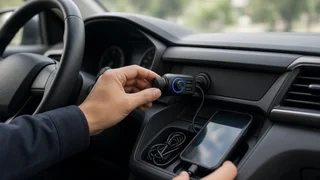
This is the most common design. A small receiver takes power from a USB port or a USB adapter in the 12-volt power outlet (often called the cigarette lighter socket), and a 3.5 mm cable carries audio to the AUX jack. Because it draws power from the car, it has no battery to recharge.
Its main advantage is convenience. In many cars the USB or 12-volt outlet switches on with the ignition, so the receiver powers up when you start the car and can reconnect to your phone automatically. In other vehicles those outlets stay live when the car is off. That behavior depends on the vehicle, so check yours.
The main drawback is possible electrical noise. When a device draws power and sends audio through the same car electrical system, a buzz or whine that changes with engine speed can appear. This is usually called ground loop noise. It is a known side effect of the setup, not necessarily a defect in the adapter. A ground loop isolator, covered below, is the usual fix.
2) Battery-Powered Clip-On Receiver
This compact receiver has a built-in rechargeable battery and plugs straight into the AUX jack or connects with a short cable. Many can clip onto a vent, visor or seatbelt. With no power cable running to the car, ground loop noise from the power supply is less likely.
The tradeoff is that the battery needs charging, and the unit may not switch on with the car. Look at how the manufacturer describes battery runtime, charging and auto-on behavior, and treat those claims as unverified until independent reviews confirm them.
3) Hands-Free Receiver With a Separate or Remote Microphone
If calls matter as much as music, microphone placement makes a large difference. Adapters with the microphone built into a unit low on the console or near the 12-volt outlet sit far from your mouth and close to road and fan noise. Designs with a separate microphone on a cable, or a control puck you can mount closer to the driver, can place the microphone in a better position.
Look for noise reduction or echo cancellation in the product description. Echo cancellation stops the caller from hearing their own voice played back through your speakers. Treat these features as claims to verify, since how well they work varies between models.
4) Receiver With a Built-In Ground Loop Isolator
Some receivers include ground loop noise filtering in the unit or the cable. This suits drivers who already know their car produces engine whine with USB-powered audio devices. If you already own a receiver that buzzes, a separate isolator is usually cheaper than replacing it.
5) Receiver With Physical Controls Mounted Near the Driver
Steering-wheel buttons generally cannot control an AUX adapter. The AUX jack carries only analog audio, with no control signals going back to the phone. Receivers with a mountable button puck or a large central button let you answer calls, skip tracks or pause without reaching for the phone. This matters most in cars where the AUX jack sits deep in a console or armrest.
Related Accessory: Ground Loop Isolator
A ground loop isolator is a small inline device fitted between the adapter's 3.5 mm cable and the car's AUX jack. It does not add Bluetooth. It only filters the noise described above. It is included here because it is the standard fix for the most common complaint about USB-powered AUX receivers. Some isolators can slightly change the sound, so if your setup is quiet without one, you do not need it.
Where Mpow Car Bluetooth Adapters Fit
Mpow is a brand name that shoppers often search for alongside car Bluetooth adapters. No verified specifications, current model names, prices or test results for Mpow car adapters were available for this article, so no claims are made about specific Mpow products. Brand lineups change over time, and the same brand may sell several different designs under similar names.
When looking at an Mpow listing, or any brand's, first identify which type above it belongs to: USB-powered, battery-powered, or one with a separate microphone or controls. Then check it against the criteria below. Do not assume that one model's features apply to another model from the same brand.
How to Compare Any Bluetooth AUX Adapter
Connection: confirm it outputs through a 3.5 mm plug and includes or accepts the cable length your car needs. Power source: USB-powered, battery-powered, or both, and whether it turns on automatically with the car. Auto-reconnect: whether it pairs with your phone again automatically when the car starts. Microphone: built-in or separate, and where it can be mounted relative to the driver. Call processing: whether noise reduction or echo cancellation is stated, and whether independent reviews support the claim. Audio codecs: SBC is the basic Bluetooth audio format every device supports. AAC is widely used by iPhones, and aptX by many Android phones. Support only helps if your phone uses the same codec. Noise handling: whether a ground loop filter is built in or the seller recommends a separate isolator. Controls: button size and placement, and whether the control unit can be mounted within reach. Multi-device pairing: whether two phones can stay connected, which helps households sharing one car. Bluetooth version: newer versions can improve connection stability, but a version number alone does not guarantee better audio or call quality.
Not the Same Thing: Related Devices
Several devices solve a similar problem but are not AUX adapters. Mixing them up is a common source of buying mistakes.
Bluetooth FM transmitter: plugs into the 12-volt outlet and broadcasts audio to an FM frequency you tune the radio to. It needs no AUX jack, but sound quality depends on finding a clear frequency, which is harder in areas crowded with stations. Bluetooth cassette adapter: for older cars with a tape deck but no AUX input. It feeds audio through the cassette mechanism instead. Visor-mounted Bluetooth speakerphone: handles calls through its own speaker, not the car stereo, and usually needs no connection to the car's audio system. Aftermarket head unit with Bluetooth: replaces the car stereo entirely. It costs more and takes more work to install, but can integrate with the car more fully, depending on the vehicle.
Choosing the Right Type for Your Car
For most drivers with an AUX jack and a USB or 12-volt outlet nearby, a USB-powered receiver is the simplest everyday choice, with a ground loop isolator kept as a backup if buzzing appears. If the AUX jack is far from any power outlet, or you want to avoid power-related noise, a battery-powered clip-on receiver is the cleaner option. If you take frequent calls while driving, prioritize a model whose microphone can be mounted near you over any music-related feature.
Gaps in This Guide
This guide does not include product rankings, prices, measured audio or call quality, battery runtimes, or confirmed model-specific features, because no verified data for those was available. Check current listings, manufacturer documentation and independent reviews before buying. Also confirm in your owner's manual that your vehicle has a 3.5 mm AUX input.