Best Bluetooth FM Transmitters for Cars
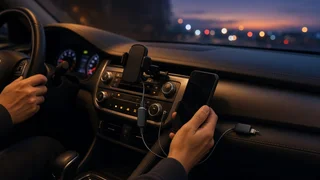
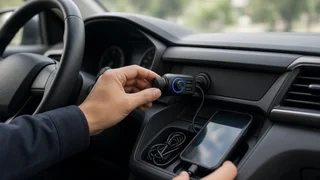
A Bluetooth FM transmitter plugs into a car's 12-volt accessory socket, pairs with a phone over Bluetooth and rebroadcasts the phone's audio on a low-power FM frequency that the car radio can tune to. Most also work as USB car chargers, and many include a microphone for hands-free calls. For an older vehicle with a working FM radio but no Bluetooth or auxiliary input, it is one of the simplest ways to get streaming audio and call audio through the car's speakers without replacing the head unit.
How This Selection Was Built
No verified test results, specifications or prices were available for this guide, so it does not rank individual products or claim that any one model is the best. Instead, it groups transmitters by the features that matter most to drivers, starting with the onn Bluetooth FM car charger that many shoppers search for by name. Entries are ordered by how directly they answer that search first, then by how many common driving problems each feature type solves. This is a selection to guide a purchase, not a complete inventory of every transmitter on the market.
Inclusion boundary: every entry is a device that plugs into the 12-volt socket, receives audio over Bluetooth and outputs it to the car's FM radio. Related devices that work differently, such as Bluetooth aux receivers and cassette adapters, are covered separately below so they are not confused with true FM transmitters.
The Selection
1) onn Bluetooth FM Transmitter Car Charger
onn is Walmart's in-house electronics brand, and its Bluetooth FM transmitter car chargers are sold through Walmart in the US. Its relevance is availability: it can be bought in-store the same day, which suits drivers who need a quick fix rather than a researched upgrade. onn has sold more than one version over time, so features such as the number and type of USB ports, charging output and whether a hands-free microphone is included should be confirmed on the specific package or product listing rather than assumed. No independent performance data was available for this guide, so its sound quality and call clarity relative to other brands are not assessed here.
2) Transmitters with a USB-C Power Delivery Port
Many current phones charge through USB-C, and USB Power Delivery (PD) is the fast-charging standard most of them support. A transmitter with a USB-C PD port can charge a modern phone noticeably faster than a basic USB-A port, which matters when streaming navigation and music drains the battery on long trips. Check that the port is labeled PD and that the phone supports it; a USB-C port without PD may charge no faster than an older port. Some Android phones also support Qualcomm Quick Charge, which is a separate standard that some transmitters list on their USB-A port.
3) Transmitters with a Dedicated Hands-Free Microphone and Call Button
For drivers who mainly want call audio rather than music, the microphone and controls matter more than the charger. Look for a physical answer/end button that can be pressed without looking, and for a microphone that is not buried behind the charging ports. Some listings advertise noise reduction or echo cancellation; those claims could not be verified for this guide, so treat them as manufacturer descriptions rather than proven performance. Call audio is always limited by the FM link and by cabin noise, so expect clarity below that of a factory-installed hands-free system.
4) Gooseneck or Flexible-Mount Transmitters
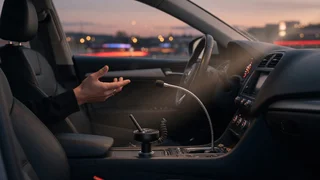
In many vehicles the 12-volt socket sits low in the center console, under a cover or deep inside an armrest bin. A gooseneck transmitter raises the controls and microphone toward the driver, which can make buttons easier to reach and may help the microphone pick up speech. The trade-off is a bulkier unit that can rattle or obstruct a cupholder or gear selector, so whether it suits a given car depends on that vehicle's console layout.
5) Dual-Mode Transmitters with an AUX Output
Some transmitters include a 3.5 mm auxiliary output in addition to FM. If the car has an aux input, connecting by cable bypasses the radio frequency step entirely and avoids static and station interference. This type suits drivers who own more than one vehicle or plan to move the device between a car with aux and one without.
6) Transmitters with a Frequency Display and Easy Tuning
Finding an empty FM frequency is the biggest day-to-day hassle with these devices, especially in cities with crowded radio dials. A clear display and simple tuning controls make it easier to switch to a new frequency when a local station bleeds through. Some units also show the car's battery voltage, which can serve as a rough indicator of charging system health, though it is not a substitute for a proper battery or alternator test.
Related Devices That Are Not FM Transmitters
Bluetooth aux receiver: plugs into a car's 3.5 mm aux jack and outputs audio by cable; usually clearer than FM but requires an aux input. Bluetooth cassette adapter: plays through a cassette deck; only useful in vehicles that still have one. Visor-mounted Bluetooth speakerphone: handles calls through its own speaker rather than the car's audio system; does not route music through the car stereo. Aftermarket Bluetooth head unit: replaces the car radio; the most integrated option, but a larger and more expensive installation.
Search terms such as Bluetooth FM adapter, FM car kit and Bluetooth car charger with FM are commonly used for the same device as a Bluetooth FM transmitter. A product called a Bluetooth car adapter, however, may be an aux receiver instead, so check whether the listing says it connects through FM or through the aux jack.
What to Check Before Buying
Your car has a working FM radio and a 12-volt accessory socket within reach of the driver. Whether the socket stays powered when the ignition is off; this varies by make, model and model year, and an always-on socket can slowly drain the battery if the transmitter is left plugged in. The phone's charging connector and whether it supports USB Power Delivery or Quick Charge. Whether a microphone and call button are included, if hands-free calling is a priority. The physical size of the unit relative to the space around the socket. Whether the car has an aux input, which would make a dual-mode unit or an aux receiver a better choice.
Pairing and Setup
Plug the transmitter into the 12-volt socket and turn on the ignition or accessory mode. Tune the car radio to a frequency with only static and no station audio. Set the transmitter to the same frequency. On the phone, open Bluetooth settings and select the transmitter from the list of devices. Play audio and adjust volume, keeping the phone volume high and controlling loudness with the car stereo to reduce hiss. If a station begins to interfere while driving, retune both the radio and transmitter to a new empty frequency.
Getting the Best Call Audio
Calls route through the same FM link as music, so a clean, interference-free frequency matters even more for speech. Keep the transmitter's microphone unobstructed, reduce fan and window noise where practical, and, if the unit is mounted low, consider a gooseneck model or a separate visor speakerphone for frequent callers. If the phone pairs to both the car and the transmitter, disconnect one to avoid calls being routed to the wrong device.
Regulatory Note for US Drivers
In the US, personal FM transmitters operate as unlicensed low-power devices under FCC rules. Products sold through mainstream retailers are generally marketed as compliant, but the low power that keeps them legal is also why their range is short and why strong local stations can overpower them.
Gaps in This Guide
No verified specifications, prices, test measurements or user reviews were available for any specific transmitter, including onn models. For that reason this guide does not rank products, compare sound quality or charging speeds, or state which model performs best. Before buying, confirm port types, charging standards, microphone inclusion and Bluetooth version on the exact product's packaging or listing.