Bleed the brake hydraulic system
The short answer
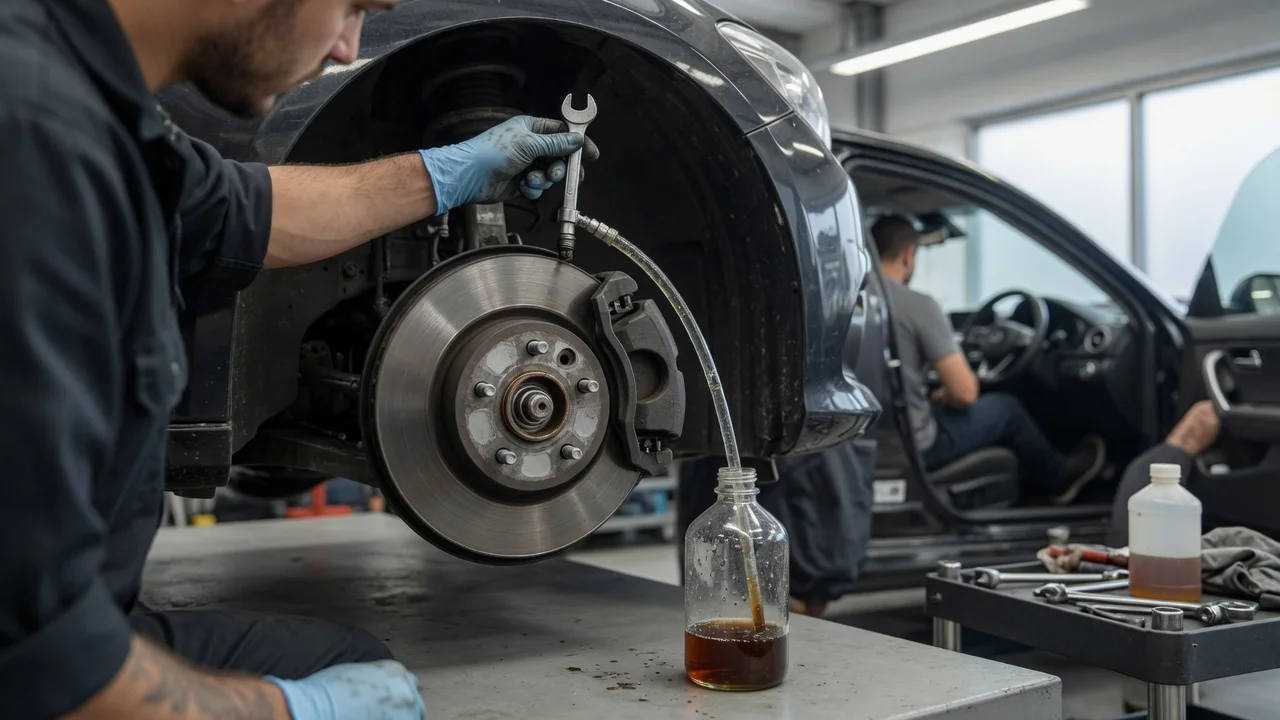
A brake bleeder kit is a set of tools for pushing air and old fluid out of a car's brake hydraulic system through the bleeder screws at each caliper or wheel cylinder. The right kit depends on whether you work alone, how much you bleed and what your vehicle needs. Kits range from a simple hose with a one-way check valve to a hand vacuum pump or a pressurized reservoir system. Any of them can do the job on a conventional system. The main exception is vehicles with ABS or electronic brake control. If air has reached the hydraulic control unit, some of these vehicles need a scan tool or a specific service procedure, and no basic kit replaces that. Check your vehicle's service information before you start.
Why brakes need bleeding
Hydraulic brakes rely on fluid that does not compress. Air bubbles do compress, so trapped air shows up as a soft or spongy pedal and weaker braking. Air usually gets in when a line, caliper, hose or master cylinder is opened or replaced, or when the fluid reservoir runs low. Brake fluid in common glycol-based types also absorbs moisture over time. That is why manufacturers specify periodic fluid replacement, and the job is done with the same bleeding tools. Intervals vary by manufacturer and model, so use the figure in your owner's manual.
Main types of brake bleeder kits
Kit type | How it works | Suits | Main caveats; One-person check valve hose | A hose with a one-way valve fits over the bleeder screw. You pump the pedal, and the valve stops air from being drawn back in. | Occasional DIY use, working alone, lowest complexity | You still have to keep refilling the reservoir. Results depend on a good seal at the bleeder screw. Hand vacuum pump (brake bleeder pump) | A hand pump creates vacuum in a catch jar and pulls fluid and air out through the bleeder screw. | Working alone, small jobs, clutch hydraulics on some vehicles | Air can be pulled in past the bleeder threads, so bubbles in the hose don't always mean air in the system. Watch the reservoir level. Pressure or power bleeder | A pressurized tank fits onto the master cylinder reservoir with a vehicle-specific cap or adapter and pushes fluid through the system. | Frequent use, full fluid flushes, one-person work | Requires the correct reservoir adapter. Pressure must follow the tool and vehicle instructions, because too much can damage reservoirs or seals. Master cylinder bench bleeder kit | Short tubes and fittings route fluid from the master cylinder outlets back into its reservoir while it is pumped on a bench or vise. | Installing a new or rebuilt master cylinder | Covers only the master cylinder. The rest of the system still needs bleeding after installation.
What a typical kit includes
Bleeder hose: clear tubing so you can see air bubbles and fluid condition. Catch bottle or jar: collects old fluid, and a hang hook or magnet often holds it in place. Check valve: a one-way valve in the hose or bottle that reduces backflow of air. Adapters: rubber fittings for different bleeder screw sizes, and reservoir caps on pressure kits. Bleeder wrench: often not included. A box-end or flare-nut wrench that fits the screw is less likely to round it off than an open-end wrench.
Bleeder screws and valves
The bleeder screw, also called a bleeder valve, is a small hollow screw threaded into each caliper or wheel cylinder. Loosening it slightly opens a passage for fluid and air to escape. Tightening it seals the passage again. These screws often seize from corrosion and can snap or round off. A penetrating lubricant applied in advance and a properly fitting wrench lower that risk. Replacement screws come in vehicle-specific thread sizes. Some aftermarket screws have a built-in check valve, which serves the same purpose as the valve in a one-person kit. Tightening torque is a vehicle-specific value, so take it from service information, not general guidance.
How to choose a kit
The points below are editorial judgment, not test results. For a single job on a conventional system, a one-person check valve hose or a basic vacuum pump is usually enough. If you flush fluid regularly or work on several vehicles, a pressure bleeder is worth considering. It keeps the reservoir topped up and frees both hands, but only if an adapter exists for your master cylinder. A bench bleeder kit is needed only when you replace a master cylinder. Many replacement master cylinders include one.
This article does not compare specific retail products, including kits sold at AutoZone or Harbor Freight, because no verified contents, prices, availability or performance data were available for them. Check the current listing for what is in the box, compatible bleeder sizes, adapter coverage and the return policy. Also check whether your local store offers tool loan or rental.
Basic procedure overview
Confirm the correct fluid type. It is usually printed on the reservoir cap and listed in the owner's manual. Do not mix incompatible types. Find the vehicle's specified bleeding sequence. Many vehicles start at the wheel farthest from the master cylinder, but the order varies, and some vehicles specify a different one. Check whether the vehicle has an ABS procedure that requires a scan tool. Raise and support the vehicle safely, and remove the wheels if needed for access. Connect the hose to the bleeder screw and run the other end to the catch bottle. Open the bleeder, move fluid using your kit's method, and close the bleeder before the flow stops or the pedal is released, as your method requires. Keep the reservoir from running low at every stage. Letting it empty can draw air into the system. Continue at each wheel until the fluid runs clear and free of bubbles, then tighten the bleeders to specification. Check for a firm pedal and look for leaks before driving. Test at low speed in a safe area. Wipe up spills right away, because brake fluid can damage paint, and dispose of old fluid according to local rules.
DIY kit or professional brake bleed service
A professional brake bleed service makes sense if you cannot confirm the bleeding procedure, if the vehicle needs a scan tool to cycle the ABS unit, if bleeder screws are seized, or if the pedal stays soft after bleeding. A pedal that stays soft can point to problems a bleeder kit cannot fix, such as a failing master cylinder or a leak. No pricing data for professional service was available, and costs vary by shop, region and vehicle.
Gaps in this guide
No supplied evidence covered specific product ratings, kit prices, pressure settings, torque values, fluid change intervals or model-specific ABS procedures. These depend on the tool and the vehicle's make, model, year and brake system design. Confirm them in the tool's instructions and the vehicle's service information.