Bleed a car cooling system

Bleeding a car cooling system removes trapped air that can interrupt coolant flow and create uneven engine temperatures. The process applies to a radiator system after draining, refilling, or replacing components such as a thermostat, radiator, or hoses. Air pockets often collect at high points in the cooling circuit and may cause erratic temperature readings, reduced heater output, or coolant expulsion from the pressure cap. A proper bleed restores liquid contact with cylinder head passages and helps the radiator transfer heat consistently. This overview explains the essential answer and a practical procedure for how to bleed a car radiator system.
Essential answer
The essential answer is that bleeding means releasing trapped air from the cooling circuit until the coolant can circulate without compressible pockets. Air enters when the system is opened, when a component is replaced, or when the coolant level drops enough to draw air past the pressure cap. Because air rises, it tends to gather near the thermostat housing, heater core, or upper radiator hose. That trapped air can block flow and give a false impression that the system is full even when liquid volume is low.
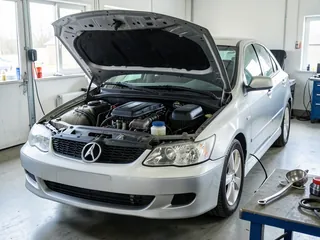
The scope depends on the vehicle design. Some cooling systems have a dedicated bleed screw or valve at a high point, while others rely on running the engine with the pressure cap off until air bubbles stop appearing. The coolant specification and concentration also matter because mixing incompatible formulations can encourage gelling or reduce the ability to protect the radiator and heater core. Manufacturer-dependent bleed points require vehicle-specific confirmation before attempting to open a fitting.
Procedure
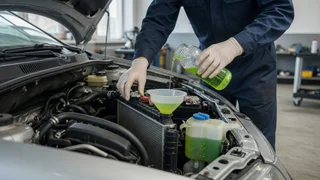
Begin only when the engine is cool enough to touch, because opening a warm pressure cap can release hot coolant violently. Check that the vehicle is level or follow the service guidance for the model, since an incline affects where air settles. Fill the system slowly with the recommended coolant mixture to reduce splashing that introduces more bubbles. If a bleeder valve is present near the thermostat or an upper hose connection, open it carefully and watch for a steady stream of coolant without air. Close the valve once liquid flows without spitting.
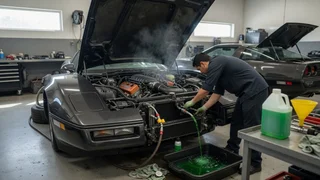
With the cap off or the bleeder open, run the engine at a low idle and monitor the temperature gauge and heater output. The thermostat must open to push coolant through the radiator, but do not assume a new thermostat is faulty just because the lower hose warms slowly. Squeezing a large upper hose gently can help dislodge air pockets, though sharp or repeated squeezing should be avoided if the components are brittle. Recheck the coolant level after shutdown and cooling, and never leave an unsecured pressure cap while the circuit may still contain air.