Bleed a brake booster
The short answer
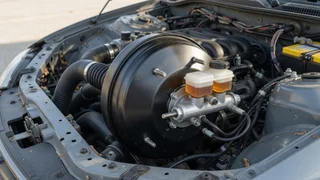
On most cars and light trucks, the brake booster does not get bled. The common vacuum booster is the large round canister between the brake pedal and the master cylinder. It holds no brake fluid. It uses engine vacuum, or a vacuum pump on some engines, to multiply the force from your foot. Bleeding means pushing trapped air out of a fluid-filled system, so there is nothing inside a vacuum booster to bleed.
When people search for how to bleed a brake booster, they usually need one of three jobs: bleeding the hydraulic brake system (the master cylinder, lines and calipers or wheel cylinders), bench-bleeding a replacement master cylinder, or purging air from a hydraulic booster on vehicles that use one instead of a vacuum unit.
Which booster your vehicle has changes the answer
Booster type | How it works | Does it need bleeding? Vacuum booster | A diaphragm in a canister, assisted by engine or pump vacuum | No. Bleed the brake lines and master cylinder instead. Hydraulic booster (often called hydro-boost) | Pressurized by power steering fluid from the steering pump | It contains no brake fluid, but air in its power steering circuit is purged with a procedure. Electro-hydraulic or integrated electronic brake units | An electric pump or motor builds brake pressure, often combined with ABS and stability control | Often yes, and many need a scan tool to run the bleed routine.
Booster type depends on the specific model, model year, engine and market. Hydraulic boosters have mostly been used on some heavier trucks, vans and diesel applications. Electronic brake units appear on many hybrids, electric vehicles and newer vehicles with advanced driver-assistance systems. Confirm your vehicle's system in its service information before starting.
Vacuum booster: bleed the hydraulic brakes
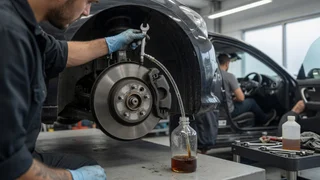
With a vacuum booster, a spongy or low pedal points to air in the brake fluid, worn components or a master cylinder fault, not to the booster. The fix is a normal brake bleed: work through each wheel's bleeder valve in the sequence the manufacturer specifies, keep the master cylinder reservoir topped up with the specified fluid type, and remove air until the fluid comes out clear.
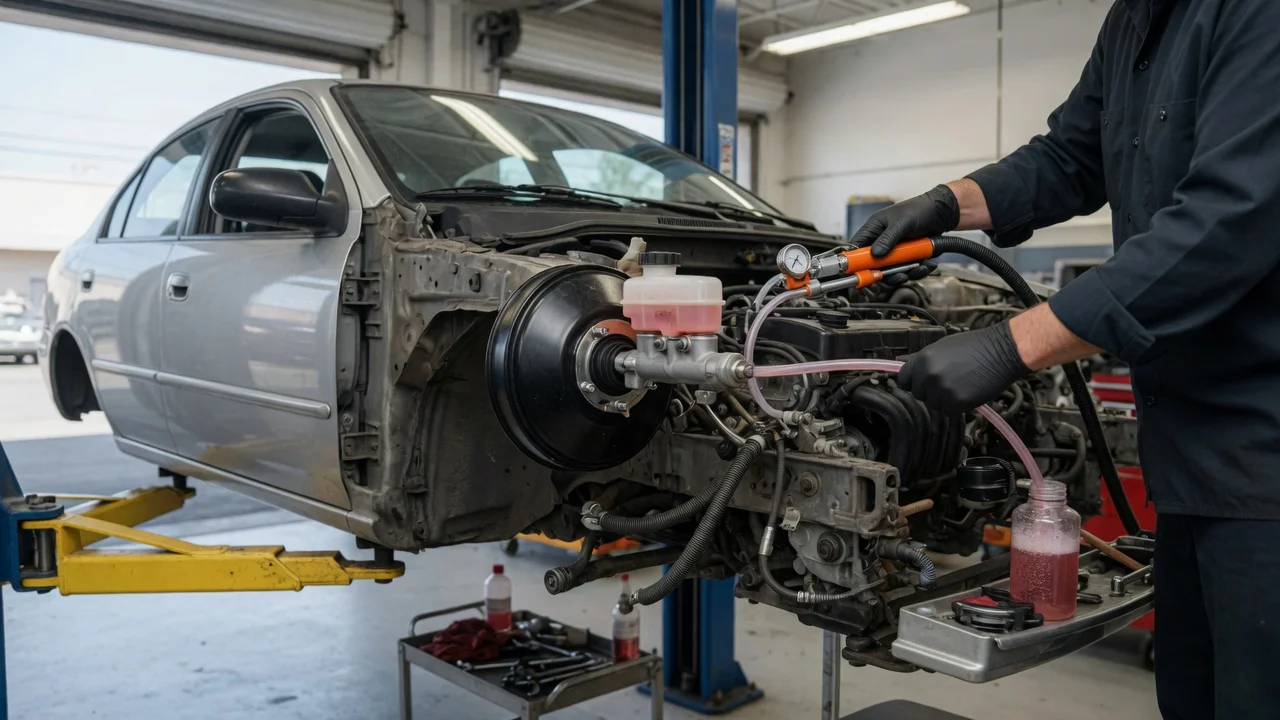
If you replace the master cylinder, it is usually bench-bled before or during installation. That fills its bores with fluid so you are not forcing a large volume of air through the whole system.
A hard pedal, especially with the engine running, can point to a booster problem such as a vacuum leak, a failed check valve or a torn diaphragm. Bleeding will not fix any of these. The usual checks are a vacuum hose and check-valve inspection, plus a simple function test: with the engine off, pump the pedal several times to use up the stored vacuum, hold steady pressure on the pedal, and start the engine. A working vacuum booster normally lets the pedal drop slightly as assist comes in.
Hydraulic booster: purging air from the power steering circuit
A hydraulic booster shares fluid with the power steering system. After a booster, pump or hose is replaced, air in that circuit can cause noise, foamy fluid or poor brake assist. The commonly published purge procedure follows these general steps. The exact steps, fluid type and any cautions vary by manufacturer.
1) Fill the power steering reservoir to the correct level with the specified fluid. 2) With the front wheels off the ground and the engine off, turn the steering slowly from lock to lock several times, then recheck the fluid level. 3) Start the engine and repeat the lock-to-lock turns, topping up as needed. 4) Pump the brake pedal several times to cycle fluid through the booster. 5) Check for leaks, and confirm the fluid is no longer foamy and the steering and brake assist feel normal.
Some manufacturers specify a particular order of engine-off and engine-running steps or a set number of turns. Follow the service manual for your exact vehicle, because this guide cannot confirm those details for any specific model.
Electronic brake systems: check before you open a bleeder
On vehicles with an integrated electronic brake unit or brake-by-wire, the manual bleed method can leave air trapped in internal passages. It can also be unsafe if the system pressurizes on its own, for example when a door opens or the ignition turns on. Many of these systems require a scan tool that can cycle the pump and valves, and some require a service mode to be enabled first. Requirements are specific to the vehicle, so check the manufacturer's procedure before doing any work.
Gaps and safety notes
No vehicle-specific specifications, fluid types, bleed sequences or test results were available for this guide. The procedures above are general descriptions, not instructions for a particular model. Brakes are safety-critical, so if the pedal is still soft, sinks, or the brake warning light stays on after bleeding, do not drive the vehicle until the brakes have been inspected.