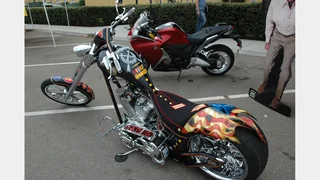
Big Dog chopper ignition module
A no-start or erratic-spark condition on a 2004 Big Dog chopper often points toward the ignition module, but the module is only one part of a coordinated starter circuit and spark-timing chain. Before ordering a replacement, the practical step is to interpret the symptoms against battery state of charge, cranking speed, ignition switch behavior, fuel delivery, and basic diagnostic checks. A weak battery can mimic module failure by slowing crank rotation or pulling voltage below the threshold the ignition system needs. Confirming that supporting circuits are healthy helps avoid replacing an expensive component when the actual fault lies elsewhere in the starting or ignition path.
The direct answer
The direct answer is that a suspected 2004 Big Dog chopper ignition module should be treated as a possible cause, not an automatic replacement part. The module may indeed be responsible for lost spark, backfiring through the intake, or a crank-but-no-fire condition, but the same symptoms can arise from low battery state of charge, a failing ignition switch, poor ground connections, or interrupted fuel delivery. Because manufacturer-dependent codes and exact trigger voltages vary, the module’s behavior needs to be interpreted in the context of the complete starting circuit before purchase.
A useful first distinction is whether the engine cranks briskly and still refuses to fire, or whether cranking speed is slow and labored. Brisk cranking with no spark may point toward the module, pickup input, or coil driver circuit. Slow cranking usually indicates battery voltage, cable resistance, or starter current draw, and that lower available voltage can prevent the module from firing the coil cleanly. Checking cranking speed, battery condition, and ignition switch output gives a more reliable purchase direction than swapping the module on assumption alone.