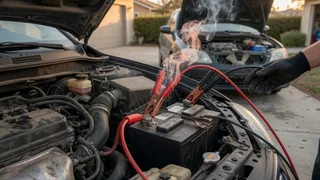
Battery terminal smoking when jump starting
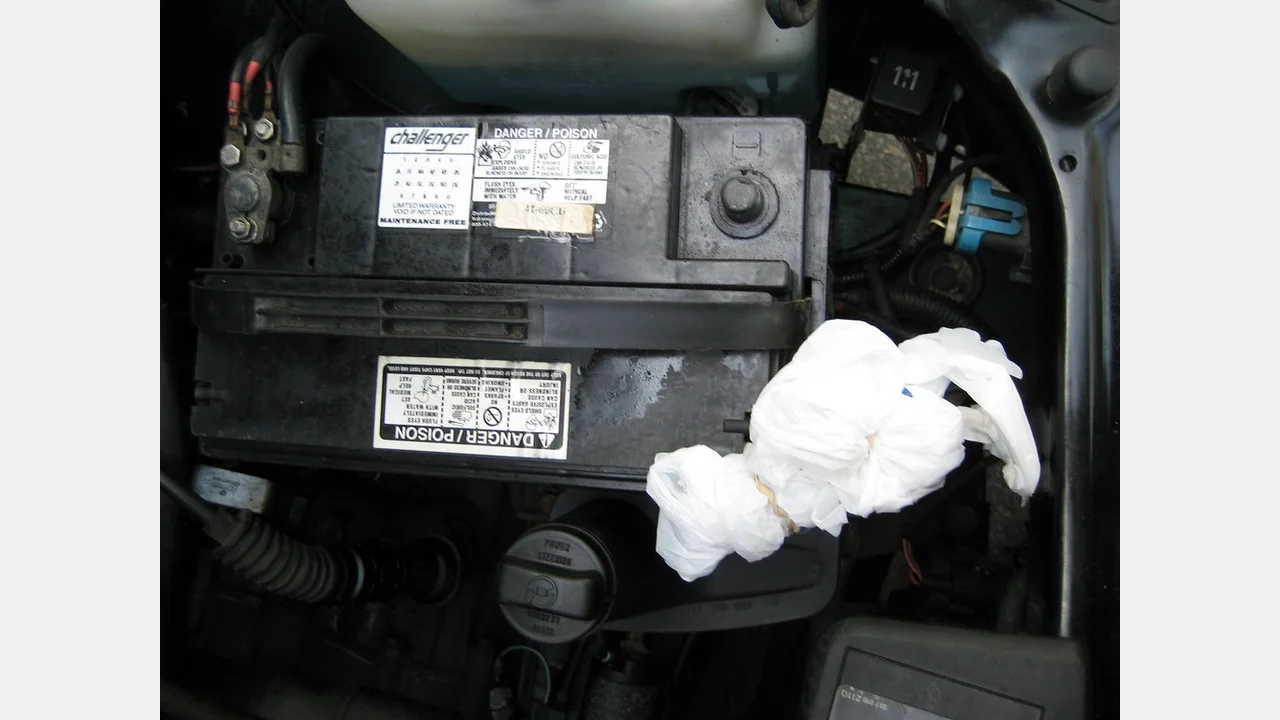
Smoke at a battery terminal during jump starting looks alarming, but it is usually a concentrated electrical problem rather than an engine fire. The smoke typically forms where high current meets high resistance at a clamp, cable lug, or corroded post. That resistance converts energy into heat quickly enough to burn surface contamination or soften terminal material. Recognizing why this happens helps you separate a poor connection from a damaged battery or reversed cable hookup.
Essential answer
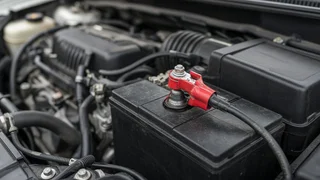
Battery terminal smoking when trying to jump start most often means the electrical connection at that post is loose, corroded, or carrying more current than the contact area can handle. A jumper clamp that does not bite firmly into the post creates a narrow path for system voltage. The resulting voltage drop concentrates heat at the high-resistance point, which can char grease, boil moisture, or melt the soft lead surface. The smoke is evidence of local overheating, not automatic proof that the battery itself has failed.
In some cases the smoke points to reversed jumper cable placement or a shorted circuit drawing far beyond the expected fuse rating. Because jump starting can push substantial amperage, any weak link in the battery terminals or cable connections becomes the hottest point. A charging output issue, such as an overcharging donor vehicle, can also raise current enough to stress a marginal clamp. The direct answer is therefore to stop, inspect polarity and terminal contact, and correct the connection before trying again.