Car battery not charging after jump start

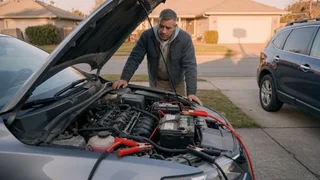
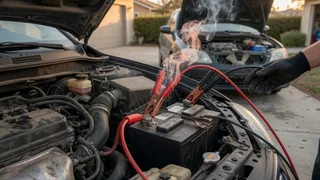
A jump start can restore a dead vehicle long enough to reach the road, but it does not repair the charging problem that drained the battery. When the engine runs and a car battery is not charging after a jump start, the charging system, cable connections, or battery condition needs diagnosis. Understanding the limited role of a jump start and the way an alternator restores stored energy helps separate a temporary connection fault from a charging component failure. The following explanation covers the essential answer while addressing relevant charging interfaces, vehicle compatibility, supply capacity, charging power, energy consumption, and charging protocol topics that affect recharging after a boost.
Essential answer
If the vehicle keeps running but the battery does not recharge after a jump start, the most likely scope of the problem is the charging system rather than the jump start itself. A successful boost only supplies enough external current for the starter and engine electronics; it does not force the alternator or voltage regulator to restore the battery. The no-charge condition means the running engine is not converting mechanical energy into sufficient charging current. That distinction matters because the driver may assume the battery is defective when the alternator, belt, wiring, fuse, or control circuit is actually preventing replenishment.
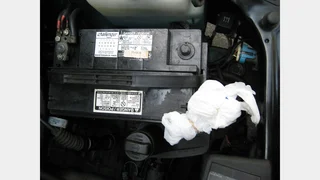
The essential answer also depends on how the observation is made. A battery may take many minutes of driving to regain useful capacity, so a short idle is not proof that charging has failed. In contrast, if voltage remains low while the engine is running, warning lights appear, or electrical accessories quickly weaken after another shutdown, the charging path is clearly incomplete. A car battery not charging after jump start frequently points to a connection that moved during booster cable removal, a blown protection fuse, or an alternator that is not producing output. Battery age, terminal corrosion, and the vehicle’s charging protocol also shape the correct next step.