Adjustable Leveling Jacks for Campsite Setup: What to Check Before You Buy
The short answer
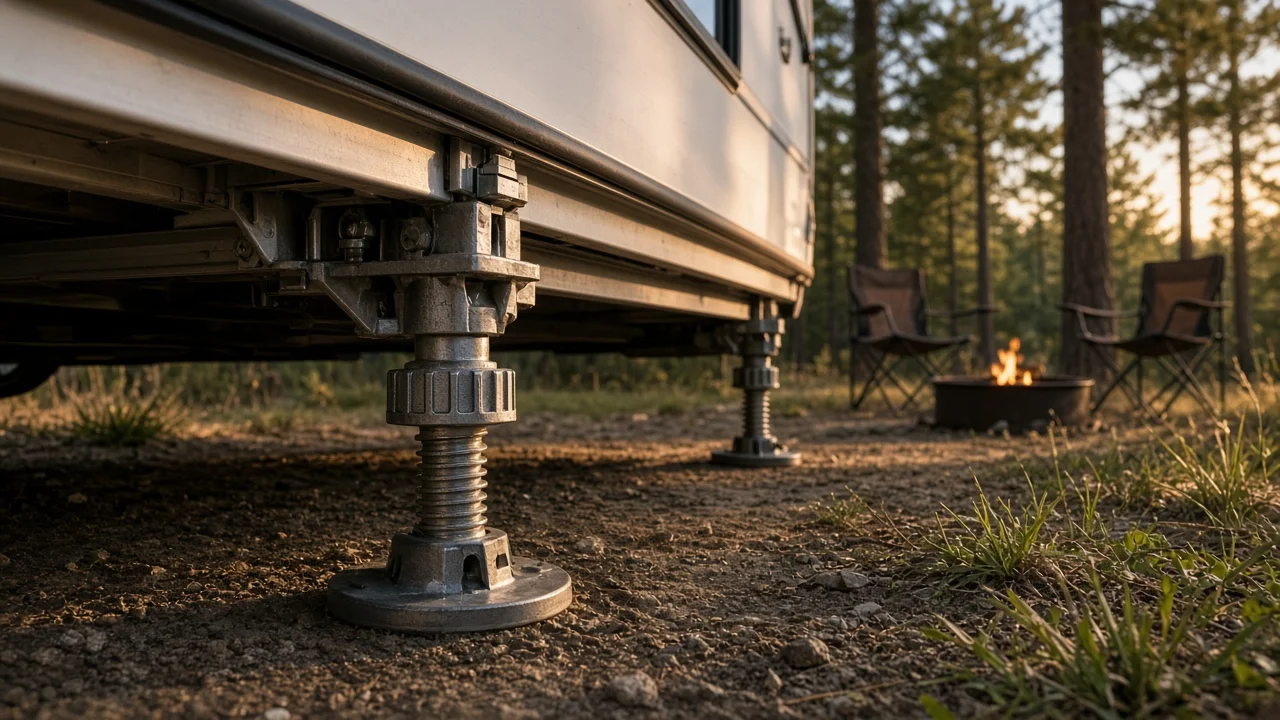
An adjustable leveling jack can help you set up a caravan or travel trailer at a campsite, but only if it is designed and rated to lift. Many products sold as campsite jacks, including scissor jacks and corner steadies, are stabilizers. They stop the trailer from rocking once it is already level, and are not meant to raise its weight. Before buying, confirm in the manufacturer's documentation whether the jack is rated for leveling or only for stabilizing. That single distinction changes which product suits you and how you should use it.
Leveling versus stabilizing
Leveling means bringing the trailer's floor to a flat plane, side to side and front to back, so doors close properly, water drains as intended and appliances that need a level installation work correctly. Stabilizing means reducing movement and bounce when people walk around inside. A stabilizer jack is extended until it makes firm contact with the ground, without lifting the tires off it.
Using a stabilizer-only jack to lift the trailer can bend the jack, damage the frame where it mounts, or leave the trailer resting on a support that was never designed to carry that load. If the product literature does not clearly say the jack can be used for leveling, treat it as a stabilizer.
Common types of adjustable jacks
Type | Typical role | Points to consider; Scissor jack (frame-mounted) | Usually stabilizing | Cranked by hand or with a drill adapter; check whether the maker permits any lifting. Corner steady (fold-down) | Usually stabilizing | Common on caravans; compact when stowed; confirm the rated use. Screw or telescoping stand (portable) | Stabilizing; some models are sold for supporting load | Placed under the frame at chosen points; check the rating and the approved contact points on your frame. Tongue or A-frame jack | Front-to-back leveling on a trailer tongue | Already fitted to most towable trailers; adjusts nose height. Powered system (electric or hydraulic) | Leveling and stabilizing, where rated | Usually installed as a system; needs electrical supply and installation suited to your frame.
What to check when choosing
Rated purpose: the documentation should say leveling, stabilizing, or both. Load rating: compare the jack's stated capacity with your trailer's weight figures, using the manufacturer's placard or owner's manual rather than estimates. For a stabilizer, the rating also shows how robust the jack is. Frame compatibility: confirm the mounting method, bolt-on, clamp-on or weld-on, suits your frame's shape and material. Ask the trailer manufacturer whether drilling or welding the frame affects the warranty. Extension range: the jack must reach the ground from your trailer's frame height across the range of uneven ground you expect. Compare the stated retracted and extended heights against a measurement of your own frame height. Ground clearance when stowed: a jack that hangs low when retracted can strike the ground on ramps, driveways or rough campsite entrances. Foot or pad size: a wider footprint spreads the load on soft ground such as grass, sand or gravel. Check whether pads are included or sold separately. Operation: hand crank, drill-driven or powered. Drill operation can speed setup, but check whether the maker approves it and what drive size is used. Corrosion protection: jacks sit close to road spray and wet ground, so the finish and the condition of the screw thread matter for long-term use. Instructions and support: clear installation guidance and available spare parts make ownership easier.
Model-specific compatibility
Fit depends on the specific trailer: model year, frame design, floor height and where tanks, plumbing and wiring run under the floor. Two trailers that look alike can differ in frame layout between years or floor plans. Check the mounting points against your own trailer rather than relying on a general fitment description, and confirm with the trailer or jack manufacturer when the listing does not name your model.
A typical setup sequence
Choose the flattest firm spot available and position the trailer. Level side to side, typically with leveling blocks or ramps under the wheels on the low side, unless you have a jack system rated for lifting. Chock the wheels before unhitching. Level front to back with the tongue jack. Lower the stabilizer jacks to firm ground contact, using pads on soft surfaces, without lifting the tires. Check the trailer is still level and adjust if needed. When leaving, fully retract and secure every jack before moving.
Safety points
Do not use a stabilizer or leveling jack as a tire-changing jack unless the manufacturer specifically allows it, and never get under a trailer supported only by jacks. Recheck jacks after heavy rain or on soft ground, as pads can sink and change both level and stability.
Information gaps to resolve
This guide does not include specific product ratings, dimensions, prices or test results, because no verified data on individual jacks was available. Before buying, get the rated capacity, extension range, mounting requirements and approved use for the specific model from the manufacturer, and compare them with the weight and frame details for your own trailer's model year and floor plan.