80W-90 Gear Oil Nearby: Where to Look and What to Check Before You Buy
The short answer
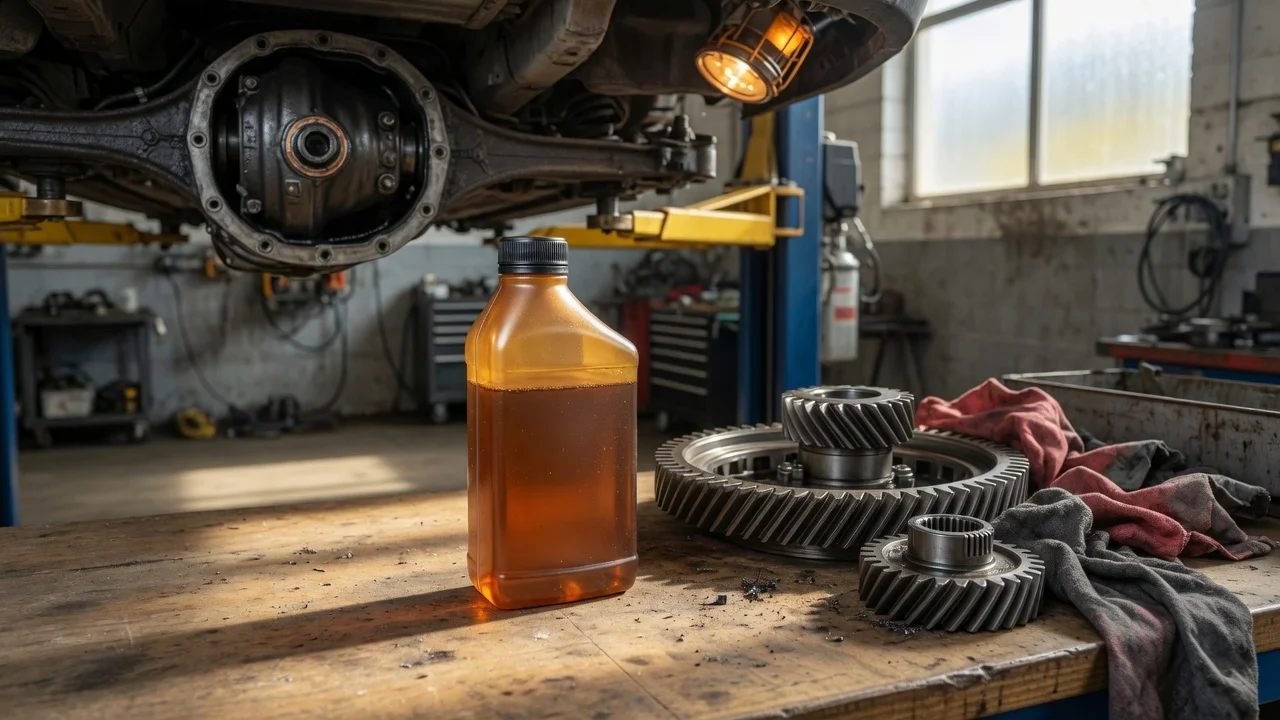
80W-90 is a common gear oil grade, so look first at local auto parts stores, general retailers with an automotive aisle, farm and tractor supply stores, and dealership parts counters. The grade on the bottle is not enough on its own, though. Before you buy, confirm three things in your owner's manual or service information: the API service category (usually GL-4 or GL-5), whether your differential needs a limited-slip additive, and whether 80W-90 is actually the grade specified for your model year, market, trim and drivetrain. If any of these don't match, the nearest bottle may be the wrong one.
No local inventory, store, or pricing data was supplied for this article, so it cannot say which specific stores near you have it in stock or what it costs. The most reliable way to confirm is to check a store's own inventory tool or call ahead.
Where 80W-90 is usually sold
Auto parts stores: generally the most likely place to find several brands and both GL-4 and GL-5 versions. General retailers with an automotive section: often carry a smaller selection of the more common gear oils. Farm, tractor and equipment supply stores: frequently stock gear oils for trucks, tractors and implements, sometimes in larger containers. Dealership parts departments: useful if your manufacturer specifies a particular product or approval. Marine and powersports shops: may carry gear oils for outboard lower units or ATVs. Check that the product is meant for your type of vehicle, because these are often formulated for specific uses.
What 80W-90 means
The number describes viscosity, meaning how thick the oil is. The "80W" part describes how it behaves in cold conditions (the W stands for winter), and the "90" describes its thickness at operating temperature. Gear oil viscosity grades are on a different scale from engine oil grades, so 80W-90 gear oil is not interchangeable with any engine oil, even one with similar-looking numbers.
Specifications to confirm before buying
API GL-4 vs GL-5: The GL rating indicates the level of extreme-pressure additives. GL-5 is commonly specified for hypoid-gear differentials, which put heavy sliding loads on the gear teeth. GL-4 is often specified for certain manual transmissions and transaxles. Some manufacturers warn against using GL-5 in transmissions that call for GL-4, because the stronger additive package can be harsh on brass or bronze synchronizer parts in some designs. Some products are labeled as meeting both GL-4 and GL-5. Follow the rating your vehicle's documentation calls for rather than assuming either one is a universal upgrade.
Limited-slip differentials: Many limited-slip differentials need a friction modifier. Some gear oils include it already, and some require you to add it separately. Check the label for limited-slip wording, and check your manual for whether your axle needs it.
Conventional vs synthetic: Both are sold in 80W-90. Some vehicles specify a synthetic product or a manufacturer-approved fluid; if yours does, use what is specified.
Grade substitutions: You may see 75W-90 or 85W-140 on the same shelf. Only substitute a different grade if your manual or a parts professional confirms it is approved for your specific axle or gearbox. Specifications can differ between model years, trims, markets and drivetrain options of the same vehicle, so confirm against your exact configuration.
How much to buy
Fill capacity varies by component and vehicle, so this article does not give a figure. Look up the capacity for each part you are servicing, such as front differential, rear differential, transfer case, or manual transmission. Then buy enough to cover the total plus a small margin, since some fill procedures use slightly more than expected. Gear oil is commonly sold in quart bottles, and some stores also carry larger jugs.
A quick checklist for the store
Bring your year, make, model, trim and drivetrain, and the axle or transmission code if you know it. Confirm the specified grade (80W-90 or an approved alternative). Confirm the API category: GL-4, GL-5, or a product rated for both. Check whether a limited-slip additive is needed and whether the product already contains it. Check whether your manufacturer requires a specific approval or a synthetic fluid. Buy enough for every component you plan to fill.
Information gaps
This guide does not include stock levels, prices or store locations near you. It also does not include vehicle-specific fluid specifications or capacities. Use your owner's manual, the manufacturer's service information, or a parts counter lookup for your exact vehicle to fill those in.