80W-90 GL-5 Gear Oil: What It Is and When to Use It
The short answer
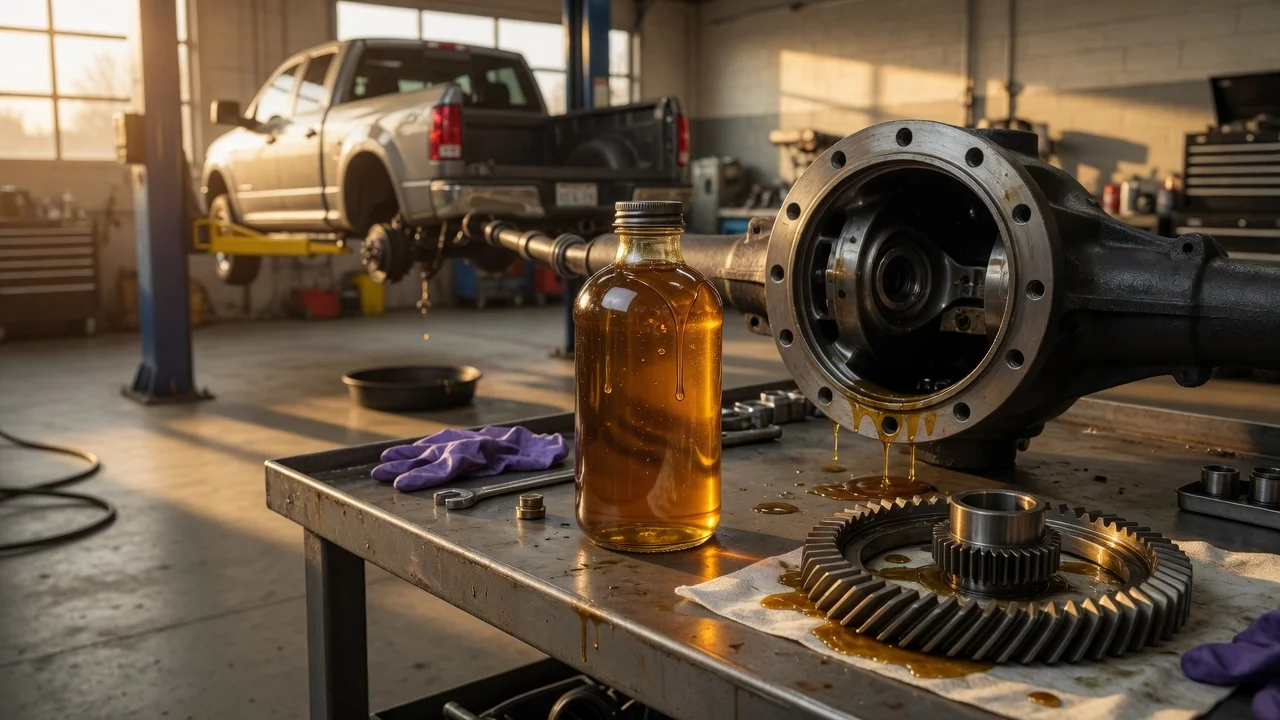
An 80W-90 GL-5 gear oil is a multigrade gear lubricant that combines two separate ratings. The SAE 80W-90 grade describes its viscosity across temperatures. The API GL-5 rating describes its performance level, which is intended for heavily loaded hypoid gears such as those found in many rear axles and differentials. It is a common fill for differentials and some transfer cases, but it is not a universal gear oil. The correct choice for any vehicle depends on what the manufacturer specifies for that specific model year, drivetrain and component.
What the 80W-90 grade means
Gear oil viscosity grades come from the SAE J306 standard, which is separate from the system used for engine oil. The 80W portion is the low-temperature rating, where the W stands for winter, and indicates how the oil performs when cold. The 90 portion is the viscosity grade at operating temperature. Because the two scales are different, a gear oil numbered 90 is not comparable to an engine oil with a similar number, and the figures should not be compared directly.
What API GL-5 means
API GL-5 is a service category from the American Petroleum Institute for gear lubricants used under severe conditions. These conditions include high speed combined with shock loading and low speed combined with high torque, which are typical of hypoid gear sets. To protect gears in these conditions, GL-5 oils contain a relatively high level of extreme-pressure additives. These additives help prevent metal-to-metal scuffing and wear when gear teeth are under heavy load.
Where it is typically used
Hypoid-gear differentials and axles where the manufacturer calls for GL-5 at the 80W-90 grade; Some transfer cases and final drives, but only where the service information specifies this oil; Manual transmissions, but only where GL-5 is explicitly approved, since many transmissions call for a different specification
Qualifications that change the answer
Manual transmissions that specify GL-4: Some manual gearboxes, especially those with brass or bronze synchronizers, call for API GL-4 rather than GL-5. The higher additive content in some GL-5 oils can affect synchronizer friction or yellow-metal parts in these units. Some products carry both a GL-4 and a GL-5 rating, but suitability should be confirmed against the transmission's requirement rather than assumed.
Limited-slip differentials: Many limited-slip units need a friction modifier. Some GL-5 oils already include one and are labeled for limited-slip use. Others require a separate additive. The product label and the vehicle's service information determine which applies.
Viscosity specification: Manufacturers specify different grades depending on the component, the climate and the vehicle generation. Common alternatives include 75W-90, 75W-140 and 85W-140. An 80W-90 should be used where it is listed, not simply because it carries a GL-5 rating.
Store-brand options such as NAPA
Retailers including NAPA sell 80W-90 gear oils under their own brands. The available information does not confirm the formulation, base oil type, limited-slip suitability or additional ratings of any specific NAPA product. Before buying any retail 80W-90, check the container for three things: the API GL-5 rating, any limited-slip notation and any other specifications the vehicle manufacturer requires. Compare these against the owner's manual or service information for the exact vehicle.
Gaps in this guide
This guide covers what the 80W-90 grade and the GL-5 rating mean in general terms. It does not include laboratory measurements, comparative test results or capacity and change-interval figures, because no such data was supplied. For fill quantities, service intervals and approved products, use the manufacturer's documentation for the specific vehicle.