6L90 Transmission Valve Body Identification
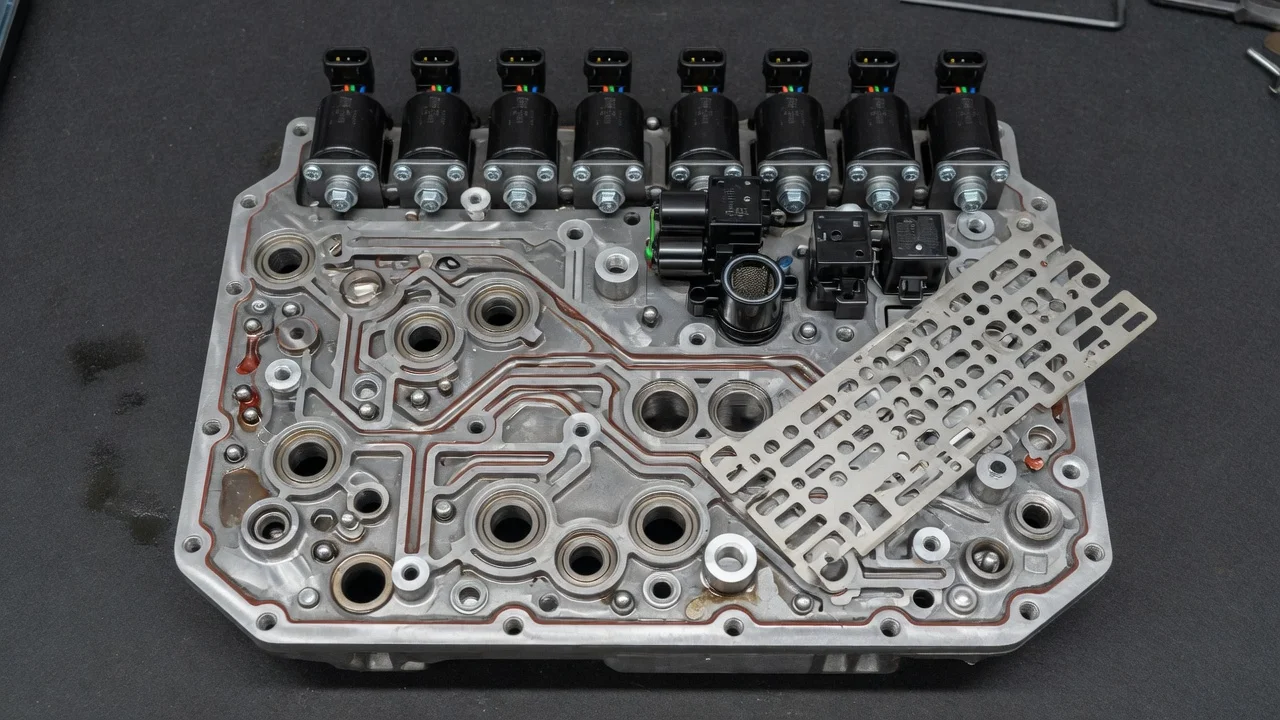
To identify the right valve body for a 6L90, first confirm the transmission, then match the control assembly to your vehicle and its software calibration. The 6L90 is a GM six-speed automatic used in heavy-duty pickups, full-size vans and some high-output rear-drive cars. It looks a lot like the lighter-duty 6L80. Getting this right helps you avoid a part that bolts in but does not work. It also keeps a shift complaint from being mistaken for a confirmed valve body failure.
Short answer: identifying a 6L90 valve body
Start with the transmission type. The Service Parts Identification label, usually in the glove box or on a door jamb, lists factory option codes. The 6L90 is typically listed as MYD and the 6L80 as MYC. Next, look for the identification label or marking on the transmission case. It confirms the model and can help a parts counter trace the build. On this transmission family, the transmission control module and its solenoids mount directly to the valve body as one electro-hydraulic control assembly. So identifying the valve body means reading two things: the part number on the module label and the casting numbers on the upper and lower valve body halves.
The most reliable confirmation is a parts lookup by full VIN. Matching castings or a similar-looking unit is not enough. The control module carries vehicle-specific software, and the hydraulic parts changed over the production run. Two assemblies can look identical and still need different programming or have different internal details.
How the valve body and control module work together
The valve body is the hydraulic control center of the transmission. It is made of machined aluminum castings with fluid passages, spool valves and check balls, plus a separator plate between the upper and lower halves. The pump sends pressurized fluid into the valve body, which routes it to the clutch packs. The 6L90 shifts clutch-to-clutch. One clutch releases while another applies, so the timing and pressure of each shift depend heavily on how accurately the valve body and solenoids work.
The integrated control module commands pressure control and shift solenoids and reads pressure switches. It also reads sensors that report internal speeds and fluid temperature. It stores the calibration for the specific vehicle and learns adaptive values as clutches wear. That is why a replacement assembly usually needs programming to the vehicle and an adaptive relearn afterward. Replacement parts may be sold as a bare valve body, a control module alone, or a complete assembly, and each choice affects what work follows.
What changes the answer
Several factors decide which valve body your 6L90 needs: • Model year and revision. GM revised the hydraulic and electronic parts during production. • Application. A heavy-duty truck, a commercial van and a performance car use different calibrations. • Configuration. Engine, axle ratio and two- or four-wheel drive can all affect the software. • 6L80 versus 6L90. The two share much of their basic architecture and look similar from outside, so check the option code rather than appearance. Part numbers can also be superseded. The number on your original unit may now lead to a newer replacement.
The source of the part matters too. A new or remanufactured assembly from a supplier that sorts by VIN is the most predictable choice. A used unit from another vehicle may be programmed for a different application and may still need reprogramming. Without that, you may get warning lights, poor shift behavior or a no-start condition. Fluid also matters. These transmissions are specified for Dexron VI. Wrong, low or badly degraded fluid can produce symptoms that look like a valve body problem.
What the owner can do
Collect the facts before anyone orders parts: • The full VIN. • A photo of the option code label and of the transmission case identification. • Current mileage. • Your service history, including fluid changes and earlier transmission work. • Any stored diagnostic codes, with freeze frame data if a scan tool can capture it. • A description of the shift behavior. Note whether the problem is a harsh or flared shift, delayed engagement into drive or reverse, slipping, or the transmission holding one gear in a protective mode. Also note whether it changes when the transmission is cold or fully warm.
Check the fluid correctly before assuming a hardware fault. Many of these transmissions have no traditional dipstick. The level is set through a check plug with the engine running and the fluid within a specified temperature range, so follow the procedure for your vehicle. A solenoid or pressure code points to a circuit or hydraulic problem in that area, but it does not prove the valve body has failed. Wiring, connectors, low fluid, internal clutch wear and outdated software can all set similar codes.
Repair options range from least to most invasive: • A software update and adaptive relearn. • Replacing the control module or individual solenoids. • Rebuilding or replacing the valve body. • A full overhaul, if the clutches are burned or debris has spread through the unit. Ask the shop which test results support its recommendation. Ask too whether the quoted price includes programming and relearn.
Limitations and next step
This guide explains how identification works. It cannot confirm fitment for your vehicle. Part numbers, revisions and programming requirements vary, and only a VIN-based lookup through a dealer or a knowledgeable transmission supplier can settle which assembly applies. Programming the control module also needs suitable scan and programming equipment, which many owners do not have.
If codes or shift problems persist after the fluid is confirmed correct, the next step is professional diagnosis. A transmission technician can review live scan data, test circuits and solenoid commands, check line pressure where the procedure allows, and judge whether the fault is in the valve body or elsewhere in the transmission. Bring the information gathered above. It shortens diagnosis and makes the parts lookup accurate the first time.