6T40 Transmission Valve Body Identification: A Practical Guide
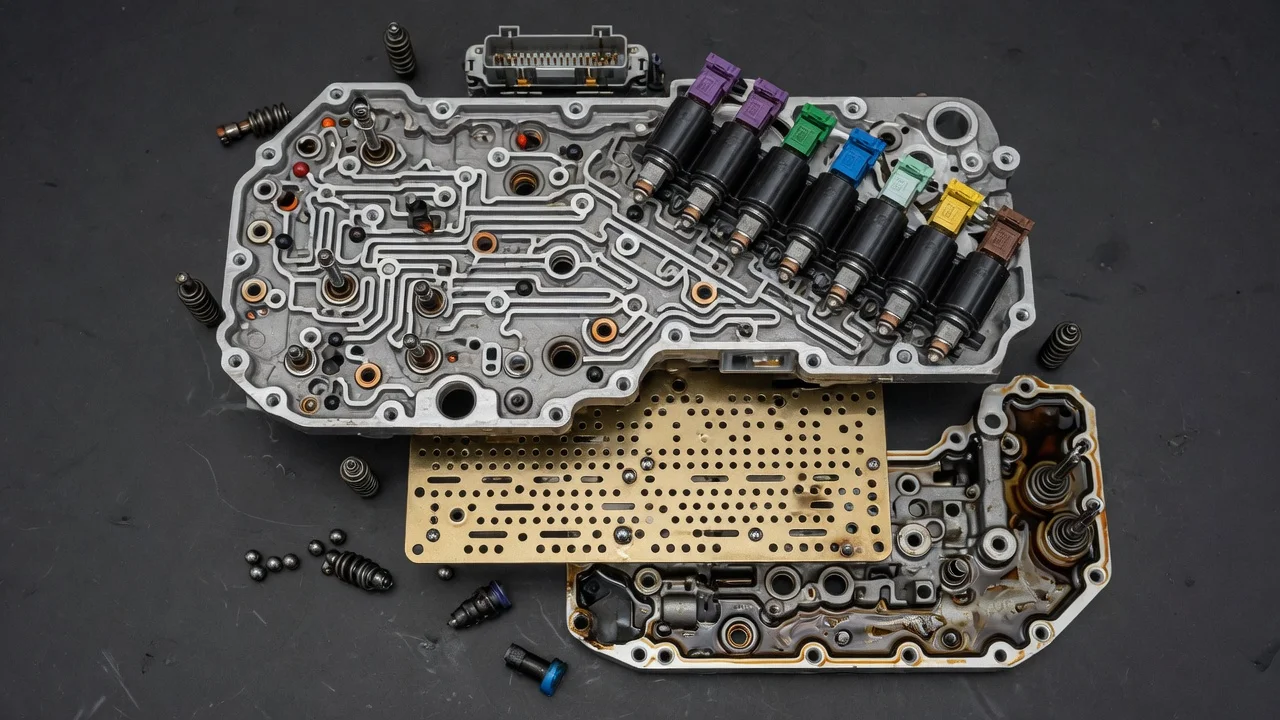
Finding the right valve body for a GM 6T40 six-speed automatic takes more than matching a model year. The 6T40 belongs to a family of front-wheel-drive transmissions that share a basic layout but changed over time. Its valve body also works with an electronic control module that has its own fitment and programming needs. This guide explains how to identify the unit you have, which details matter and how to avoid buying the wrong part.
The short answer
To identify a 6T40 valve body correctly, start with the transmission, not the vehicle. First confirm that the unit really is a 6T40 and not a closely related variant such as a 6T30, 6T45 or 6T50. Then narrow it down by production generation, using the identification details on the transmission case and the vehicle's service parts label. Only after that does a part number or casting number on the valve body become meaningful, because similar-looking castings were used across different versions.
Two qualifications matter. First, the valve body and the electronic control module mounted to it are separate components with separate identification, even though they are often sold together as one assembly. Second, identifying a valve body does not prove that it is causing a problem. Harsh or erratic shift behavior can come from fluid condition, internal clutch wear, wiring or software. Identification is a fitment task, not a diagnosis.
How the valve body and control module work together
The valve body is the hydraulic control center of the transmission. It is a machined casting with passages and spool valves that route pressurized fluid to the clutches that apply each gear. On the 6T40, electrical commands come from an integrated transmission control module, often called the TEHCM. It combines the control electronics, the shift and pressure control solenoids and the sensors in one unit attached to the valve body. The module decides when to shift, the solenoids turn that decision into hydraulic signals, and the valve body directs the fluid.
Because these parts are so closely linked, several different faults can produce similar complaints, such as delayed engagement, flare between gears or a harsh downshift. Worn valve bores, sticking valves, a faulty solenoid and a module fault can all cause them. The transmission also adapts its shift timing over time by learning how its clutches fill. When hydraulic parts are replaced, those learned values may no longer fit, so a relearn procedure is usually part of the repair.
What changes the correct part
The biggest variable is the exact transmission type and version. GM revised the 6T40 family during its production run, and later generations brought changes to internal hardware and hydraulic calibration. A valve body from one generation may bolt into another and still behave differently, or fail to match the separator plate, solenoid body or software. The heavier-duty 6T45 and 6T50 and the lighter 6T30 share the same architecture, but their parts are not automatically interchangeable.
The control module adds a second layer. A replacement module usually has to be programmed to the vehicle with the correct calibration, and some used or remanufactured assemblies arrive with software from another vehicle. Engine pairing, model application and calibration updates issued over the years also affect which assembly is correct. Condition matters too: a used valve body from a high-mileage or overheated transmission may carry the same wear you are trying to fix.
Steps an owner can take
Start by gathering identification data. Record the VIN, model year, engine and the transmission code from the service parts label. On GM vehicles this label is commonly in the glove box or another interior location. Check the identification tag or stamping on the transmission case if you can reach it. If the valve body is already exposed, photograph all casting numbers, part numbers and labels on both the valve body and the control module before removing anything.
Next, review the service history and current symptoms. Note fluid level and condition, and check that the correct fluid specification has been used. The 6T40 family is generally specified for Dexron VI type fluid, but confirm this in the owner's manual. Record any stored diagnostic codes along with their freeze-frame data. Solenoid or pressure control codes may point toward the control side, while gear ratio codes can reflect clutch problems rather than a valve body fault.
When comparing repair options, ask whether a replacement valve body is new, remanufactured or used, whether it includes the control module, and whether the seller verifies fitment by VIN or transmission code. Confirm who will handle programming and the relearn procedure. An unprogrammed module or a skipped relearn can leave shift quality poor even when the hardware is correct.
Limits and when to get professional help
This guide cannot confirm fitment for a specific vehicle. Part numbers get superseded, calibrations change, and looking similar does not prove two parts are compatible. To confirm the exact part for your VIN, use the dealer parts catalog, a reputable transmission parts supplier or a technician with access to factory service information.
Get professional help if codes return after basic checks, if the fluid is burnt or contains debris, or if the module needs programming. A transmission specialist can run pressure tests and scan-tool checks to tell a valve body fault apart from solenoid, module or clutch problems before you pay for parts.