Identifying a GM 10-Speed Transmission Valve Body
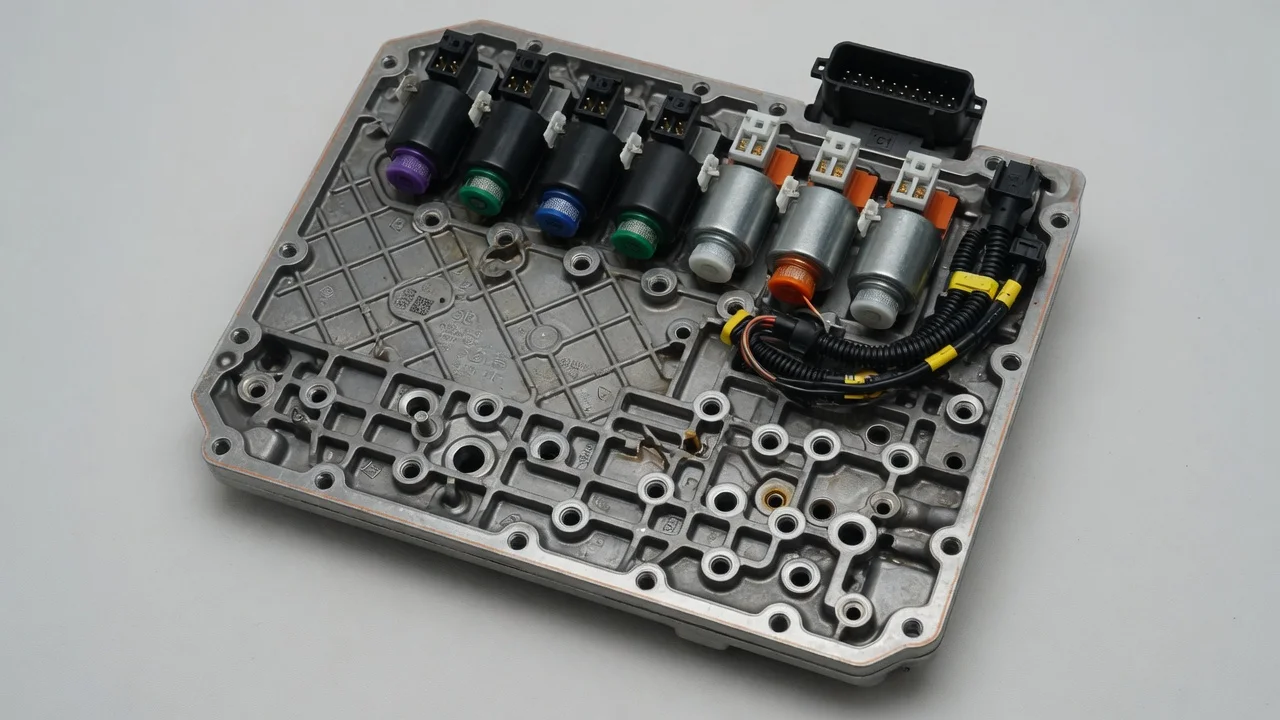
Identifying a GM 10-speed transmission valve body depends mostly on which transmission it belongs to and which part number the vehicle's build requires. Two units can look nearly identical and still not interchange. This guide explains how to confirm the transmission type, what the valve body does, what affects fitment, and what an owner can check before buying parts or approving a repair.
The short answer
To identify the valve body, first identify the transmission. GM's 10-speed automatics include the 10L80 and 10L90, used in full-size trucks, SUVs and some performance cars, and the Allison 10L1000, used in heavy-duty pickups. Control hardware from one family should not be assumed to fit another. Once you know the family, confirm the exact part by the vehicle's VIN and the GM service part number. Visual similarity or a shift symptom is not enough.
In practice, check three things: the Service Parts Identification label, usually in the glove box or center console, which lists the vehicle's option codes; the identification tag or markings on the transmission case; and, if the pan is already off, any part numbers on the control assembly itself. A dealer parts department can match the VIN to the current service part, which may supersede the number originally installed at the factory.
What the valve body does in a 10-speed
The valve body is the hydraulic control center of an automatic transmission. Machined passages, spool valves and check balls route pressurized fluid to the clutches that produce each gear. Electronically controlled solenoids move those valves on command, applying one clutch while releasing another. With ten forward ratios and closely timed clutch-to-clutch shifts, small changes in valve movement, fluid pressure or fluid condition can noticeably change shift behavior.
On the 10L80 and 10L90, the valve body and electronic controls form one assembly inside the transmission, behind the oil pan, with the transmission control module attached. That affects both identification and repair. A replacement assembly usually needs programming to the vehicle and an adaptive learn procedure afterward, so it is not a simple bolt-in part, even when the physical fit is correct.
What changes the answer
Transmission type matters most. The 10L80, 10L90 and Allison 10L1000 are built for different torque loads and applications, and their control parts are not interchangeable. Ford's 10R80 shares a development history with GM's light-duty 10-speeds, but parts from it should not be treated as a substitute. Within one family, GM has revised parts and calibrations over the production run, so model year and build date can change which part number is correct. This is why fitment is confirmed by VIN rather than by transmission name alone.
The source of the part also matters. A new assembly from GM may arrive unprogrammed. A remanufactured unit may come set up for a specific application. A used valve body from a salvage transmission may carry a different revision, an unknown history and calibration data from another vehicle. Fluid specification matters too: the 10L80 and 10L90 are specified with a low-viscosity Dexron fluid, and the wrong fluid or an incorrect level can produce symptoms that resemble a control problem. Confirm the exact fluid in the owner's manual for your vehicle.
What the owner can do
Start by collecting identification and evidence. Record the VIN, photograph the Service Parts Identification label, and note any visible transmission tag. Read diagnostic codes with a scan tool that can access the transmission module; a basic code reader may show only a general transmission fault. Write down the shift behavior in detail: which gears are affected, whether the problem occurs cold or hot, under light or heavy throttle, and whether it is constant or intermittent.
Check the fluid only according to the procedure for your vehicle. Many GM 10-speed applications lack a conventional dipstick, and the level is checked at a fill or check plug at a specified fluid temperature. Review the service history for fluid changes, software updates and earlier transmission work, and ask a dealer whether any service bulletins or calibration updates apply to your VIN.
If parts are needed, order by VIN and confirm the part number before installation. Ask whether programming and adaptive learning are included in the quote. Compare the realistic repair options, which may range from a software update or fluid correction to replacing the control assembly or repairing internal transmission components.
Why a symptom is not a diagnosis
Harsh shifts, flares between gears, shudder and delayed engagement are often blamed on the valve body, but the same symptoms can come from low or degraded fluid, outdated adaptive values, software calibration, torque converter issues, worn clutches, or wiring and connector faults. A code pointing to a solenoid or pressure control circuit may point toward the control assembly without proving that it has failed.
A proper diagnosis usually combines code history, live data such as commanded versus actual clutch pressure or slip, fluid inspection, and, where needed, pressure testing or inspection with the pan removed. Debris in the pan can also indicate wear elsewhere in the transmission. In that case, a new valve body alone may not solve the problem and could be damaged by contamination.
Limitations and next step
This guide cannot confirm a part number or a failure for a specific vehicle. Part revisions, fluid requirements, check procedures and programming steps vary by model year and application, and they should come from GM service information or a parts department using your VIN. Programming an internal control assembly typically requires dealer-level or equivalent software, which is beyond most home garages.
If the vehicle may still be under powertrain warranty, contact the dealer before opening the transmission or installing parts, since outside work can complicate a claim. Otherwise, bring the VIN, codes, documented shift behavior and service records to a transmission specialist or dealer. That information lets them confirm the transmission type, check fitment, and decide whether the valve body is actually the cause before you pay for one.