68RFE Transmission Valve Body Identification
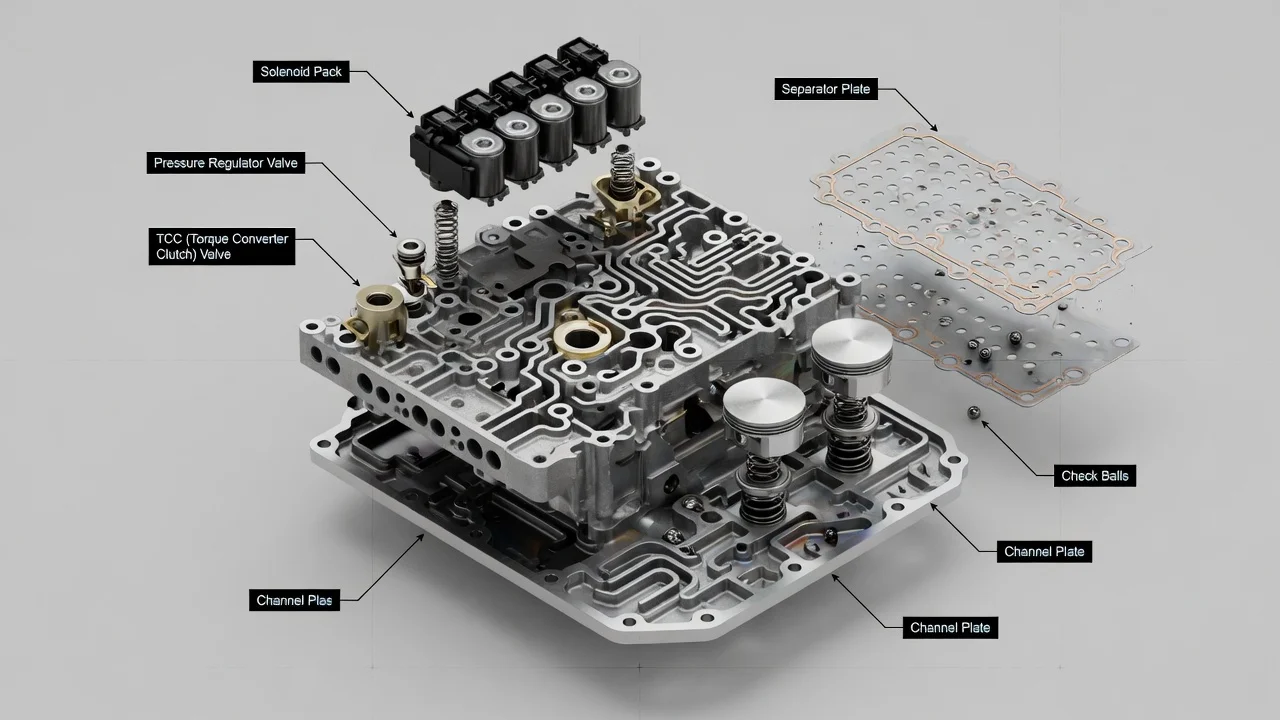
The 68RFE is a six-speed, electronically controlled automatic transmission used mainly in heavy-duty Ram pickups and chassis cabs, most commonly behind the Cummins diesel. Identifying the correct valve body means confirming the transmission, its model-year configuration and the exact part tied to the vehicle. A unit that only looks similar is not enough. This guide explains what to check, why it matters and where owner-level identification stops.
How to identify a 68RFE valve body
Identifying a 68RFE valve body takes three steps. First, confirm the transmission is a 68RFE. Second, determine the vehicle and transmission configuration from the VIN and the transmission's identification markings. Third, match the replacement by part number rather than by appearance. The 68RFE shares its basic architecture with the earlier 545RFE and 45RFE family, so valve bodies from these units can look alike on a bench while differing in calibration, internal valving or connector details. Looking similar does not prove fitment.
For most owners, the most reliable route is to give the full VIN to a parts counter or transmission supplier and ask for the valve body listed for that build. Then compare that listing with any number on the transmission's identification tag or stamp. If the original valve body is already out of the vehicle, numbers cast or stamped on it can help a supplier, but a casting number alone may cover several assembled versions.
How the valve body works in this transmission
The valve body is the hydraulic control center of the transmission. It sits in the oil pan area and contains machined passages, spool valves, check balls and springs that route pressurized fluid to the clutches. In RFE transmissions, shifts are commanded electronically. The controller energizes solenoids in a solenoid and pressure switch assembly mounted to the valve body, and those solenoids direct fluid to apply or release specific clutches. Pressure switches report back so the controller can confirm what happened.
The controller adapts clutch fill times and pressures as the transmission wears, so the valve body and the electronic calibration work as a system. Several different faults can produce similar shift behavior, such as harsh engagements, flare between gears, delayed reverse or a default limp mode. These include worn valve bores, sticking valves, a leaking gasket or separator plate, and a failing solenoid. Because of that overlap, a symptom points to a circuit or area to test, not directly to a failed valve body.
What changes the correct part
The 68RFE has been produced across many model years and applications, and the components in and around the valve body were revised during that time. Several factors can affect which valve body or solenoid assembly is correct: model year, engine, two- or four-wheel drive, pickup or chassis cab use, and the software calibration. A unit from a different year may bolt in and still cause wiring, calibration or shift-quality problems.
The type of replacement also matters. A new factory valve body, a remanufactured unit tested on a bench fixture, and an aftermarket performance or towing-oriented valve body do not behave the same way. Modified units may change line pressure or shift firmness and may need specific calibrations. Some replacements come with the solenoid assembly installed and others do not, so confirm exactly what is included before comparing prices.
Service history matters as well. If the transmission has been replaced or rebuilt, the unit in the truck may not match what the VIN originally specified. Check the tag on the transmission and any rebuild paperwork against the VIN lookup before ordering parts.
What the owner can do
Start by recording what a supplier or technician will need: the full VIN, model year, engine, mileage, and the numbers on the transmission identification tag or stamp. The location of that marking varies, and it may be dirty or damaged, so photograph it in good light. Also note the service history, including fluid changes, earlier valve body or solenoid work, and whether the transmission is original.
Next, describe the symptoms precisely: when they occur, at what temperature, during which shift, and whether a warning light comes on. Have stored and pending diagnostic codes read with a scan tool that can access transmission data, not only generic engine codes. Solenoid, pressure switch, gear ratio and line pressure codes help narrow the search, but confirming a cause still requires circuit and pressure testing. Check fluid level and condition using the correct procedure for your truck. The fluid specification for the 68RFE is ATF+4, and the wrong fluid or an incorrect level can cause shift complaints on its own.
If you decide to replace the valve body, plan for the steps after installation. RFE transmissions typically need a quick learn procedure with a capable scan tool after valve body or solenoid work, and some cases call for a software update. Skipping this step can leave poor shift quality even when the correct part is installed.
Limitations and when to get help
This guide cannot confirm a part number for a specific truck. Appearance, casting marks or a seller's listing are not a substitute for a VIN-based lookup. Part supersessions, mid-year changes and prior repairs can all make a general rule wrong for an individual vehicle.
Get professional help when codes point to internal hydraulic faults, the truck enters limp mode, the fluid shows heavy debris or smells burnt, or shift problems continue after a correct fluid service. A transmission specialist can run pressure tests and electrical checks to find whether the fault is in the valve body, solenoid assembly, wiring, controller or internal hard parts. If debris is present, replacing the valve body alone may not solve the problem, because worn clutches or other components can contaminate a new unit.