Choosing a 68RFE Transmission Valve Body Upgrade
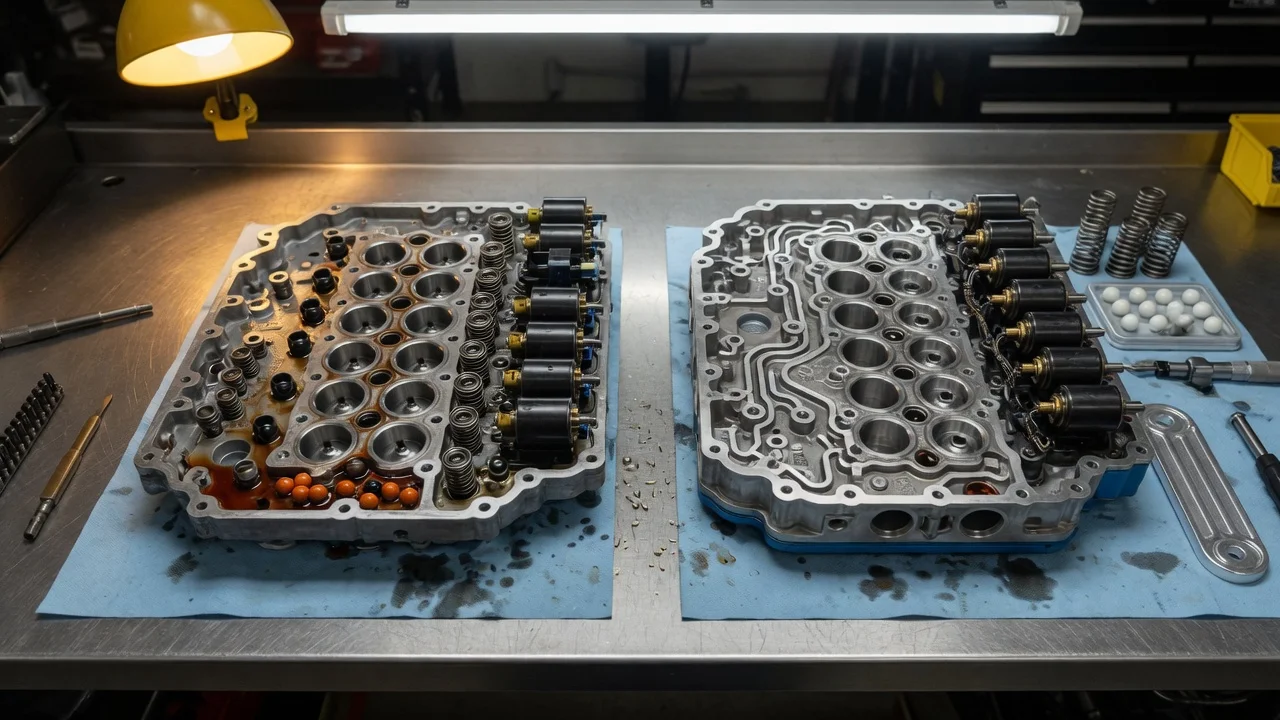
A valve body upgrade is one of the most common changes made to the 68RFE six-speed automatic, especially on Ram heavy-duty trucks that tow, haul or run more engine output than stock. It can firm up shift behavior and make converter clutch control more consistent, but it does not cure every transmission complaint. This guide covers how to match the upgrade to your goal and your truck, which features deserve attention, and what it costs to own.
Define the job the upgrade must do
Start with how the truck actually works. A pickup that tows a heavy trailer through hills, a hot-shot rig that stays loaded most of the year, a plow truck and a lightly used daily driver put very different demands on the transmission. The factory valve body is calibrated for smoothness and broad conditions. Upgraded units modify the hydraulic circuits to raise or stabilize line pressure, shorten clutch apply time, reduce overlap between shifts and hold the torque converter clutch more firmly. Those changes matter most when the engine makes extra torque, whether from factory output or aftermarket tuning, and when the truck spends long periods under load.
Diagnose before you shop. A flare between gears, a harsh engagement, slipping, converter shudder or limp mode can come from low or degraded fluid, worn clutch packs, a failing solenoid pack, a wiring or connector fault, a sensor problem or software. A symptom alone does not prove the valve body is at fault. Read the stored diagnostic codes, check fluid level and condition using the correct temperature-based procedure, and review the service history. If the clutches are already burned, a new valve body will not restore them and may only mask the problem for a short time; in that case the realistic repair options shift toward a rebuild or a replacement transmission.
Finally, set your practical limits: total budget, whether you will install it yourself, whether you have access to a scan tool that can run the required relearn, and how long the truck can be off the road.
Check compatibility before you buy
Confirm the transmission type rather than assuming it from the engine. The 68RFE belongs to the same RFE family as the 545RFE and 66RFE, and the parts can look similar while differing in important details. Some later heavy-duty Ram trucks with high-output Cummins engines use a different automatic altogether. Check the identification tag on the transmission or have a dealer or the seller decode your VIN. Model year also matters, because the 68RFE and its electronics were revised during production, so valve bodies are usually listed by year range. Treat a seller's fitment listing as a starting point and confirm it against your VIN.
Next, look at the interfaces. Find out whether the unit ships with a solenoid and pressure switch assembly and a transmission range sensor, which in this family mounts to the valve body, or whether you must transfer your existing parts. Reusing an old solenoid pack on a fresh valve body can carry an existing electrical fault forward. Ask whether the calibration is designed to work with stock transmission programming or assumes a tuner or custom calibration, because a hydraulic upgrade and the control software must agree.
Check the fluid specification as well. The 68RFE is filled with ATF+4 type fluid, and the valve body maker's instructions should not conflict with that. Plan to buy enough fluid to cover the partial drain and refill that comes with removing the pan.
Features that affect the choice
Construction is the first divide. Many upgraded units are remanufactured from factory castings. A good remanufacturer inspects bores for wear and corrects it with sleeves or oversized valves, replaces worn springs and check balls, and flow or bench tests the finished assembly. Ask which parts are replaced and which are only inspected, whether testing is done on every unit, and whether a core charge applies to your old valve body.
Calibration level is the second divide. Sellers often offer street or towing versions alongside performance or competition versions. Firmer, quicker shifts reduce slip under heavy torque, but they also feel harsher and pass more shock into the driveshaft, axles and mounts. More line pressure is not automatically better for a truck that rarely works hard. Pick the mildest calibration that addresses your actual load and power level, and pay attention to how each option manages converter lockup, since that affects heat and consistency when towing.
Separate evidence from marketing. Stage numbers and horsepower ratings are not standardized between brands, so they say little on their own. More useful signals are a specific list of modifications, detailed installation instructions, reachable technical support and clear warranty terms, including whether coverage requires professional installation, specific fluid or a full transmission build. Owner feedback is most relevant when it comes from trucks used the way yours is.
Limitations and ownership costs
Installation involves dropping the pan, catching a considerable amount of fluid, removing the valve body with attention to bolt locations and connectors, and reinstalling everything clean and to the correct torque. Afterward, RFE transmissions need a quick learn procedure performed with a capable scan tool, followed by driving that lets the controller adapt. If you lack the tool or the confidence, add shop labor to the price of the part.
Budget for consumables: fresh ATF+4, a new filter or filters, including any cooler return filter your transmission uses, and a pan gasket or the specified sealant. A truck that tows heavily or runs extra power generally benefits from more frequent fluid service and close attention to transmission temperature, so expect ongoing maintenance costs to rise somewhat with harder use.
Be clear about what the upgrade cannot do. It does not strengthen clutch packs, shafts, planetary sets or the torque converter, add cooling capacity, fix wiring faults or correct a bad calibration. It may make the truck feel firmer than some drivers like. If the vehicle is under a powertrain warranty, check how modifications could affect claims before installing anything.
Build a practical shortlist
Before comparing prices, write down a short checklist for each candidate: confirmed fitment for your transmission and year range by VIN; whether the solenoid pack and range sensor are included or reused; whether stock programming is supported or a tuner is required; the intended use and power level the calibration targets; a documented list of modifications; new or remanufactured construction and any core charge; warranty length and conditions; availability of instructions and technical support; and total cost including fluid, filters, gaskets, labor and relearn access.
Narrow the field to two or three options and contact each seller with your VIN, use case and any diagnostic codes, then judge how specifically they answer. If testing points to internal damage rather than a hydraulic control issue, set the valve body aside and compare a rebuild with upgraded hard parts or a complete replacement transmission instead.