6F50 Transmission Valve Body Identification
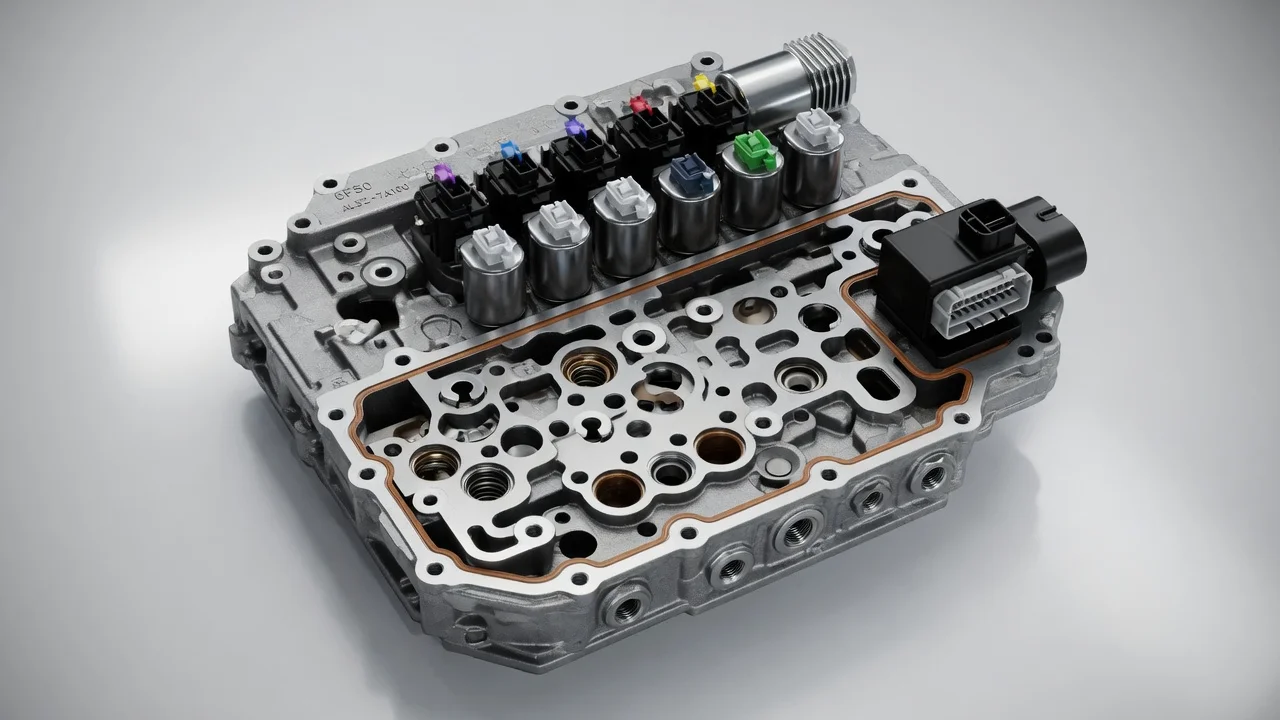
The valve body in a 6F50 six-speed automatic is the hydraulic control center that works with its solenoids to decide when each clutch applies and how firmly. Owners usually need to identify it when they are chasing a shift problem, comparing replacement units or checking a rebuilt part before installation. Ford built several versions of this transmission family, and a valve body that looks similar may not fit or calibrate correctly. Confirm the exact transmission and its configuration first.
Identifying a 6F50 valve body
The reliable way to identify a 6F50 valve body is to work from the vehicle and the transmission outward, not from the part's appearance. Start with the VIN, model year and engine. Then read the identification tag on the transmission case, which carries the transmission model and assembly code. A service parts catalog uses that information to point to the correct valve body or solenoid body assembly. Casting numbers on the valve body and the label on the solenoid body help confirm a match. On their own, though, they do not prove that a unit fits your vehicle, because revised parts can share castings with earlier ones.
Be clear about which part you are identifying. In this transmission, the main control assembly combines the valve body castings, a separator plate and an electrically operated solenoid body. Some repairs replace the whole assembly and others replace only the solenoid body. Compare parts at the same level of assembly as the one installed in your transmission.
How the valve body controls shifting
The 6F50 is a transverse six-speed automatic used in front-wheel-drive and all-wheel-drive Ford and Lincoln vehicles. Its pump supplies pressurized fluid, and the valve body routes that fluid through machined passages and spool valves to the clutches and the torque converter clutch. Solenoids on the solenoid body regulate line pressure and individual clutch pressures. They act on commands from the powertrain control module, which uses inputs such as vehicle speed, throttle position, turbine speed and fluid temperature.
Shift quality depends on precise pressure control, so the module needs to know how each solenoid actually behaves. On many Ford transmissions of this generation, the solenoid body carries an identification or characterization code. After replacement, that code is loaded into the control module so the module can compensate for small manufacturing differences between solenoids. If the code is not entered, or the wrong data is used, a good valve body can still produce harsh, late or inconsistent shifts. The valve body in this family is mounted behind a cover on the side of the case, which affects how much labor replacement takes on a given vehicle.
Configurations that change the answer
Several factors determine which valve body is correct. The 6F50 has close relatives, including the heavier-duty 6F55 used behind higher-output engines and GM transmissions developed in the same joint six-speed program. Their control assemblies are not interchangeable just because they look alike, because valve calibrations, solenoid programming and wiring can differ. Ford also made running changes to the 6F50 across model years. A valve body from an earlier or later build may not match your case, separator plate or software.
Drivetrain layout and engine matter too. Front-wheel-drive and all-wheel-drive versions, different engine calibrations and different vehicle platforms can call for different assemblies or different software. If the valve body or solenoid body was replaced before, the vehicle may carry a superseded part, so check the service history before assuming the original part number still applies. Remanufactured units are sometimes updated to a later revision, which can require matching software in the control module.
What the owner can check
Before buying any part, collect the information a parts counter or transmission shop will need: the full VIN, model year, engine, drivetrain, transmission tag details and any paperwork from earlier transmission work. Scan for diagnostic codes with a tool that reads transmission data. Record the codes along with when the problem occurs, such as cold or hot, on specific upshifts or downshifts, or only under load. Detailed notes on shift behavior make diagnosis faster and cheaper.
Check the fluid level and condition using the procedure for your vehicle. Many of these transmissions have no conventional dipstick, and the level must be checked at a specified temperature. Use only the fluid specification listed for your transmission. Mercon LV is commonly specified for the 6F50, but confirm it in your owner's manual or service information. Low, overfilled or incorrect fluid can cause symptoms that resemble a valve body fault.
Treat symptoms as clues, not as a diagnosis. Harsh engagement, flare between gears, slipping or solenoid-related codes can come from wiring, connectors, a sensor, worn clutches or software, not only from the valve body. Repair options range from a software update or solenoid body replacement to a full valve body replacement or transmission overhaul. Test results should decide which one is needed.
Limitations and next steps
General guidance cannot confirm the exact part for your vehicle. Fitment depends on catalog data tied to the VIN and transmission build, and some details, such as running changes and part supersessions, appear only in dealer or professional parts and service systems. Valve body replacement also involves specific bolt locations and torque sequences. On many vehicles it also requires programming solenoid data into the control module with a capable scan tool.
If the fluid is correct and at the proper level, codes point to transmission control and the problem continues, get a professional diagnosis. It should include pressure testing, a review of live data and wiring checks. Ask the shop to confirm the failed component before replacing the valve body, and ask whether the replacement will need programming. This avoids paying for a part that does not fix the problem or does not fit.