6.0 Powerstroke Glow Plug Control Module Location
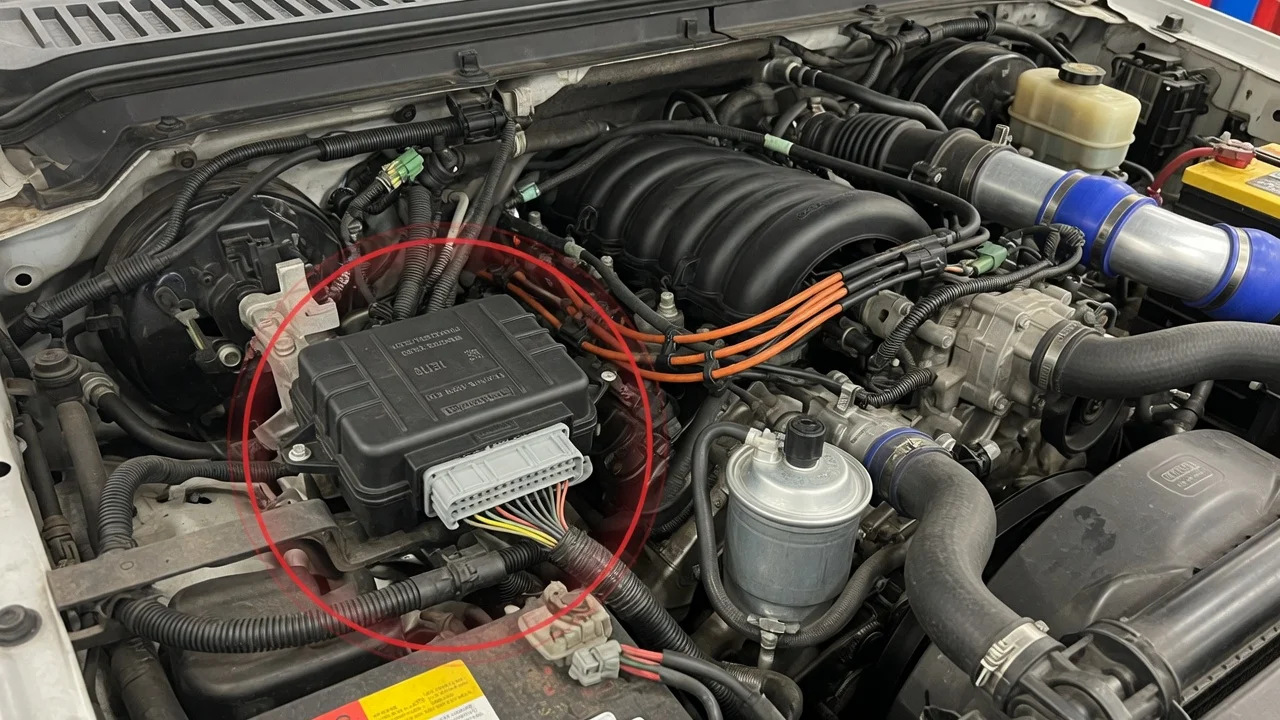
On a 6.0L Power Stroke, the glow plug control module is not under the hood with most of the engine electronics. On Ford Super Duty pickups it sits on the driver's side frame rail beneath the cab, where it is exposed to water, road salt and debris. Knowing where it is mounted helps you inspect its wiring, read related trouble codes in context, and separate a glow plug fault from a fuel delivery problem when the engine starts hard in cold weather.
Where the module is mounted
On 2003 to 2007 Super Duty trucks (F-250 through F-550) with the 6.0L diesel, the glow plug control module, often shortened to GPCM, is bolted to the driver's side frame rail under the cab, roughly below the driver's door. You reach it from underneath the truck, looking up at the frame behind the left front wheel. It is a compact rectangular module with harness connections that carry battery power, the command signal from the powertrain control module (PCM), and the feeds that run forward to the glow plug harnesses on both cylinder banks.
Because it sits in the splash zone, the module and its connectors take a beating from winter road treatment and pressure washing. That location is the main reason corrosion at the connector is such a common finding on these trucks. Running boards, aftermarket steps or skid plates can make it harder to see, but the cab does not need to be lifted to reach it.
How the glow plug system works on the 6.0
A diesel ignites fuel through the heat of compression, which is hard to achieve in a cold engine. Each of the eight cylinders has a glow plug that heats the combustion chamber before and during a cold start. The PCM decides whether the plugs are needed and for how long, mainly based on engine oil temperature, and sends that command to the GPCM. The module does the heavy lifting: it switches high current to the glow plugs and monitors each circuit individually, reporting faults back to the PCM. The wait-to-start lamp on the dash is timed separately, so the plugs can keep heating after the lamp goes out.
Glow plugs only help the fuel ignite; they do not deliver it. On the 6.0, a frame-mounted fuel pump pushes diesel through a fuel filter and water separator on the frame and a second filter on top of the engine, and each injector is fired hydraulically by high-pressure engine oil. A hard cold start can come from the glow system, from low fuel pressure, or from the oil-actuated injection side, so it pays to confirm which system is at fault before buying parts. Gasoline-style fuel trim readings are not the tool for this job on a diesel.
What changes the answer
The frame rail location applies to the Super Duty pickups and cab-chassis trucks. The 6.0L was also used in the Excursion and in E-Series vans, and chassis packaging on those vehicles is different, so confirm the module location in service information for your specific VIN rather than assuming it matches the pickup. A truck that has already had a module replaced may have a different-looking unit, a repaired harness, or a slightly different mounting position.
Operating conditions also matter. In mild weather a failed module or several dead glow plugs may cause little more than a brief rough idle and some white smoke, while the same fault in freezing temperatures can prevent starting. Regular block heater use can hide a weak glow system. Fuel condition plays a role too: this engine runs on diesel, and summer-grade fuel that gels in the cold or water in the fuel can cause no-start symptoms that no glow plug repair will fix.
Inspecting the module and its circuit
Park on level ground and support the truck properly if you need extra clearance. Disconnect both batteries before unplugging anything, because the glow plug circuit carries very high current. Look at the module connector for green or white corrosion, broken locking tabs, and pushed-back terminals, then trace the wiring along the frame for chafing or melted insulation. Cleaning corroded terminals with electrical contact cleaner and reassembling with dielectric grease is a reasonable owner-level step, but badly corroded pins usually call for a new connector or pigtail.
Read stored codes with a scan tool before replacing anything. P0670 relates to the module control circuit, P0671 through P0678 identify individual cylinder glow plug circuits, and P0683 points to communication between the module and the PCM. A single-cylinder code more often traces to that glow plug or to the harness under the valve cover than to the module itself. With the batteries disconnected, checking each glow plug circuit's resistance at the module connector and comparing it to the factory specification can show which circuit is open.
If the glow system checks out, look at the fuel side. Confirm both fuel filters were changed on schedule, and measure low-side fuel pressure with a gauge at the test port on the engine filter housing, comparing the reading to Ford's specification. A visual leak check for wet fuel lines and fittings is fine, but never loosen fittings on a running engine or put your hands near pressurized lines. Additives can help prevent gelling in winter, but they are not a proven repair for a failing module, weak fuel pump or sticking injector.
Limitations and when to get help
The location described here covers the typical Super Duty layout; confirm it with a wiring diagram for your exact vehicle, engine configuration and build date. Intermittent communication faults can be hard to pin down without a scan tool that can command the glow plug module and display individual circuit status, which generic code readers often cannot do.
Some repairs are better left to a diesel shop. Replacing the under-valve-cover harness means removing the valve covers, glow plugs can seize or break in the cylinder head during removal, and faults in the high-pressure oil system that fires the injectors require specialized testing. Before you go in, write down the stored codes, the outside temperature when the problem occurs, how long the engine cranks, and any recent fuel or filter service. That record shortens diagnosis and helps avoid paying for parts the truck does not need.