Locating the Glow Plug Switching Unit on a 6.0 Powerstroke
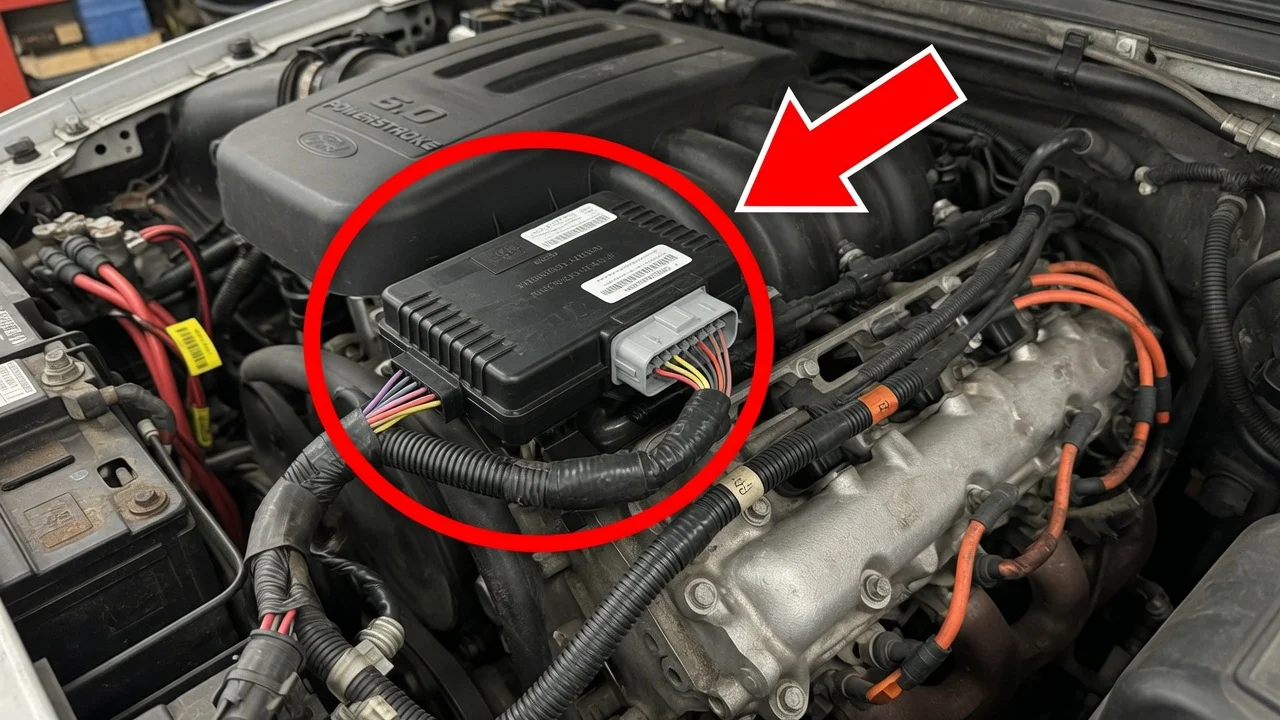
If you are looking for the glow plug relay on a 6.0 Power Stroke, you will not find a relay where the older 7.3 diesel kept one. The 6.0 uses a solid-state glow plug control module, usually called the GPCM, and on Super Duty pickups it is mounted low on the driver-side frame rail beneath the cab. Here is where to look, how the module works, and what to check before buying parts.
Where the glow plug module sits on a 6.0
On F-250 through F-550 Super Duty trucks and the Excursion equipped with the 6.0L diesel, the GPCM is bolted to the driver-side (left) frame rail under the cab. On many trucks it sits roughly below the driver's door area, though its exact position along the rail can differ by cab, bed length and build. It is a compact metal housing with a large multi-pin connector and a harness that runs up toward the engine. The easiest view is from underneath the truck, looking along the frame rail behind the driver-side front wheel. E-Series vans used the 6.0 on a different chassis layout, so confirm the module location for a van with service information for that exact vehicle.
Two other parts are often mistaken for the glow plug switching unit. The fuel injection control module, or FICM, mounts on top of the engine on the driver side and powers the injectors, not the glow plugs. The horizontal fuel conditioning module, which houses the fuel pump, primary fuel filter and water separator, is also on the driver-side frame rail. It has fuel lines attached, while the GPCM is purely electrical. Telling these three apart before you unplug anything saves time and avoids disturbing the wrong system.
How the glow plug control system works
The 6.0 is a V8 diesel with eight glow plugs, one per cylinder, threaded into the cylinder heads. Diesel fuel ignites from the heat of compression, and a cold engine loses too much heat into cold metal to fire cleanly, so the glow plugs preheat the combustion chambers. The powertrain control module decides whether glow time is needed, based mainly on engine oil temperature, and sends an enable command to the GPCM. The module then switches high battery current to the plugs. Glow can continue for a while after the engine starts to reduce white smoke and rough running. The wait-to-start lamp is commanded by the PCM, and its on-time is not necessarily the same as the actual glow plug on-time.
Unlike a simple relay, the GPCM monitors each glow plug circuit and reports faults back to the PCM. That lets a scan tool show codes for an individual cylinder's glow plug circuit or for the module control circuit. From the module, the wiring runs through the engine harness and passes through connectors in the valve cover gaskets to the plugs under the valve covers. A chafed under-valve-cover harness, a loose plug terminal or a corroded connector can therefore produce the same symptoms as a failed module.
What changes the answer
The model year matters first. The 6.0 replaced the 7.3 partway through the 2003 model year, so some 2003 Super Duty trucks still have the 7.3 and its separate glow plug relay. The eighth character of the VIN identifies the engine; on these trucks a P typically indicates the 6.0 and an F the 7.3. Prior repairs also change the picture: a previous owner or shop may have relocated the module, replaced it with a different part, or routed the harness differently, and aftermarket frame-mounted accessories can block the view.
Operating conditions decide whether a fault shows up at all. In warm weather the engine may need little or no glow time, so a weak module or a few dead plugs often go unnoticed until the first cold mornings. Battery condition affects the result as well; the 6.0 runs two batteries, and a weak battery or poor cable connection reduces both glow plug heating and cranking speed. Keep in mind that a hard start on this engine is not always a glow plug problem. Starting also depends on injection control pressure from the high-pressure oil system, adequate FICM voltage to fire the injectors, and steady fuel pressure from the frame-mounted fuel pump through clean fuel filters.
What the owner can do
Start with a visual inspection with the engine off, the key removed and the truck parked on level ground and safely supported if you need to get under it. Look at the module housing and connector for green or white corrosion, a cracked or missing locking tab, packed mud, chafed wiring along the frame and signs of water intrusion. Follow the harness as far as you can toward the engine. Never use the module or its wiring as a step or handhold.
Next, read codes with a scan tool that supports Ford diesel diagnostics. Glow plug circuit codes that name a specific cylinder point toward that plug or its wiring, while a code for the module control circuit points toward the GPCM, its power feed or its link to the PCM. Clearing a code does not fix the cause. Before unplugging the module, disconnect the negative cables from both batteries, because the GPCM carries a high-current battery feed. If the connector is corroded, clean it with electrical contact cleaner, let it dry, check that the pins are straight and the lock engages fully, and reconnect.
If the glow system reports no faults and the truck still starts poorly, move to the fuel side in a controlled way. Confirm the fuel filters are within their service interval and do a visual leak check around the frame-mounted fuel conditioning module and the filter housing on top of the engine. A fuel pressure test requires the proper gauge and procedure. Do not crack open fuel or high-pressure oil lines to bleed or relieve pressure with the engine running or hot. Fuel additives are not a proven repair for failed glow plugs, a bad module or worn injectors.
Limitations and next step
The exact mounting point, connector style and part number can vary with year, body style and prior repairs, so treat the frame-rail location as a starting point and confirm it with service information matched to your VIN. Seek professional help if codes point to the under-valve-cover harness or to individual glow plugs, since removing the valve covers and extracting plugs that have seized in an aluminum head can lead to costly damage. A diesel shop with the right scan tool can also view live glow plug commands, injection control pressure, FICM voltage and fuel pressure together, which is the quickest way to separate a glow system fault from a fuel or injection problem when a 6.0 is hard to start.