6.0 Powerstroke Glow Plug Relay: Finding and Checking the Glow Plug Control Module
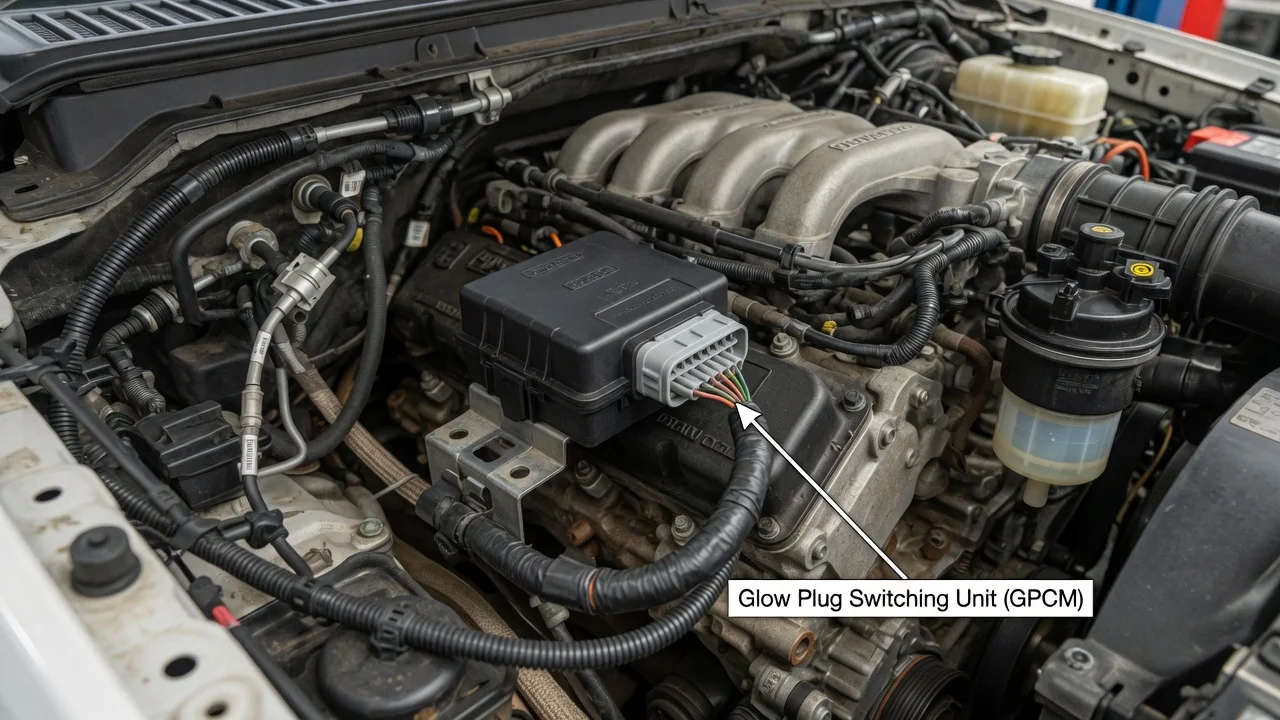
If you are looking for the glow plug relay on a 6.0 Powerstroke, you will not find the simple relay used on the older 7.3. Ford replaced it with a glow plug control module, usually called the GPCM, which switches power to all eight glow plugs and reports circuit faults to the engine computer. This guide explains how to identify the module, how it works, what changes the diagnosis, and what to check before buying parts.
Where the 6.0 Glow Plug Relay Actually Is
The 6.0 Powerstroke, used from 2003 to 2007 in Super Duty trucks, the Excursion and E-Series vans, uses a glow plug control module instead of a conventional relay. On Super Duty pickups and cab-chassis trucks, the module is typically mounted on the driver-side frame rail below the cab, outside the engine compartment. It is a rectangular box with harness connectors and a heavy-gauge power feed. Because it sits on the frame, it is exposed to water, road salt and debris. Mounting positions differ on vans and some other body styles, so confirm the location for your specific chassis in service information before removing anything.
Owners call it a relay because it does the same basic job of switching high current to the glow plugs. The difference matters for diagnosis: the GPCM is not a plug-in relay that can be swapped with an identical part from the fuse box, and it contains monitoring electronics. Order a replacement by VIN or by the part number on the existing module, not by a generic relay description.
How the Glow Plug Control Module Works
The powertrain control module decides when glow plugs are needed, relying mainly on engine oil temperature. When it commands glow, the GPCM switches battery voltage to the plugs through the engine harness. In this V8 engine configuration, the plugs are split between two banks, and on each bank power passes through an under-valve-cover harness before reaching the individual plugs. The plugs may also stay on briefly after the engine starts to help reduce cold-start smoke and rough running. The wait-to-start lamp on the dash is timed separately, so the lamp going out does not prove the plugs actually heated.
Unlike a basic relay, the GPCM watches each glow plug circuit and reports problems to the engine computer. Individual cylinder circuit faults set codes in the P0671 to P0678 range, while module control and communication problems set codes such as P0670 and P0683. A code for one or two cylinders usually points to a plug, connector or harness on that circuit. Faults affecting every cylinder, or a communication code, put more suspicion on the module itself, its power feed or its wiring.
What Changes the Diagnosis
Temperature is the biggest variable. A warm engine may not command glow at all, so testing right after a drive can make a working system look dead. Checks need a cold-soaked engine. Battery condition matters too: the 6.0 runs two batteries, and glow plugs draw heavy current, so a weak battery or poor cable connection can reduce glow performance and cranking speed at the same time. Model year, chassis type and harness revisions can change connector layout and routing, which is why vehicle-specific wiring information is worth having.
Not every hard start on this diesel is a glow plug problem. The 6.0 uses hydraulically actuated injectors fired by high-pressure engine oil, so low injection control pressure, low fuel pressure from the frame-mounted fuel pump, a restricted fuel filter or a failing injector can produce similar complaints. The glow system mainly affects cold starts, cold idle quality and white smoke. A hard start on a fully warm engine points elsewhere. Fuel additives are not a proven fix for a glow circuit fault or a mechanical fuel system problem.
Practical Checks for Owners
Start with a scan tool that can read Ford diesel codes and note which cylinders are flagged. Then inspect the module on the frame rail for corrosion, cracked housings, loose connectors, green or white residue on terminals and chafed wiring along the rail. Check the related fuse and the battery feed for a clean, tight connection. Disconnect both batteries before unplugging the module connectors, because the power feed carries high current.
To confirm operation, test on a cold engine with the key on. A meter at the module output or an inductive amp clamp on the glow plug harness can show whether the module is energizing the circuits, but compare your readings with specifications from service information rather than guessing at normal values. If only one cylinder is reporting a fault, focus on that plug and the under-valve-cover harness before blaming the module. Glow plug removal on this engine can be difficult, and a seized or damaged plug can turn a simple job into cylinder head work.
If you also suspect a fuel problem, do not loosen fuel or oil fittings to look for flow, especially on a running or recently run engine. Fuel pressure should be checked with a proper gauge at the designated test port following the service procedure. A visual leak check for wet spots, diesel odor or oil seepage around the fuel filter housing and lines is a safe first step.
Limitations and When to Get Help
Module location, connector pinouts and test values vary with build date and chassis, so use VIN-specific service information for exact procedures. A trouble code identifies a circuit, not a failed part, and some checks require a scan tool that can display glow plug data or command the module. Without that information, replacing the module, plugs or harness is guesswork.
Professional help makes sense when a glow plug is seized, when an under-valve-cover harness must be replaced, when communication codes persist after checking power and ground, or when a no-start continues on a warm engine. In those cases the cause may involve injection control pressure, injectors or the fuel supply rather than the glow system, and a shop with diesel diagnostic equipment can separate those faults safely.