2009 Saturn Outlook oil pressure low stop engine warning
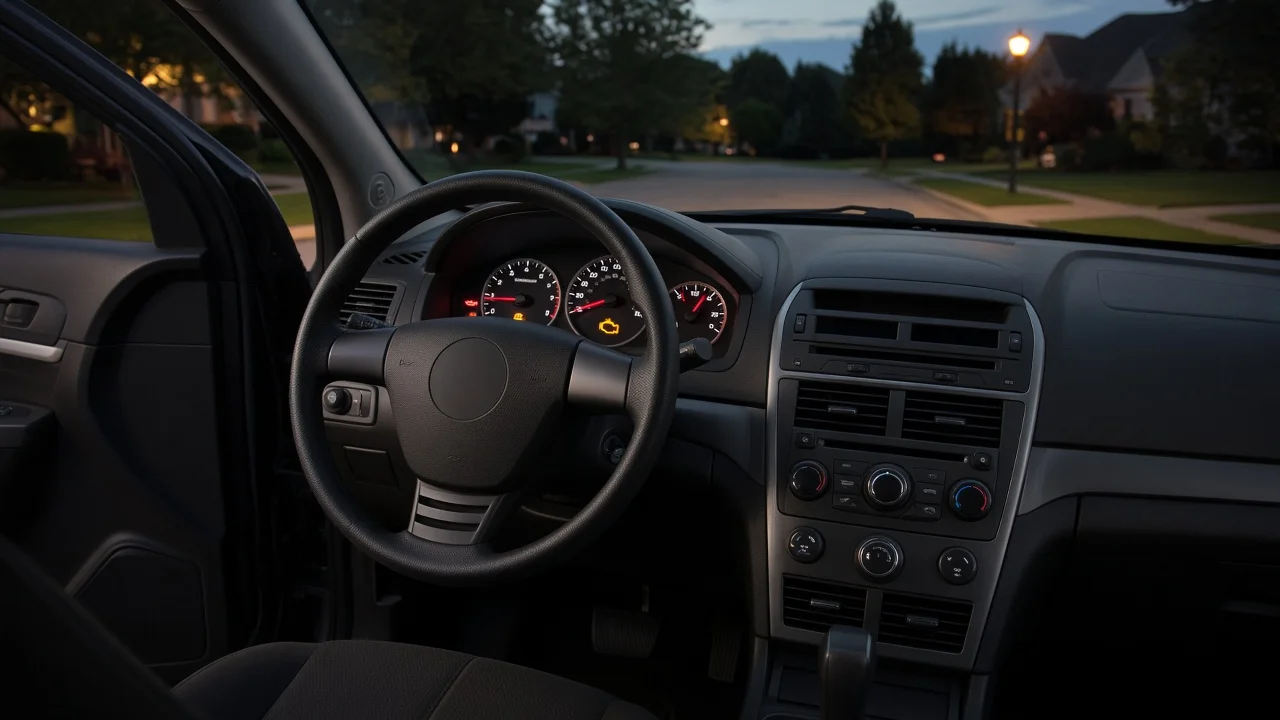
A “2009 Saturn Outlook oil pressure low stop engine” message is an urgent indication that the powertrain is not maintaining the oil pressure needed to protect rotating and sliding surfaces. On this Lambda-platform crossover, the warning usually appears on the driver information display and is paired with an audible chime or reduced power behavior. Because lubrication also cools critical parts, continued operation can quickly turn a minor oil-delivery fault into bearing or timing-chain damage. Treating the alert as an instruction to pull over safely and shut the engine off is the first step toward preserving the 3.6L V6.
Essential answer
The essential answer is that this message means the engine control system has received a signal showing oil pressure below the threshold considered safe for continued driving. It does not by itself prove which component failed. The cause may be a low oil level, an incorrect lubricant specification or fill quantity, a clogged pickup screen, a failing oil pump, a restricted filter, or a faulty sending unit. Stopping the engine promptly prevents lubrication loss from becoming a much larger internal failure.
The warning differs from a simple oil-change reminder. Instead, it reflects a live or stored low-pressure condition serious enough to command an immediate stop. On the Saturn Outlook, a normal level check should be performed on level ground after the engine has been off briefly. If the dipstick is full and the oil appears clean, the concern may involve a sensor circuit, internal leakage, or cold-start oil viscosity. The message should be investigated before the vehicle is driven again.
Diagnosing a problem
Begin with the dipstick and a visual check for obvious leaks beneath the engine, around the filter, and near the oil pan. A low reading often explains the warning, but adding oil does not solve the underlying leak or consumption. If the level is correct, note whether the alert appears only when the engine is hot, only at idle, or during the first start of the day. Each pattern points toward a different possible cause, such as heat-thinned oil, a weak pump, or a sending unit affected by engine load.
Because manufacturer-dependent fault codes vary by model and calibration, a stored code should be treated as evidence to investigate rather than a part replacement authorization. A scan tool may reveal a pressure-circuit trouble code, but a technician still needs to verify actual oil pressure mechanically. If the engine is noisy or the warning returns immediately after the vehicle is restarted, avoid driving it. Towing to a repair facility is a more practical next step than risking bearing or timing-chain wear.