Acadia / Traverse / Outlook Oil Pressure Low – Stop Engine
A “low oil pressure – stop engine” warning on a 2008 GMC Acadia, 2009 Chevy Traverse, or 2009 Saturn Outlook is an urgent alert, not a routine reminder. These three Lambda-platform crossovers share similar lubrication system designs, so the message often points to the same underlying conditions. Oil pressure is what keeps critical bearing surfaces separated under load. When the driver information center displays this command, it means the powertrain control system has received a signal indicating that pressure may be insufficient to protect the engine at that moment. The correct first response is to find a safe place to pull over and shut the engine off, because continued operation can turn a repairable oiling fault into severe internal wear.
Essential answer
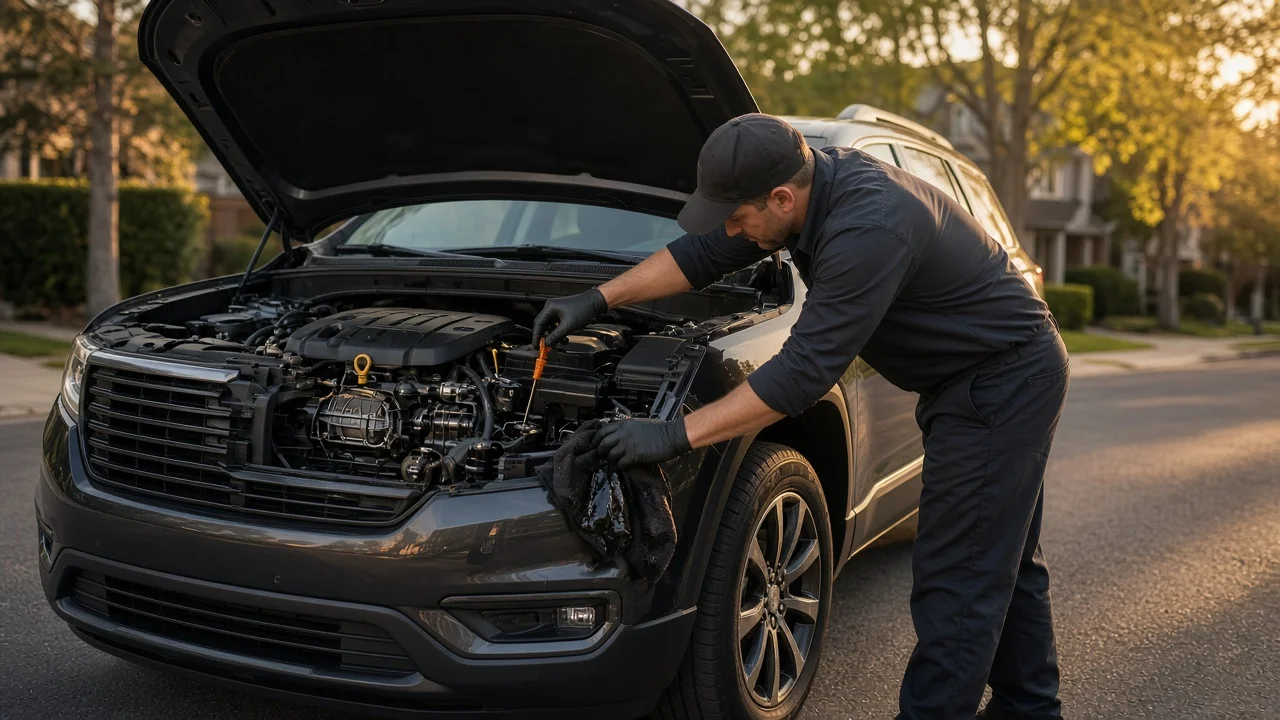
The essential answer is that this warning should be treated as a hard stop condition until the oil level and pressure are checked. On these vehicles, the alert commonly appears when the oil pressure sender reports a value below a calibrated threshold at a given rpm and temperature. A low oil level is the most straightforward trigger because the pickup tube can draw air instead of liquid during cornering, braking, or acceleration. The level check must be performed on level ground with the engine off, using the dipstick after the oil has had a moment to drain back into the pan. If the dipstick shows the crankcase is significantly below the safe crosshatch area, topping up with the correct lubricant specification may resolve the immediate warning.
Beyond the fluid level, the alert can be caused by a failing oil pressure switch, a partially blocked pickup screen, excessive bearing clearance, a worn oil pump, or oil that has thinned beyond its intended viscosity. A fault code or gauge reading is evidence to interpret, not proof that one component has failed. Manufacturer-dependent codes may require vehicle-specific confirmation because the same warning can be triggered by different calibration values across model years and engines. Without supporting test data, no exact part can be declared the sole cause. The safe next step is to avoid restarting or revving the engine and instead have the vehicle towed or diagnosed where actual oil pressure can be compared with the electrical signal.