Replace 2005 Honda Accord rear drum brakes
The short answer
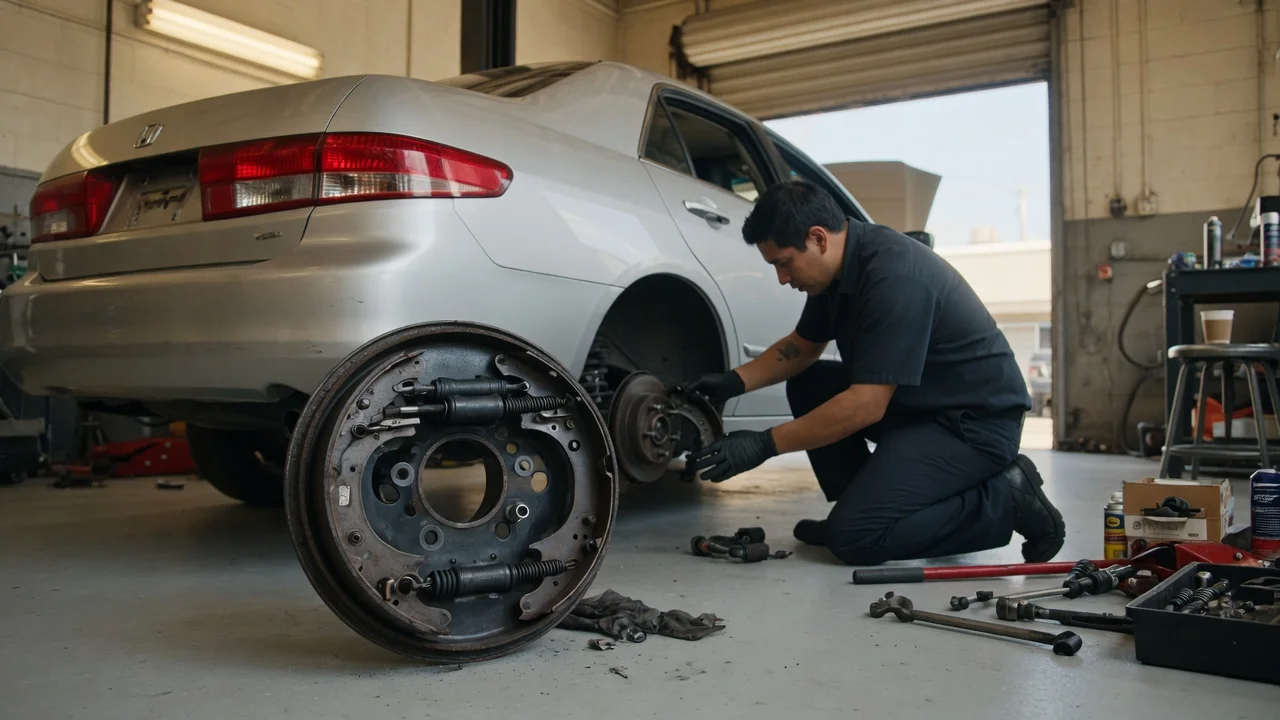
Replacing the rear drum brakes on a 2005 Honda Accord is a routine job: you remove the drum, replace the brake shoes and usually the return and hold-down spring hardware, inspect or replace the drums and wheel cylinders, then adjust the shoes and check the parking brake. The main qualification is that not every 2005 Accord has rear drums. Before buying parts, confirm which rear brake system your car uses.
Does your 2005 Accord have rear drums?
The 2005 Accord belongs to the seventh generation, sold from the 2003 to 2007 model years. In that generation, rear brake hardware varied by trim and engine. Commonly cited fitment for the North American market places rear drum brakes on lower four-cylinder trims, such as the DX and LX sedans, while V6 models, the Hybrid and higher four-cylinder trims such as the EX used rear disc brakes. No verified fitment table was supplied for this article, so treat this as a general guide, not a definitive list. Coupes and cars from other markets may differ.
The reliable check is visual. Look through the spokes of a rear wheel. A flat, exposed rotor with a caliper clamped over it means disc brakes. A closed, bell-shaped drum with no visible caliper means drum brakes. A parts retailer's fitment lookup by VIN or exact trim can confirm the correct shoe and drum part numbers.
What a rear drum brake system includes
In a drum brake, curved brake shoes inside a rotating drum are pushed outward against the drum's inner surface to create friction. These terms come up during the job:
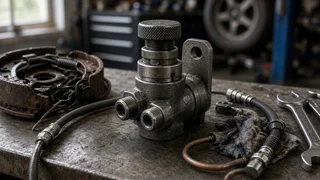
Brake drum: the cast-iron housing that turns with the wheel and provides the friction surface. Brake shoes: the curved steel pieces with friction lining that press against the drum. Wheel cylinder: a small hydraulic cylinder that pushes the shoes outward when you press the brake pedal. Return springs and hold-down springs: hardware that retracts the shoes and keeps them seated against the backing plate. Self-adjuster: a mechanism that takes up clearance as the linings wear, so pedal travel stays consistent. Parking brake linkage: on drum-equipped Accords, the parking brake acts on the rear shoes through a lever and cable.
What the job typically involves
The following outline describes a typical rear drum brake service. It is not a substitute for the factory service manual. Torque values, minimum lining thickness and maximum drum inside diameter were not supplied for this article and must come from the manual or the specification cast into the drum.
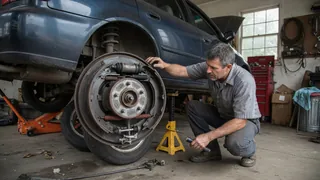
Secure the car on level ground, chock the front wheels, release the parking brake, and support the rear on jack stands. Remove the rear wheel and the drum. A drum that has sat for years may be stuck to the hub or held by worn shoes, and backing off the self-adjuster or gently freeing the drum may be needed. Photograph the shoe and spring layout before you take anything apart, and work on one side at a time so the other side stays assembled as a reference. Remove the springs, shoes, adjuster and parking brake connection, and inspect the wheel cylinder for fluid leaks or torn dust boots. Clean the backing plate and apply a small amount of brake-specific lubricant to the shoe contact points, keeping the friction surfaces free of grease. Check the drum's friction surface for scoring, glazing or wear beyond the stamped limit, and replace or resurface it as needed. Install the new shoes and hardware, set the adjuster, refit the drum, and confirm the wheel turns with only slight drag. If you opened the hydraulic system, for example to replace a wheel cylinder, bleed the brakes using the fluid type specified on the reservoir cap or in the owner's manual. Pump the pedal to seat the shoes, check parking brake operation, and road-test at low speed before normal driving.
Parts to replace together
Shoes are replaced as an axle set, meaning both rear wheels together, so braking stays balanced. A hardware kit with new springs and clips is a common add-on because old springs can weaken from heat. Drums and wheel cylinders are replaced based on condition. A leaking wheel cylinder contaminates new linings and should be dealt with during the same job. Whether a drum can be resurfaced depends on how much material remains compared with its marked maximum diameter.
Points that need extra care
Brake dust can contain hazardous material, especially on older or unknown-origin linings. Clean components with brake cleaner instead of blowing them off with compressed air. Reassembly errors such as swapped springs, a reversed adjuster or a misrouted parking brake connection can reduce braking performance or cause dragging. If the pedal feels soft, the car pulls under braking, or the parking brake does not hold after the job, have the system inspected before driving further.
Information gaps to fill before starting
This article does not include verified part numbers, torque specifications, lining wear limits, drum dimensions, labor time or cost estimates for the 2005 Accord, because none were supplied. Get these from the Honda service manual for your exact trim, or from a reputable parts catalog matched to your VIN, before you begin.