How Does a Drum Brake Work?
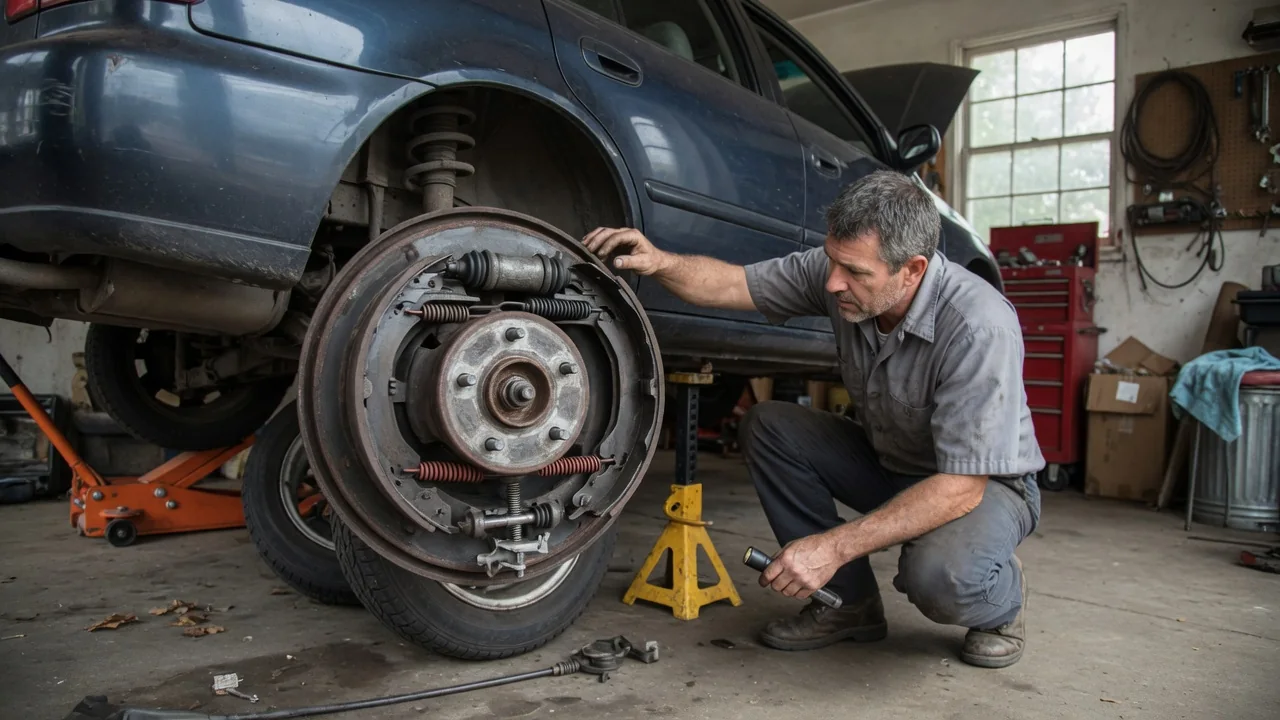
How does a drum brake work? Instead of clamping a disc from the outside, it pushes curved brake shoes outward against the inside of a rotating drum that turns with the wheel. Hydraulic pressure from the brake pedal drives that movement, and friction between the shoe linings and the drum turns the vehicle's motion into heat, slowing the wheel.
Wheel cylinder
The wheel cylinder is the small hydraulic component that converts pedal effort into shoe movement. It bolts to the backing plate, the stationary steel plate behind the drum, and typically contains pistons sealed by rubber cups. When the driver presses the brake pedal, the master cylinder sends pressurized fluid through the lines into the cylinder bore. The fluid forces the pistons outward, and each piston pushes against the end of a brake shoe, spreading the shoes apart until their linings touch the drum's inner wall.
When the pedal is released, fluid pressure drops and return springs pull the shoes back toward the center, pushing the pistons into the cylinder again. That retraction is what lets the wheel turn freely between stops. From outside, the cylinder is mostly hidden, though its brake line fitting and bleeder screw are usually visible on the back of the backing plate. Designs vary by vehicle: some use one double-ended cylinder per wheel, while others use different arrangements, so layout should be confirmed for the specific model.
Friction surface
The friction surface in a drum brake is a pair of working faces: the lining material bonded or riveted to each curved shoe, and the machined inner circumference of the drum. The drum is commonly cast iron, chosen because it tolerates heat and wears predictably. When the shoes expand, the linings rub against this inner wall across a broad arc. That contact resists the drum's rotation, and because the drum is fastened to the wheel hub, the wheel slows with it.
Drum geometry adds a helpful effect. The rotation of the drum tends to drag the leading shoe harder into the surface, which multiplies the applied force without extra pedal effort. Engineers call this self-energizing action, and how strongly it occurs depends on how the shoes are anchored. With the drum removed, a healthy surface looks smooth and evenly gray, while deep grooves, heat discoloration, glazed shiny linings, or fluid contamination indicate conditions that reduce grip and deserve professional evaluation.
Service context
Servicing drum brakes differs from servicing discs because the working parts are enclosed. A technician generally has to remove the wheel and pull the drum to see the shoes, springs, wheel cylinder, and adjuster. Some backing plates include a small inspection opening that allows a limited look at lining thickness, but a complete assessment requires the drum off. The enclosed design also traps brake dust inside, which is why shops clean these assemblies with methods that avoid blowing dust into the air.
As the linings wear, the shoes must travel farther to reach the drum, so most systems include a self-adjuster that takes up the growing gap. If the adjuster seizes, pedal travel can increase. Typical service work includes checking lining thickness, measuring the drum's inside diameter against the manufacturer's limit, inspecting the wheel cylinder for seepage, and examining springs and hardware. Wear limits, adjustment methods, and inspection schedules differ between vehicles, so the service information for the specific model governs the work.
Everyday Use and Observations
In daily driving, drum brakes usually work without drawing attention. Many passenger cars and light trucks carry them on the rear axle, where braking loads are lower, paired with discs up front. The parking brake often uses the same rear shoes: a cable pulls a lever inside the drum that mechanically spreads the shoes against the drum, independent of hydraulic pressure. That is why a parking brake lever or pedal that travels farther than it used to can hint at shoe wear or adjustment needs.
Drivers can notice several signs from the seat. A scraping or grinding sound from the rear may suggest linings worn down toward the metal shoe. A pulsation felt during stops can point to a drum that is no longer round. A low or soft pedal, or dampness on the inside of a rear tire or backing plate, may indicate a leaking wheel cylinder. A rear wheel that grabs or locks easily sometimes follows contaminated linings. Each symptom is a clue rather than a diagnosis.
Limits and Next Steps
The main limitation of a drum brake is heat. Because the friction happens inside an enclosed drum, heat escapes more slowly than from an exposed disc. During long descents or repeated hard stops, the drum can expand away from the shoes and the linings can lose grip, a condition known as brake fade, felt as a longer pedal and weaker response. Water that gets inside can also reduce braking temporarily until the surfaces dry. These traits explain why front axles commonly use discs.
Understanding the principle helps a driver describe symptoms accurately, but it does not replace inspection. Brakes are a safety system, and the springs, adjusters, and hydraulic parts inside a drum must be assembled correctly to work as designed. Anyone noticing noise, pulling, a changed pedal feel, a weak parking brake, or a brake warning light should have the system examined by a qualified technician. The owner's manual and the manufacturer's service information identify the specific design, wear limits, and maintenance requirements for a given vehicle.