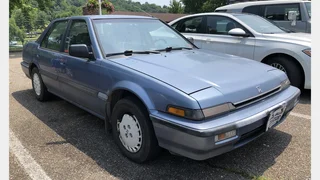
Japanese Honda Accord

The Japanese Honda Accord raises a common question among American shoppers: what, exactly, is this car, and how does it differ from the Accord sold at a local dealership? The answer is not a separate model but a market specification, a vehicle built by Honda for its home market and later imported elsewhere. Understanding that distinction matters because a Japanese-market Accord can differ in equipment, trim level, powertrain configuration, body style, and even model generation from the familiar US version. Those differences shape parts availability, feature expectations, and the way an owner should evaluate a specific vehicle's history before purchase.
Essential answer
A Japanese Honda Accord is fundamentally the same nameplate applied to a vehicle produced for the Japanese domestic market rather than one originally built to US standards. The Accord has spanned multiple model generations, and within each generation Japan could receive body styles, powertrain configurations, or trim levels that differ from the American lineup. For example, a Japanese-market sedan or wagon may carry a smaller-displacement engine or equipment package that was never offered through US Honda dealers, so the phrase should be understood as a regional specification rather than a distinct standalone model.
In practical terms, the distinction is useful when comparing an imported vehicle, a classified listing, or an owner's description. A car described as a Japanese Honda Accord may reflect a right-hand-drive layout, metric instrumentation, or model-year differences tied to Japan's release schedule. These are variations in market specification, not evidence that the vehicle is unrelated to the Accord sold in North America. Buyers and owners should therefore confirm the specific model year, body style, and trim level to understand what the Japanese-market version actually includes and how it compares with the US-market car they know.