1.9 TDI Engine Oil Leak: Likely Sources and How to Narrow Them Down
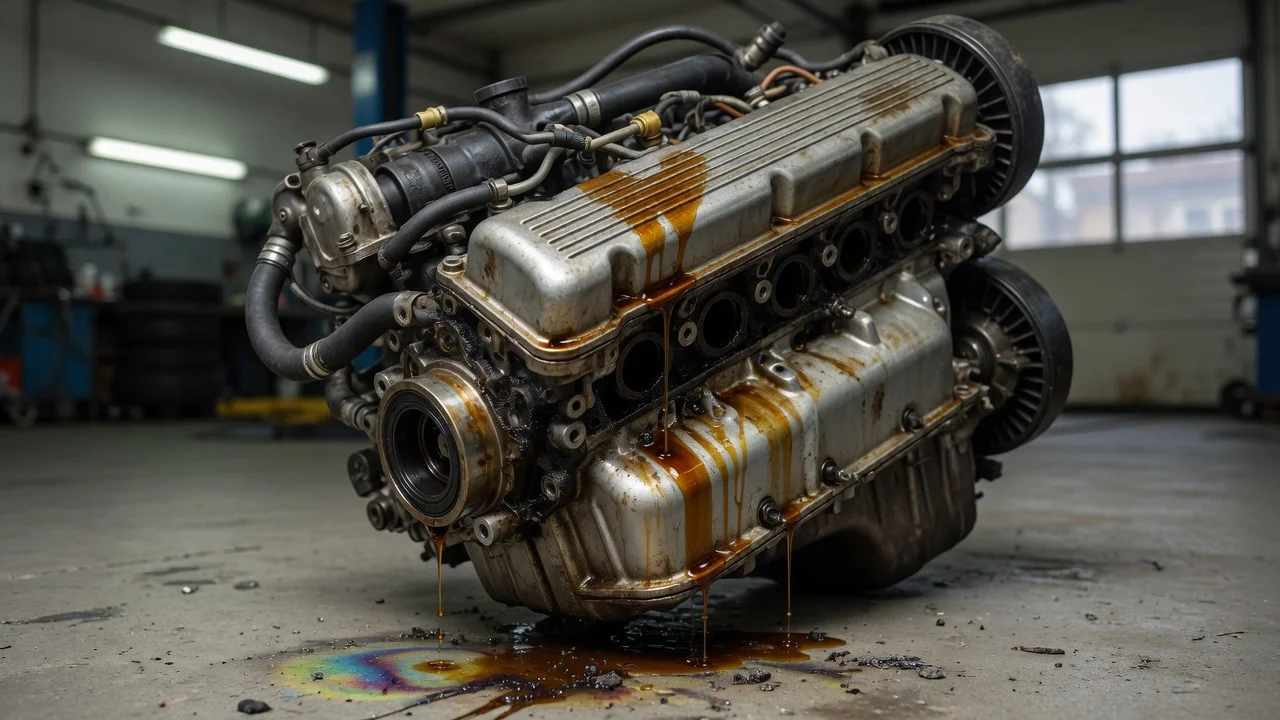
An oil leak on a 1.9 TDI usually comes from a gasket or seal on the engine itself, not from a single known defect. The most likely places differ between engine versions, so the practical answer is to identify which 1.9 TDI you have and then trace the oil to the highest point where it appears. TDI stands for Turbocharged Direct Injection. It is the Volkswagen Group's name for its turbocharged diesel engines, and the 1.9-litre version was used across many VW, Audi, SEAT and Skoda models over a long production period.
The direct answer
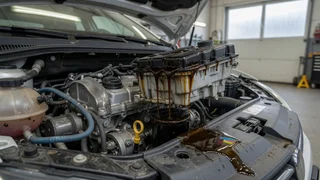
When a 1.9 TDI leaks oil externally, the cause is most often one of these: an ageing gasket (valve cover, oil filter housing or oil cooler, sump), a shaft seal (crankshaft or camshaft), a fitting or hose in the turbocharger oil supply and return, or a sensor or plug that has started to weep. Which one is most likely depends on the engine version, its mileage and its maintenance history. No single source applies to every car, and oil often runs down from higher up, so the place where drips collect is frequently not where the leak starts.
This guide covers oil escaping from the outside of the engine. Two other complaints are often described as a leak but have different causes. The first is oil consumption, where the level drops but nothing drips. The second is oil inside the intake pipes or intercooler, which can come from the crankcase ventilation system or the turbocharger and which a check under the car will not find.
Why the engine version matters
The 1.9 TDI name covers several generations and many engine codes. Broadly, earlier versions use a distributor-type injection pump, often called a VE pump, which is driven by the timing belt. Later versions use the PD system (Pumpe Düse, or unit injector), where each injector has its own pump element driven by the camshaft. On PD engines a tandem pump, which combines the fuel supply pump and the brake vacuum pump, is mounted on the cylinder head and driven by the camshaft. That adds another gasket and seal joint near the top of the engine that distributor-pump engines do not have in the same form.
Component layout, part numbers and service procedures vary with model year, market, vehicle platform and engine code. Before ordering parts, check the engine code. It is usually printed on a label in the vehicle and stamped on the engine. The parts and repair information for that code is the authority for your car.
Common leak points and how they usually show up
Leak point | Where oil typically appears | Notes; Valve cover (cam cover) gasket | Around the top edge of the cylinder head, then running down the sides | A frequent source on older engines. Also check the oil filler cap seal at the same time. Tandem pump gasket or seal (PD engines) | On the cylinder head near the pump, below its mounting | Applies to PD versions only. Do not confuse this with diesel seeping from the pump's fuel connections. Camshaft and crankshaft front seals | Behind the timing belt covers, sometimes flung around the belt area | Oil contaminating the timing belt is a serious concern because it can shorten belt life. Rear crankshaft seal (rear main seal) | Where the engine meets the gearbox, dripping from the bell housing joint | Often confused with gearbox oil leaks. Smell and colour help tell them apart. Oil filter housing and oil cooler gaskets | Around the filter housing and cooler on the side of the block | Some designs place the oil cooler between the housing and the block, which adds seal joints. A failed internal cooler seal can mix oil and coolant. Sump (oil pan) gasket or sealant joint and drain plug | Along the lower edge of the engine and at the drain plug | Check the drain plug washer first, especially after a recent oil change. Turbocharger oil feed and return lines | Around the turbo and its pipe connections, on the hot side of the engine | Oil here can burn and smoke on hot parts, so it should be dealt with promptly. Oil pressure switch or sender | Near the oil filter housing | A small part that is easy to overlook.
Crankcase pressure can make several seals leak at once
Excess pressure inside the crankcase can push oil past seals that are otherwise in fair condition. Two causes are worth ruling out. One is blow-by, meaning combustion gases slipping past the piston rings. The other is a restricted crankcase ventilation system, sometimes called the breather or PCV (positive crankcase ventilation) system. If oil is appearing at several points at once, or new seals start leaking again soon after replacement, check the ventilation hoses and valve. Consider having crankcase pressure assessed before replacing more gaskets.
How to trace the leak before replacing parts
Confirm the fluid is engine oil. Diesel, gearbox oil, power steering fluid and coolant can all be mistaken for it. Degrease the engine and surrounding areas so you start from a clean baseline. Drive briefly, or let the engine idle to operating temperature, then inspect from above and below with a good light. Follow wet trails upward. The leak is usually at the highest point where fresh oil appears. For slow or hard-to-find leaks, add an oil-compatible UV dye and inspect with a UV lamp after driving. Check the oil level regularly and note how quickly it falls. This shows whether the leak is minor seepage or a significant loss.
When it needs prompt attention
A light film of seepage on an older engine is often monitored rather than repaired straight away. Some situations warrant prompt action, though: Oil dripping onto the exhaust or turbocharger, which can cause smoke and a fire risk. Oil reaching the timing belt. Any oil loss fast enough to lower the level noticeably between checks. Oil and coolant mixing, which suggests an internal oil cooler problem rather than an external leak. An oil pressure warning light, in which case stop the engine and do not keep driving.
What this guide cannot tell you
No vehicle-specific evidence was supplied for this article, so it does not give torque figures, sealant types, part numbers, repair times, costs or acceptable consumption rates. It also does not say which leak point is statistically most common for a particular model or engine code. Use the service information for your exact engine code for those details, or ask a technician who can inspect the car in person.