1.9 TDI Engine Oil Capacity: What the Figure Depends On
The short answer
There is no single oil capacity that covers every 1.9 TDI. The name refers to a family of Volkswagen Group turbo-diesel engines fitted to many Volkswagen, Audi, SEAT and Skoda models over a long production run. These engines came in several versions, identified by engine code, including earlier distributor-pump engines and later Pumpe Düse (unit injector) engines. They were also installed both transversely and longitudinally, depending on the vehicle. Sump design, oil filter housing and installation can differ between applications, so the documented capacity can differ too.
Figures circulated for common passenger-car applications generally fall somewhere between 4 and 5 litres including the filter. That range has not been verified against manufacturer documentation for this article, and it should not be used as the fill quantity for a specific car. The authoritative figure is the one listed for your vehicle and engine code in the owner's manual or the manufacturer's service data.
What changes the figure
Engine code: different 1.9 TDI versions can carry different specified capacities. Vehicle and installation: the same engine family fitted to different models may use a different sump or layout. With or without filter change: published capacities usually assume a new filter, which holds some oil. Changing oil without replacing the filter needs slightly less. Model year and market: specifications can be revised over a production run or differ between regions.
How to confirm the correct capacity for your car
Find the engine code. On Volkswagen Group cars it is commonly printed on the vehicle data sticker, often found in the service booklet or the spare wheel well, and it is also stamped on the engine itself. Check the owner's manual or official service data for that engine code and vehicle. Use the capacity figure listed there. Check the required oil specification at the same time. The approved specification is not the same for every 1.9 TDI version. Confirm it from the same documentation rather than assuming.
Filling safely when you are unsure
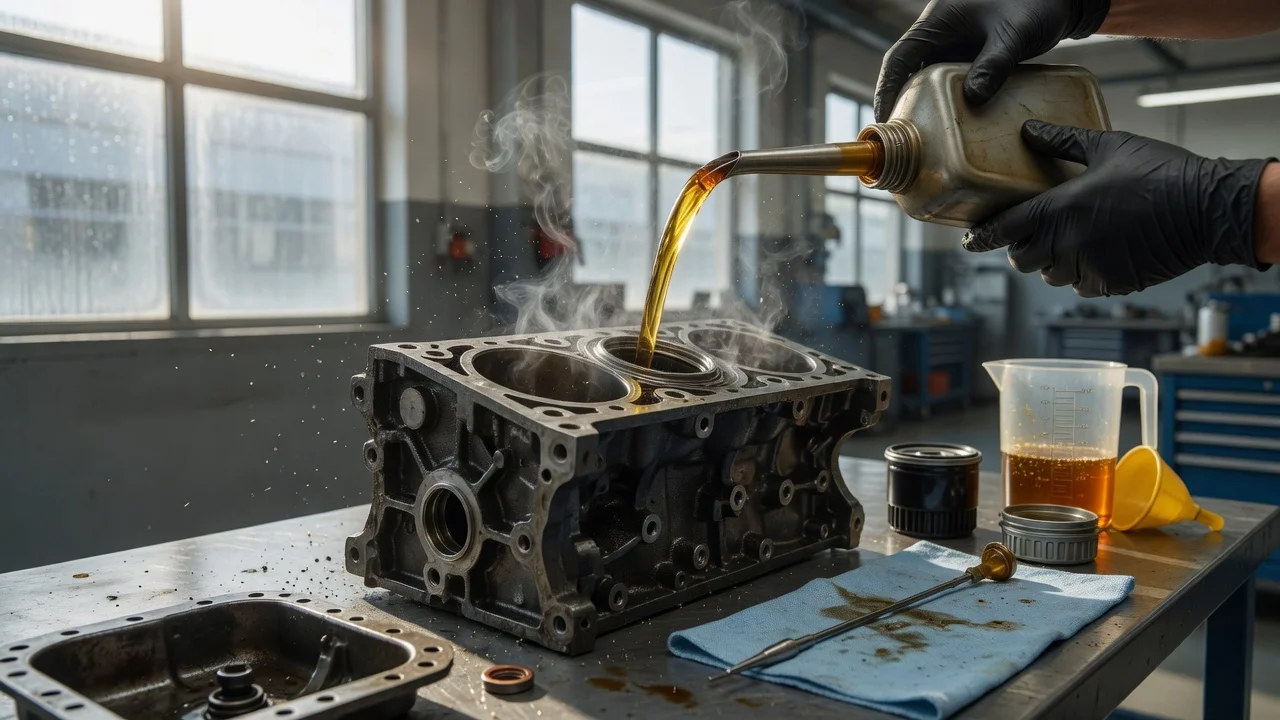
The dipstick is the final check, whatever the documented capacity says. A practical approach is to add somewhat less than the expected amount and run the engine briefly so the new filter fills. Then switch it off, wait a few minutes for oil to drain back to the sump, and check the level on level ground. Top up in small amounts until the level sits within the marked range, without exceeding the maximum mark. Overfilling can be as harmful as running low, so stop at the upper mark rather than emptying a full bottle out of habit.
Evidence gap
No manufacturer specifications or test data were supplied for this article. For that reason it does not list exact capacities by engine code or model. Treat any single number quoted for 'the 1.9 TDI' as approximate until you have matched it to your engine code and vehicle in official documentation.