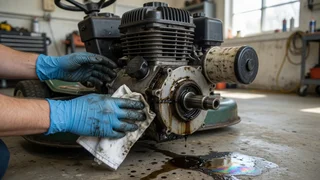
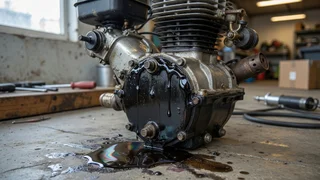
Kawasaki 25 hp Engine Oil Leak: Likely Sources and How to Narrow Them Down
The short answer
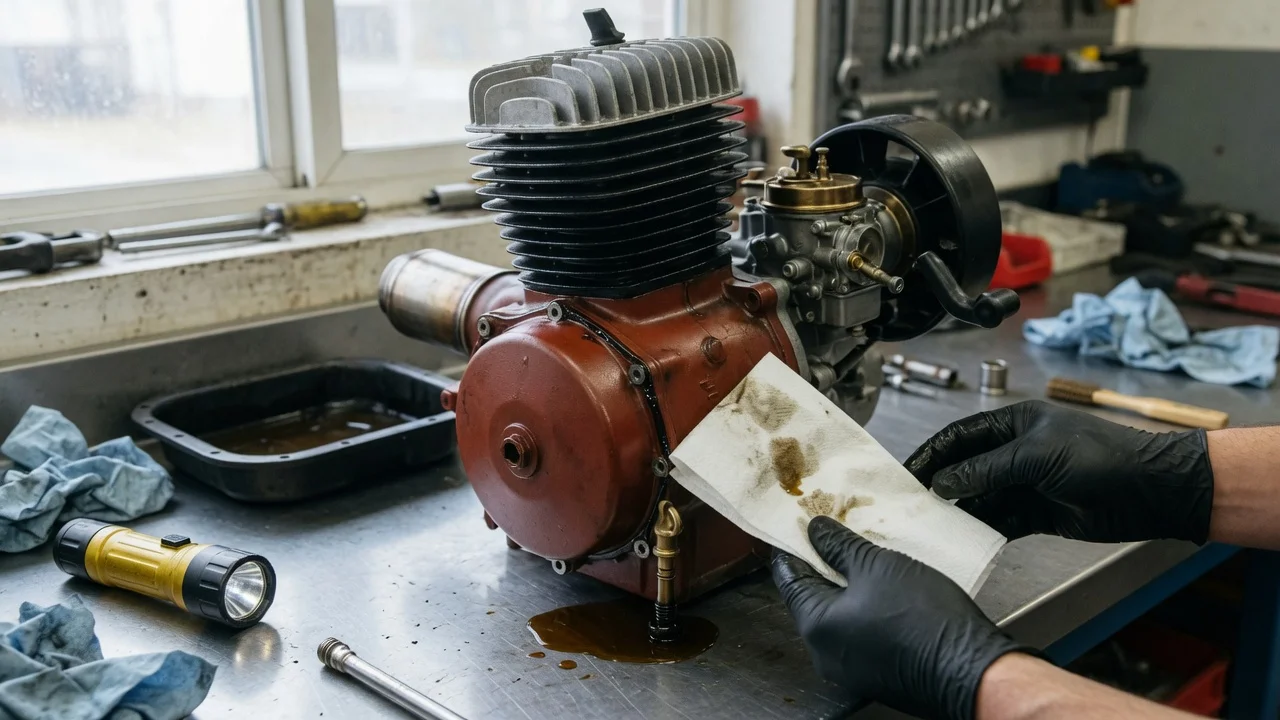
When a Kawasaki engine rated around 25 horsepower leaks oil, the cause is usually one of a small number of places. The most common are a loose or poorly seated oil filter, a drain plug or drain valve that is not sealing, and a deteriorated valve cover gasket. Less often, the cause is a worn crankshaft seal, a leaking oil pressure switch or sensor, a damaged dipstick tube seal, or a head gasket failure. Oil that appears to come from the air filter area usually points to the crankcase breather or an overfilled crankcase rather than a failed gasket. The reliable way to find the source is to clean the engine, run it briefly, and trace fresh oil back to its highest point.
Which engine this applies to
In the 25 hp range, Kawasaki engines are almost always air-cooled V-twin small engines used on riding mowers, zero-turn mowers and commercial turf equipment. They are not car engines. Kawasaki builds several engine families in roughly this power class, and the exact rating, oil filter location, breather design and fittings differ by model, series and equipment manufacturer. Some installations also add an oil cooler or remote filter mount. The model and specification number stamped on the engine, usually on a label or the blower housing, identifies the exact configuration. Use that number with the engine owner's manual or service manual for torque values, oil capacity and part numbers. This guide does not supply those figures, because they vary by engine and were not part of the available source material.
Common leak points and what they look like
Location | Typical sign | Common cause; Oil filter | Oil on the filter body or dripping beneath it | Filter not tightened enough, old gasket left on the mount, or a damaged filter; Drain plug or drain valve | Drips at the lowest point of the crankcase, often after an oil change | Loose plug, worn sealing washer, or a drain valve that is not fully closed or capped; Valve (rocker) covers | Oily film around the cover edges on one or both cylinders | Hardened or compressed gasket, or uneven cover bolt tightness; Crankcase breather or air filter | Oil in the air filter housing, an oil-soaked filter, or oil around the intake | Overfilled crankcase, a fault in the breather system, or high crankcase pressure from internal wear; Oil pressure switch or sensor | Wetness around a small threaded sensor with a wire attached | Failed sensor or loose threads; Crankshaft seals | Oil spray beneath the engine or on the underside of the mower deck area | Worn or hardened seal at the output shaft or flywheel end; Cylinder head gasket | Oil seeping between a cylinder head and its cylinder | Gasket failure, often linked to overheating; Dipstick or fill tube | Oil around the tube base or cap | Damaged tube seal or cap not seated
How to find the source
Check the oil level first with the equipment on level ground. Overfilling is a common cause of oil pushing out through the breather and into the air filter. With the engine cool, clean the oily areas with a degreaser and let them dry so new oil is easy to see. Run the engine for a short period, then shut it off and inspect it with a light. Start at the highest wet point and work downward, because gravity and cooling airflow spread oil away from the actual leak. Inspect the air filter and its housing. Oil there points toward the breather or overfilling, not an external gasket. Check the filter, drain plug and any fittings disturbed during the most recent service, since leaks often begin right after maintenance. If the source is still unclear, a fluorescent oil dye and an ultraviolet lamp can help reveal small seeps.
When the leak points to a larger problem
External leaks at the filter, drain or valve covers are usually straightforward to fix. More persistent oil at the breather, combined with blue exhaust smoke, oil consumption or loss of power, can indicate internal wear that raises crankcase pressure. Worn piston rings are one possible cause. A suspected head gasket failure deserves the same caution. In these cases, a compression or leak-down test (a check of how well each cylinder holds pressure) gives a clearer picture than replacing gaskets alone. Keep running the engine only if the oil level stays within the dipstick range, because running it low on oil risks serious internal damage.
Gaps to be aware of
This guide does not give torque specifications, oil capacities, oil grades, part numbers or leak patterns tied to a specific model, because those details depend on the exact Kawasaki engine and equipment and were not available here. Confirm them against the engine's model and specification number. If the engine is still under warranty, have an authorized Kawasaki engine dealer inspect it before you take it apart.