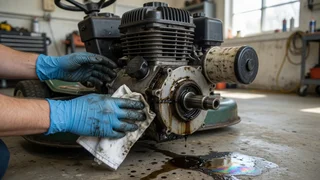
Kohler 27 hp engine oil leak
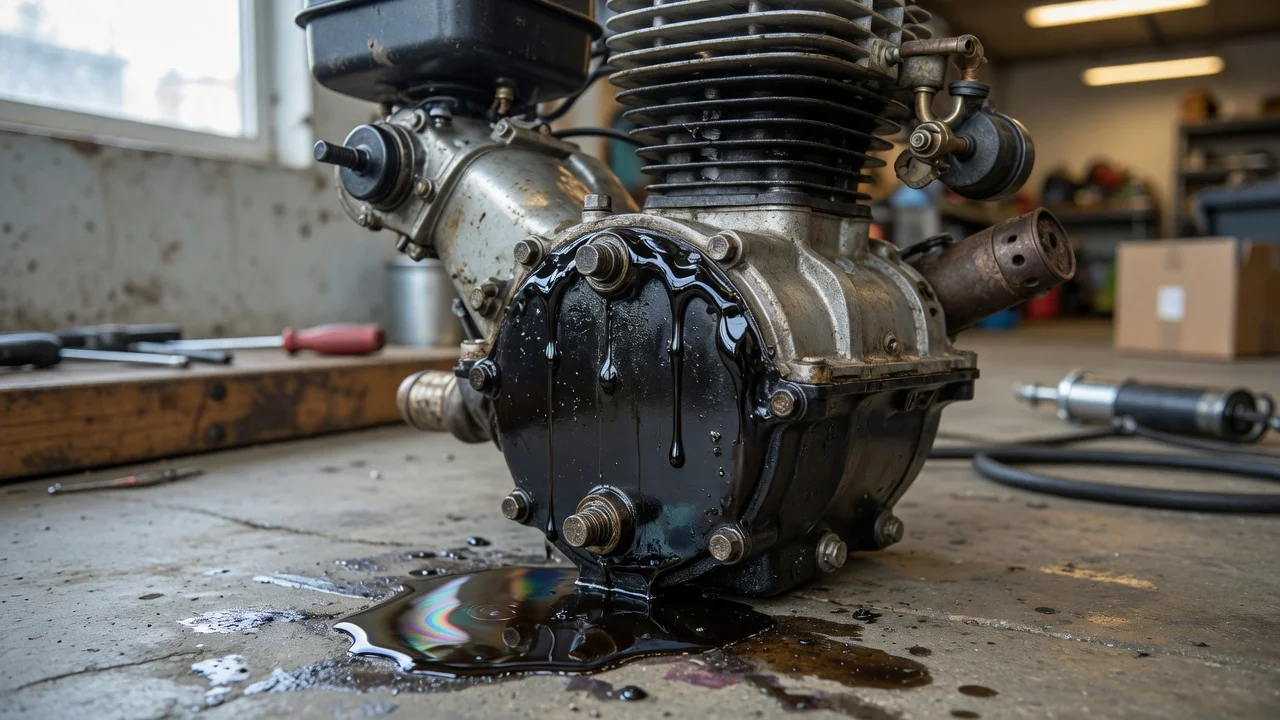
The short answer
Oil leaking from a Kohler 27 hp engine usually comes from one of a few places. These are the oil filter and its mounting area, the valve cover seals, the crankcase breather, the crankshaft seals, or the oil pan or closure plate seal. Overfilling the crankcase and excess crankcase pressure can also push oil out of joints that would otherwise stay dry. Clean the engine before diagnosing it. Then confirm the oil level and find the highest wet point. Oil runs down and gets blown around by cooling air, so the lowest oily spot is rarely the source.
What engine this covers
A 27 hp Kohler is an air-cooled small engine, typically a V-twin. It is mostly fitted to riding mowers, zero-turn mowers, lawn tractors and similar outdoor power equipment rather than cars or trucks. Kohler has sold engines near this rating in more than one product family and configuration. Horizontal and vertical crankshaft versions also exist. So the exact layout, seal type and parts depend on the specific engine. The model, specification and serial numbers on the engine label identify it. Use those numbers to get the correct service information and parts. This guide does not supply part numbers, torque values or oil capacities, because those vary by engine version.
First, confirm it is really a leak
Three different problems can look like a leak.
External leak: oil escaping from a seal, gasket, fitting or crack and wetting the outside of the engine. Oil in the air cleaner or intake: often points to the crankcase breather or excess crankcase pressure rather than a failed gasket. Oil consumption: the level drops but the outside stays dry. This suggests oil is being burned internally, for example past worn rings or valve guides. Blue-gray exhaust smoke is a common sign.
Also check that the fluid is engine oil. On mowers, hydraulic or transmission fluid from a hydrostatic drive can drip near the engine and be mistaken for engine oil. Fuel can also leave a wet residue, but it evaporates and smells of gasoline.
Common leak points to inspect
Location | What to look for | Notes; Oil filter and filter adapter | Wetness around the filter base or adapter | A loose filter, doubled or damaged filter gasket, or a leaking adapter seal. Check this first after any recent oil change. Drain plug or drain valve and hose | Drips at the drain point | A loose plug, damaged sealing washer or worn drain valve. Valve covers | Oil seeping at the cover edges on the cylinder heads | Seal material and method vary by engine version. Some use a gasket and some use a formed sealant. Crankcase breather | Oil in the air cleaner, intake or around the breather cover | A failed or clogged breather can push oil out and raise crankcase pressure. Oil pressure switch or oil sentry sensor | Wetness at the sensor threads or body | Fitted on some versions only. Dipstick tube and seal | Oil around the tube base | A loose tube or a worn seal. Crankshaft seals | Oil at the flywheel side or the output (PTO, power take-off) side of the crankshaft | Seals wear with age and can be damaged by debris or by excess crankcase pressure. Oil pan or closure plate | Oil along the joint between the main crankcase and the pan or plate | Usually needs more disassembly to repair. Oil cooler and lines | Wet fittings or cooler fins | Fitted on some versions only. Cylinder head joint | Oil or residue at the head-to-cylinder joint | Less common. Often comes with other symptoms such as low compression.
A practical way to find the source
1) Park on level ground, let the engine cool, and check the oil level with the dipstick using the method in the operator's manual. Drain to the correct level if it is overfilled. 2) Remove debris from the cooling shroud and engine surfaces, then degrease the oily areas so you start with a clean engine. 3) Inspect the oil filter, drain point, dipstick tube and any visible sensors. Recent service work is a frequent cause. 4) Run the engine for a short time, shut it off, and look for the first fresh oil to appear. Work from the highest wet point downward. A fluorescent dye made for engine oil and an ultraviolet lamp can help if the source is still unclear. 5) Remove the air cleaner and look for oil in the housing or element. Oil there points toward the breather or excess crankcase pressure. 6) If several seals are leaking at once, suspect excess crankcase pressure before replacing individual seals. Possible causes include a faulty breather, overfilling or internal wear. A compression or leak-down test can help assess internal wear.
Repair considerations
Some fixes need only basic tools and parts. Examples include tightening or replacing the oil filter, fitting a new drain plug washer and correcting the oil level. Valve cover resealing and breather replacement are moderate jobs. Their difficulty depends on how much shrouding and intake hardware must come off on your engine. Replacing a crankshaft seal on the output side may mean removing the clutch, pulley or other driven parts from the mower first. Separating the oil pan or closure plate is a larger job. Tighten fasteners to the factory torque values, use the correct gasket or sealant for your engine version, and fix any crankcase pressure problem first. Otherwise the new seal can fail again.
When to stop running the engine
Stop using the machine if the oil level drops below the safe range. Also stop if oil is reaching hot exhaust parts or there is heavy smoke. Running an air-cooled engine low on oil risks serious internal damage, and oil on a hot muffler is a fire hazard. If you cannot find the source, or the leak appears to come from internal wear or the main crankcase joints, consider having an authorized Kohler service dealer inspect it using the engine's model and serial numbers.
Information gaps
No model-specific Kohler documentation was supplied for this guide. It therefore does not state which product family your 27 hp engine belongs to or its oil capacity. It also omits torque specifications, part numbers, and whether your version uses gaskets or formed sealant at specific joints. Get those details from the service manual for your exact engine model and specification number.