Windshield Glass Removal: How It Works and Whether to Do It Yourself
The short answer
Removing a windshield means separating the glass from the vehicle body without damaging the frame opening, called the pinch weld (the metal flange the glass sits on). How that is done depends mainly on how the windshield is mounted. Most modern passenger vehicles use a bonded windshield, held in place by a bead of urethane adhesive that must be cut through. Many older vehicles, and some classic or commercial designs, use a rubber gasket that holds the glass in a channel and can be worked loose instead. Which method applies to your vehicle depends on its make, model and generation, so check the factory service information for your specific vehicle before starting.
Bonded windshields: the common modern case
On a bonded windshield, the general sequence is to remove the parts that cover or attach to the glass, cut the adhesive around the full perimeter, then lift the glass out of the opening. Exact steps vary by vehicle, but the work typically involves the following.
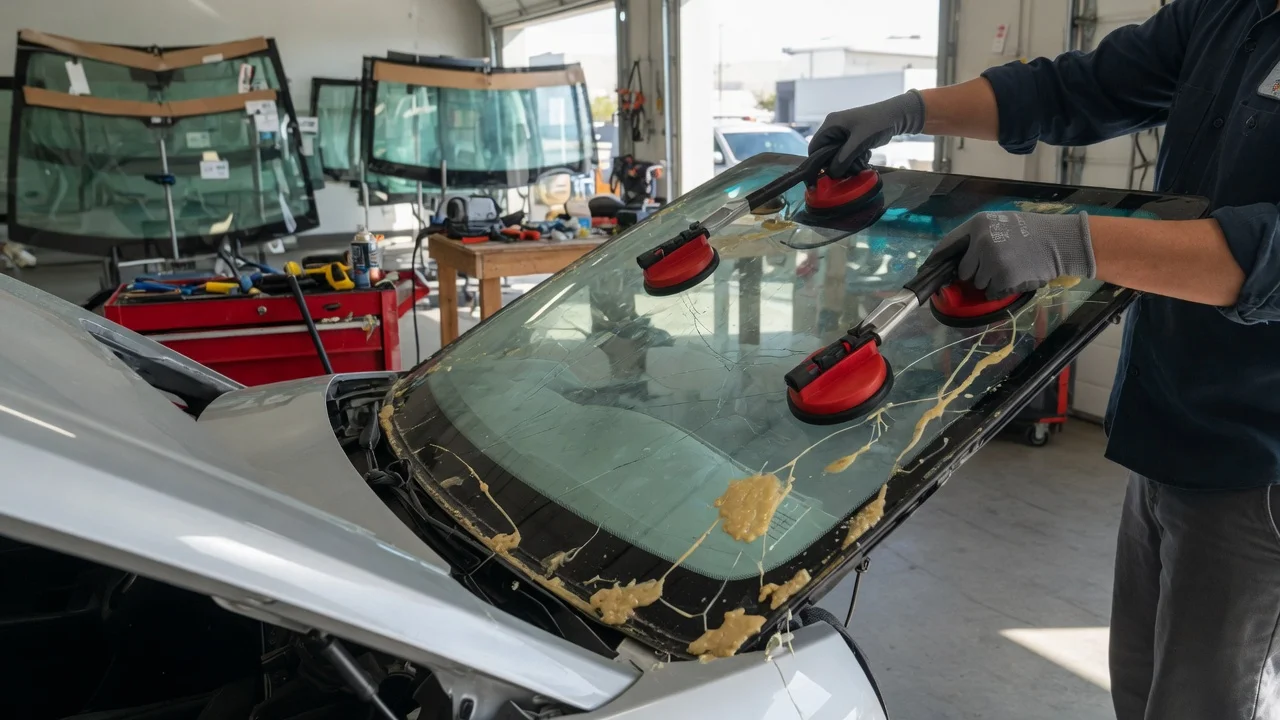
Remove the wiper arms and the cowl panel at the base of the windshield. Remove exterior moldings and, where fitted, interior A-pillar trim. Disconnect or detach items mounted to the glass, such as the rearview mirror, rain or light sensors, and forward-facing driver-assistance cameras. Cut the urethane bead around the entire edge of the glass. Lift the glass free, usually with suction-cup handles, and set it down safely.
Common cutting methods include a cold knife (a hand tool with a hooked blade pulled through the adhesive), wire cut-out systems that draw a steel or synthetic wire through the bead, and powered oscillating cutters. Laminated windshield glass is large and awkward to handle, so lifting it out is normally treated as a two-person job or done with a dedicated glass-handling aid.
Gasket-set windshields: older and classic vehicles
Where the glass sits in a rubber gasket, removal usually involves pulling out any locking strip or trim in the gasket, then breaking the seal between the gasket and the body and easing the glass and gasket out, often by pushing from inside the cabin while a helper supports the glass from outside. Aged gaskets are frequently hard and brittle, and they are commonly replaced rather than reused.
Qualifications that change the answer
Whether you intend to keep the glass matters. Cutting out a cracked windshield for replacement is more forgiving than trying to remove an intact windshield for reuse, which raises the risk of cracking the glass or chipping its edge.
On bonded designs, the windshield contributes to the strength of the cabin structure, and on many vehicles it also acts as a backstop for the passenger airbag. That makes correct preparation of the pinch weld and correct adhesive application during reinstallation a safety issue, not only a leak or noise issue.
Vehicles with a camera or sensors mounted behind the windshield for driver-assistance features generally require those systems to be checked or recalibrated after the glass is replaced. Requirements differ by manufacturer, model year and equipment level, so confirm what applies to your vehicle.
Cutting tools can scratch paint or the pinch weld. Exposed bare metal can lead to corrosion under the new glass if it is not treated before reinstallation.
Is DIY windshield removal a sensible choice?
Doing it yourself is possible, particularly on gasket-set windshields, but removal is only half the job: a bonded windshield must then be reinstalled with suitable primer and urethane and allowed to cure before the vehicle is driven. As an editorial judgment, many owners of modern vehicles with driver-assistance cameras, or without access to the correct tools and a helper, will find professional replacement the lower-risk route. It is also worth checking whether your insurance policy includes glass coverage before paying out of pocket.
What this guide does not cover
No vehicle-specific procedures, tool specifications, adhesive cure times or recalibration requirements were available for this article, so none are stated here. Those details vary by vehicle and adhesive product; consult the factory service information for your vehicle and the instructions for the adhesive you use.