Replacing a Windshield and Other Bonded Auto Glass: What to Know Before You Start

Most modern windshields, and many rear windows and fixed quarter windows, are not simply clipped or gasketed into the body. They are bonded to the body with a structural urethane adhesive. That bond helps the glass stay in place in a crash, supports passenger-side airbag deployment on many vehicles, and adds stiffness to the roof structure. Replacing bonded glass is therefore more than a parts swap. The new glass has to match the vehicle, the old adhesive has to be cut out without damaging the body, and the new bond has to cure properly before the car is driven hard or crashed. The short answer for most owners: a cracked or defective windshield usually calls for professional replacement with glass that matches your exact model year, body style and option package. Other fixed glass, such as a rear quarter window, can be a reasonable do-it-yourself job for a careful owner with the right tools. Whether it is, and what the job involves, depends heavily on the specific vehicle and generation.
Bonded Glass vs. Other Auto Glass
Auto glass falls into two broad material types and two broad mounting methods. Knowing which applies to the window you need to replace tells you a lot about the difficulty of the job.
Glass type | Where it is typically used | How it breaks | Typical mounting; Laminated glass | Windshields; some side windows on certain vehicles | Cracks but is held together by a plastic interlayer | Usually bonded with urethane; Tempered glass | Most door windows, many rear windows and quarter windows | Shatters into small granular pieces | Bonded, gasket-mounted, or held in a door or channel, depending on the window and vehicle; Moving door glass | Roll-down side windows | Usually tempered | Bolted or clamped to a window regulator, not bonded
A windshield is laminated: two layers of glass with a plastic interlayer between them. A crack in a windshield does not usually leave a hole, which is why small damage can sometimes be repaired. Tempered glass, by contrast, cannot be repaired once it breaks, so a damaged rear window or quarter glass is always a replacement job.
Recognizing Defective Windshield Glass
When people search for defective windshield glass, they usually mean one of two things: glass that has been damaged, or glass (or an installation) that was flawed from the start. The distinction matters, because a manufacturing or installation defect may be covered by a vehicle warranty or the installer's workmanship guarantee, while impact damage is typically an insurance or out-of-pocket matter.
Optical distortion: wavy or stretched images when looking through the glass, especially near the driver's line of sight, which can point to a poor-quality or incorrect replacement. Delamination: cloudy, milky or bubbled areas, often starting at the edges, where the interlayer has separated from the glass. Stress cracks: cracks that start at the edge without any visible impact point, which can indicate an installation or fitment problem rather than road debris. Water or air leaks: wind noise, damp headliner or carpets, or water at the A-pillars after a recent replacement usually point to a gap in the adhesive bead or a damaged sealing surface. Loose or misaligned trim and moldings: can indicate the glass is not seated at the correct height or position. Camera or sensor faults after replacement: lane-keeping, automatic emergency braking, rain-sensing wipers or automatic headlights behaving oddly can mean the wrong glass, a misplaced bracket or a missed calibration.
If any of these appear soon after a replacement, contact the installer first. Reputable shops generally stand behind leaks and fitment issues. If the original factory glass shows delamination or edge cracking without impact, a dealer can tell you whether it falls under warranty coverage for your vehicle.
Repair or Replace?
Small chips and short cracks in a laminated windshield can often be repaired by injecting resin into the damaged area. Whether a repair is appropriate depends on the size of the damage, how close it is to the edge, whether it sits in the driver's primary field of view, and whether it is in front of a camera or sensor. Repair shops apply their own limits, and damage that compromises visibility in the driver's sight line is generally a replacement case. Long cracks, cracks reaching the edge, and damage that has spread usually mean the windshield must be replaced.
Choosing the Correct Replacement Glass
Glass replacement for auto use starts with getting the right part. The same model can use several different windshields depending on model year, generation, body style and installed features. Ordering by make and model alone is a common source of fitment problems.
Generation and model year: body changes between generations, and sometimes within one after a facelift, can change glass shape and mounting points. Body style: sedan, hatchback and wagon versions of the same model often use different rear and quarter glass. Camera and sensor brackets: vehicles with a forward-facing driver-assistance camera need glass with the correct bracket and optical clarity in the camera area. Rain and light sensor mounts: these require a specific pad or bracket on the glass. Heating features: heated wiper-park areas or fully heated windshields need glass with the matching heating elements and connectors. Head-up display: HUD-equipped vehicles need glass designed for the display, or the projected image may appear doubled. Acoustic interlayer, tint band and solar coating: these affect cabin noise, glare and heat, and the wrong choice can also interfere with toll transponders or radio reception on some vehicles. Regulatory marking: glass sold for US road vehicles carries markings that identify the manufacturer and the glazing standard it meets; a windshield should be marked as suitable for windshield use.
Replacement glass is commonly sold as dealer-supplied original glass, as glass from the same supplier made to the original specification but sold outside the dealer channel, or as aftermarket glass from other makers. Quality varies among aftermarket options, particularly in optical clarity and exact shape. For vehicles with camera-based driver-assistance systems, many shops and owners prefer glass that matches the original specification closely, since small optical differences can affect camera performance. The vehicle identification number (VIN) is the most reliable way to have a parts supplier identify the correct glass specification.
How Bonded Glass Replacement Works
The process below is a general outline, not a vehicle-specific procedure. Trim removal, clip locations and adhesive requirements vary by vehicle, and the factory service information for your car remains the authority for any particular model.
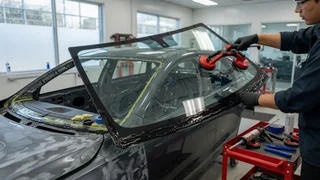
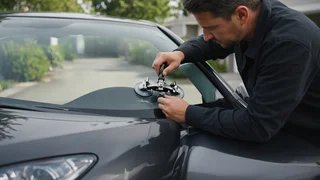
Protect the interior and paint, and remove wiper arms, cowl panel, moldings, mirror and sensor covers, and any interior trim that covers the glass edge. Disconnect any electrical connectors attached to the glass, such as heating elements, antennas, sensors or cameras. Cut the old urethane bead with a cold knife, wire tool or cutting system, taking care not to scratch the pinch weld (the metal flange the glass bonds to). Remove the old glass, ideally with suction cups and a helper, since windshields are heavy and awkward. Trim the remaining old urethane to a thin, even layer rather than scraping to bare metal; the existing layer usually gives the new adhesive a clean base. Inspect the sealing surface for rust or scratches and treat any bare metal according to the adhesive system's instructions to prevent future corrosion. Prepare the new glass with the cleaner and primer specified by the adhesive maker, and test-fit it so you know exactly where it sits. Apply a continuous urethane bead of the correct height and profile, then set the glass in position, using setting blocks or locating marks where the vehicle provides them. Reinstall moldings, sensors and trim, and leave the vehicle undisturbed for the adhesive's specified safe drive-away time. Calibrate driver-assistance cameras or sensors where the vehicle requires it, then check for leaks and wind noise.
Why adhesive compatibility and cure time matter
Urethane adhesives are sold as systems, with their own cleaners, primers and cure characteristics. Mixing products from different systems, skipping primer, or using a general-purpose sealant instead of an automotive glass urethane can result in a weak bond, leaks or corrosion. Each product also has a minimum safe drive-away time that depends on temperature and humidity, and some vehicles call for specific high-modulus or non-conductive urethane. Follow the adhesive manufacturer's stated conditions rather than a general rule of thumb.
Camera and sensor calibration
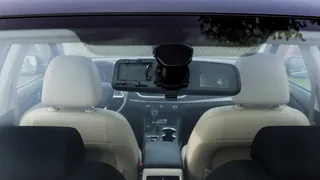
On many recent vehicles, the forward camera for lane-keeping, automatic emergency braking or adaptive cruise is mounted to the windshield. After replacement, the vehicle may require a static calibration using targets, a dynamic calibration performed while driving, or both. Requirements depend on the manufacturer and system. Skipping a required calibration can leave safety systems inaccurate even if no warning light appears, so ask any installer how calibration will be handled before booking.
Is Do-It-Yourself Auto Glass Replacement Realistic?
Do-it-yourself auto glass replacement is possible, but the risk level depends on which window you are replacing.
Windshield: the hardest DIY job. The glass is large and heavy, the bond is part of the vehicle's crash structure, positioning errors cause leaks and noise, and calibration equipment may be needed. Most owners are better served by a professional installer. Rear window: often bonded and also large, with defroster and sometimes antenna connections. Difficulty is closer to a windshield on many vehicles, though calibration is rarely involved. Fixed quarter glass and fixed door glass: smaller and lighter, and often the most DIY-friendly bonded glass. Some are bonded to the body, some are held in a rubber gasket, and some are part of a door frame assembly. Moving door glass: not bonded; it is replaced by removing the door panel and attaching new glass to the regulator.
Tools for bonded glass work typically include trim removal tools, a cutting tool for urethane, suction cups, the full adhesive system (cleaner, primer and urethane), a quality caulking gun capable of handling thick urethane, and protective gloves and eye protection. When a windshield cracks out of warranty, the cost of tools and the risk of a leak or improper bond often make professional replacement the more practical choice.
Front and Back Glass Replacement on the Same Vehicle
When both front and back glass need replacement, for example after a storm or vandalism, the jobs are separate procedures with different parts and connections. The windshield usually involves sensors and possible calibration, while the rear window typically involves defroster connections and sometimes an integrated antenna or brake light. Having both done in one visit can simplify scheduling, and insurance claims for both are usually handled as one incident, but each window still needs its correct glass specification and full adhesive cure time.
Ford Focus Rear Quarter Glass Replacement
Ford Focus rear quarter glass replacement is a good example of why fitment depends on generation and body style. The Focus was sold in the US across multiple generations in sedan, hatchback and, in earlier years, wagon versions, and the rear quarter glass differs between them. Depending on the version, the small rear glass may be a fixed pane in the rear door frame or a quarter window in the body behind the rear door, and its mounting method varies accordingly.
Identify the exact model year and body style, and confirm which window you mean, since parts catalogs list rear door fixed glass and body quarter glass separately. Check whether the glass is bonded, gasket-mounted or part of a door frame assembly before ordering, as this determines both the part and the tools you need. If the glass sits in the rear door, the job usually means removing the door trim panel and working around the moving window channel. If the glass is bonded to the body, expect to remove interior trim, cut the old adhesive and use a urethane system as described above. Broken tempered glass leaves fragments inside the door or trim cavity; vacuum them out thoroughly before installing the new pane.
Because the exact procedure differs among Focus generations, use service information or a parts diagram for your specific car rather than a general video for a different year or body style.
Hyundai Verna Fluidic Front Windshield Glass
The Hyundai Verna Fluidic was sold in markets outside the US, and owners searching for its front windshield glass face the same core fitment questions as any other vehicle. Glass made for one market or facelift may differ in sensor provisions, tint band, mirror mount or exact shape from glass for another, even when the car looks similar. Confirm the model year, market and features such as a rain sensor or auto-dimming mirror mount with your parts supplier, preferably using the VIN, and treat the windshield as a bonded, structural component requiring correct adhesive and cure time like any other modern windshield.
Insurance and Cost Considerations in the US
In the US, glass damage is usually handled under comprehensive coverage rather than collision coverage. Some policies include full glass coverage with reduced or no deductible, and a few states have rules affecting how glass claims are handled. Coverage terms differ by insurer and state, so check your own policy before choosing a shop. Costs vary widely by vehicle, glass specification and whether calibration is needed, which is why a windshield for a car with cameras and a heads-up display can cost considerably more than one for a basic model.
Choosing a Next Step
Small chip or short crack away from the edge and cameras: ask a glass shop whether resin repair is suitable. Cracked, distorted or delaminating windshield: plan for professional replacement with glass matched by VIN, and confirm how calibration will be handled. Leak, wind noise or stress crack soon after a replacement: return to the installer under their workmanship guarantee. Broken quarter or fixed door glass: consider a careful DIY replacement if you can confirm the correct part and mounting method for your exact vehicle. Unsure which glass you need: give the parts supplier your VIN and a description of the installed features before ordering.