Why Are Sensor Brackets Bonded to Windshields?
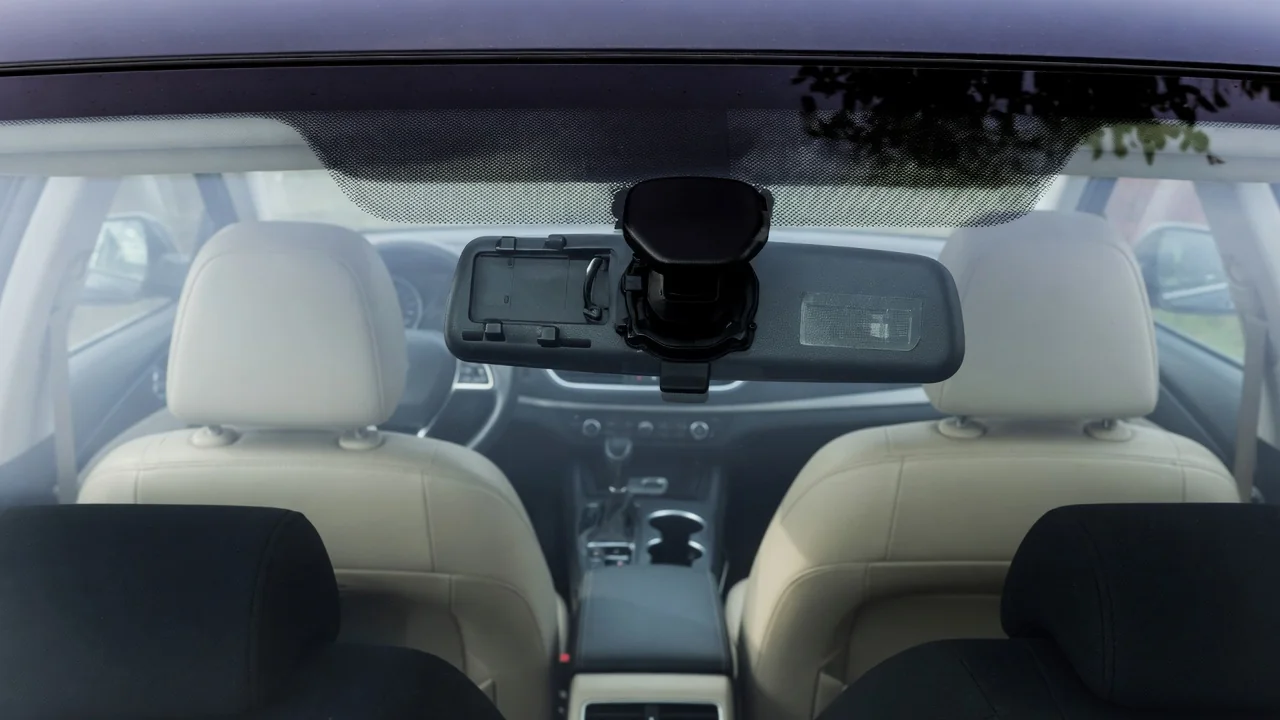
Behind the rearview mirror of many modern vehicles, a plastic or metal bracket is attached directly to the inside of the windshield. It may hold a forward-facing camera, a rain and light sensor, the mirror itself, or several of these together. The bracket is not screwed to the roof or clipped to the headliner. It is bonded to the glass. Knowing why explains how these systems work and what changes when the windshield is replaced.
Sensor position
The area near the top center of the windshield gives a sensor a high, central view of the road ahead. It sits inside the cabin, protected from rain, road spray and car washes. It is usually inside the area swept by the wipers, so the glass in front of the sensor gets cleared along with the driver's view. It also sits behind or near the mirror, a zone the driver does not rely on much for forward vision, so the hardware takes away little of the useful view.
Location alone does not explain why the bracket goes on the glass rather than on the body. The reason is the fixed relationship between the sensor and the glass it looks through. A forward-facing camera views the road through one specific patch of windshield. The software that interprets the image assumes a known mounting angle, height and distance from the glass. Windshield curvature, thickness and rake all affect the optical path. If the camera were mounted to the roof structure, small movements between the body and the glass could change that relationship. Bonding the bracket to the windshield makes the glass and the sensor housing move as one unit.
Rain sensors depend on the glass even more directly. A common design sends infrared light into the windshield at an angle so it reflects internally. Water on the outer surface lets some of that light escape, and the sensor reads the change as rain. The sensor has to be held firmly against the glass, usually through a clear coupling pad or gel layer, with no air gap. The bonded bracket provides that steady contact pressure. Light sensors that control automatic headlights often share the same housing and benefit from the same fixed position.
Adhesion
Windshields are laminated: two layers of glass with a plastic interlayer between them. Drilling holes for screws or studs is not practical. A hole would create a stress concentration where cracks could start, and it would break the sealed laminate. Adhesive bonding avoids both problems. It spreads the load over the whole contact area instead of a few points. It tolerates the different rates at which glass and plastic or metal expand with temperature. It can also dampen vibration that would otherwise reach the sensor and blur camera images or disturb readings.
Brackets are commonly attached by the glass manufacturer before the windshield ships, not added later in the vehicle assembly plant. Fixtures position each bracket on the glass so the location is repeatable from one windshield to the next. The bond is usually placed on the dark ceramic band, called the frit, printed onto the glass. The frit hides the adhesive from view and shields it from ultraviolet light, which can degrade some adhesives over time. Depending on the manufacturer and the load, the adhesive may be a structural adhesive, a urethane, or a double-sided foam tape. All of them must hold through summer heat, winter cold, sunlight, humidity and years of road vibration.
Around a camera, the frit pattern is often shaped to leave a clear viewing window while still covering the bonded area and reducing stray light. Some windshields also include fine heating elements near the camera zone to clear fog or frost in front of the lens. These details make the bracket and the surrounding glass a matched assembly rather than a generic part with something attached to it.
Replacement
Because the bracket is bonded in a controlled position, the replacement windshield normally arrives with a new bracket already attached. During replacement, the technician removes the camera, sensors and mirror from the old glass and installs them on the new bracket. For this to work, the replacement glass must match the original in the details that matter to the sensors: bracket type and position, frit pattern, camera window, and any heating or acoustic features. A windshield that only fits the opening is not enough.
Moving an old sensor bracket onto new glass is generally not the accepted practice. It is difficult to reproduce the factory position precisely by hand, and the bond may not match the original strength or durability. Rearview mirror mounting buttons are a partial exception, since dedicated adhesive kits exist for reattaching them. Rain sensors usually need a fresh coupling pad when moved to new glass, because the old one may not seat without air pockets.
Even with the correct glass and a properly bonded bracket, a camera's view can shift slightly after replacement. Many vehicle manufacturers therefore require the driver-assistance camera to be calibrated after windshield replacement or camera removal. Depending on the manufacturer's procedure, calibration may use printed targets in a controlled shop setting, a guided road drive, or both. The vehicle maker sets whether calibration is needed and how it is done.
Practical implications and limits
For owners, a loose or detached sensor bracket is more than a cosmetic problem. A camera that has shifted or a rain sensor that has lost contact can give wrong readings or switch off related features, often with a warning on the dashboard. General-purpose household glue is not a suitable fix, because it may not hold the correct position, survive temperature swings, or bond cleanly to the ceramic band. Treat the bracket area as a functional zone. Toll tags, dash cameras, parking permits and aftermarket tint film placed in front of the camera window or rain sensor can interfere with their view. A chip or crack inside the camera's field of view can also matter more than the same damage elsewhere on the glass. Whether it can be repaired or needs a new windshield depends on its size, location and the manufacturer's guidance.
This article covers general principles, and details vary widely between vehicles. Some cars have no bonded sensor bracket at all. Others mount certain sensors in the grille, bumper or roof instead. Bracket designs, adhesives, frit layouts and calibration requirements differ by manufacturer and even by trim level. Replacement glass can also differ in how closely it matches the original. For any specific vehicle, the manufacturer's service information is the authoritative reference on which glass is compatible, how sensors are transferred and whether calibration is required. Asking a glass shop about these points before booking helps avoid a repeat visit.