Will a Car Start with a Blown Fusible Link
A car that clicks or stays silent at the key often points to a break in high-current protection rather than a dead battery. Drivers researching whether a car will start with a blown fusible link are usually facing exactly that confusion: the battery tests fine, yet the starter does not crank. A fusible link is a short section of smaller-gauge wire designed to melt before the main circuit can overheat. Because it carries protected current to critical feeds, a failed link can remove voltage from circuits that must remain live during cranking. Understanding that interruption helps explain why some vehicles refuse to start while others may crank but not fire.
Essential answer
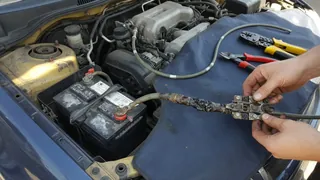
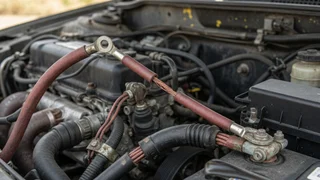
Whether a car will start with a blown fusible link depends on which circuit the link protects. If the failed link feeds the starter solenoid, ignition switch, engine control module, or fuel pump power path, the engine will generally not crank or will crank without starting. A fusible link near the battery terminal that protects the main fuse box feed can also take down multiple systems at once, producing a no-crank condition even when the battery shows normal system voltage at its posts. The link acts as a sacrificial conductor, opening the circuit before wiring damage occurs.
The interruption may be partial at first if the link is heat-damaged but not fully open, causing a voltage drop under load. In that case, the starter may click, the dash may dim, or the engine may crank slowly before the circuit fails completely. Once the link has fully blown, current cannot reach the protected branch, so the downstream component can no longer operate. This is why a failed link is not simply a low-battery symptom; it removes the path for current even when the battery, cables, and battery terminals are in sound condition.