Car Fusible Link Replacement
A blown fusible link can shut down major electrical circuits without the obvious glass or blade fuse failure many drivers expect. Car fusible link replacement is not simply swapping one visible component; it requires locating a short section of wire designed to melt before more expensive wiring and components are damaged. Understanding how a fusible link differs from a conventional fuse helps you diagnose the cause of the failure, interpret system voltage, and decide whether the repair is a practical driveway task or one best left to a technician with a wiring diagram.
Essential answer
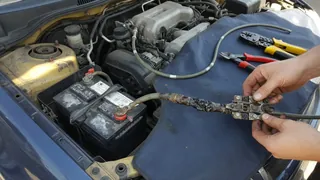
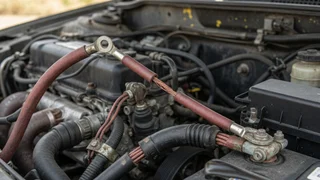
Car fusible link replacement involves removing a failed section of sacrificial wire and splicing in a new link with the correct fuse rating. A fusible link is typically several wire-gauge sizes smaller than the circuit it protects, and its insulation is designed to blister when the internal conductor melts. Because the link is often located in a harness near the battery terminals or starter, the replacement procedure requires disconnecting power and matching the replacement link closely to the original length, gauge, and current capacity.
Before replacing the link, the reason it opened matters. If a short circuit or excessive current draw remains, a new link will fail the same way. Checking for voltage drop across battery terminals, measuring charging output, and performing a parasitic draw test can help distinguish an old link that degraded from an active circuit fault. Once the underlying issue is corrected and the link is properly sized, the repair restores protection for the alternator, ignition, fuse block, or other high-current loads.