What Is a Fusible Link in a Car? Purpose, Failure, and Replacement
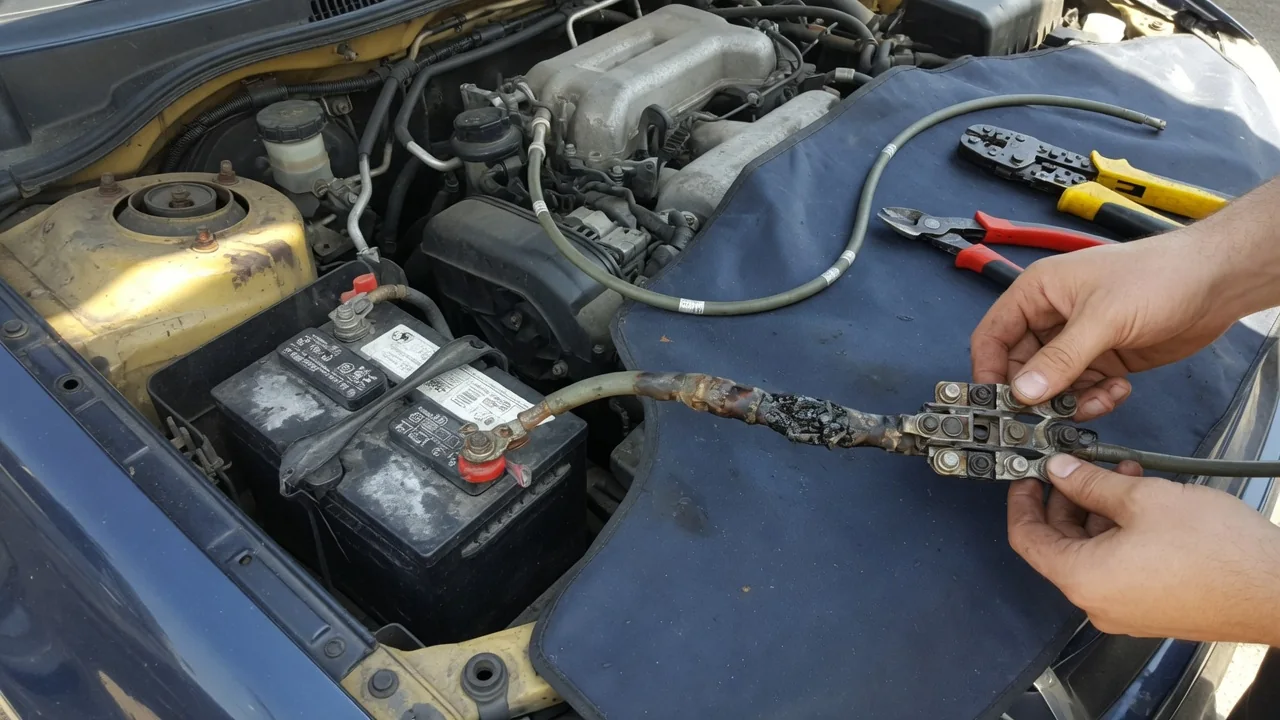
What is a fusible link in a car? It is a short section of specially made wire, or a dedicated high-current fuse, that acts as heavy-duty protection for the vehicle's main power feeds. It sits close to the battery or the main power distribution point and is designed to melt if a dead short or severe overload pulls far more current than the wiring can safely carry. Knowing how it works, fails, and is replaced explains why some faults cut power to entire systems at once.
High-Current Protection: What a Fusible Link Does
A car battery can deliver a very large current in a short time, which is exactly what the starter motor needs. The same capability becomes a hazard if a main power wire is shorted to ground. Individual blade fuses in the fuse box protect branch circuits such as lighting or the radio, but the heavy feed wires running from the battery and alternator to that fuse box sit upstream of those fuses. The automotive fusible link purpose is to protect this main feed wiring, opening the circuit before overheated wire can damage the harness or start a fire.
In its traditional form, a fusible link is a short length of wire that is usually several gauge sizes smaller than the circuit wire it protects, making it the deliberate weak point. Its insulation is a special high-temperature, flame-resistant material intended to contain the conductor as it melts rather than burning along with it. A fusible link also reacts more slowly than a small blade fuse. That allows it to tolerate brief current surges during normal operation while still opening under a sustained heavy overload or dead short.
Many newer vehicles use high-current cartridge fuses, plug-in maxi-style fuses, or bolt-down strip fuses in an underhood power distribution box instead of, or alongside, wire-type links. Manufacturers and parts catalogs sometimes still call these fusible links because they perform the same job. Which design a given vehicle uses, and how many it has, is vehicle-specific and should be confirmed in its owner's manual or service information.
How and Why Fusible Links Fail
A fusible link normally blows because something downstream drew far more current than intended. Common causes include a harness wire whose insulation has chafed through and touched the body or engine, a failed component that shorts internally, collision damage that pinches or cuts wiring, and jump-starting with the cables connected in reverse polarity. Poorly installed aftermarket accessories can also create shorts or overloads. Less often, heat, age, and corrosion at the link's terminals or splices create resistance that weakens it or causes intermittent faults.
The symptoms depend on which circuit the link feeds. A blown main link can leave the car with no crank, no dash lights, and no accessories, even though the battery tests as charged. If the link protecting the alternator output fails, the charging warning light may come on and the battery gradually runs down while driving. A telling pattern is that several unrelated systems lose power at the same time while every fuse in the fuse box checks good.
Wire-type fusible links can be deceptive because the insulation often survives while the conductor inside has melted. Visual clues include swollen, blistered, or discolored insulation, or a section that feels soft and stretches when gently tugged. A more reliable check is electrical: with the battery connected, use a test light or multimeter to confirm voltage on both sides of the link, or check continuity with the battery disconnected. Some cartridge-style links have a viewing window, but testing remains more dependable than appearance.
Replacing a Fusible Link Correctly
Replacing a blown fusible link without finding the reason it blew rarely solves the problem. If a short circuit remains, the new link will usually open again, and repeated failures put more heat and stress on the surrounding wiring. Before installing a replacement, trace the protected circuit using a wiring diagram, inspect the harness for chafing, melted spots, or damaged connectors, and correct any fault you find.
Disconnect the negative battery cable before working on the link, since the circuit is connected directly to the battery. Identify the correct replacement from the vehicle's service information or the markings on the original part, and use a link with the same rating or gauge. Never substitute ordinary wire, a heavier link, or a bolt or jumper to bypass protection, because that removes the safeguard for the entire feed. For wire-type links, cut out the damaged section and splice in the new link using quality crimp connectors or solder with sealed heat-shrink tubing, following any splice method the manufacturer specifies. Route the link away from sharp edges and hot exhaust components.
Cartridge and plug-in links are generally simpler: remove the failed unit and install one of the same type and amperage rating. Bolt-down versions should be tightened to the specified torque so the terminals neither loosen nor crack. On some vehicles the link is built into a battery cable or distribution box, so the assembly is replaced as a unit. After reconnecting the battery, confirm that the affected systems work; some vehicles also need clocks, radio settings, or other memory functions reset.
Practical Implications and Limits
A fusible link protects wiring, not the components it supplies. It will not prevent an internally failing alternator, module, or motor from being damaged, and a moderate overload below its opening point can still let a wire run hot for some time. It also cannot take the place of the branch fuses downstream. When one blows, treat it as evidence of a real fault rather than a random event; the link has done its job by sacrificing itself.
Because locations, ratings, and terminology differ between manufacturers, model years, and even engine options, general descriptions only go so far. A wiring diagram for the specific vehicle is the practical way to know which links exist and what each one feeds. This information applies to the conventional 12-volt system. Hybrid and electric vehicles also carry high-voltage circuits with their own dedicated protection, and those systems should be left to technicians trained to work on them.
Professional diagnosis is sensible when a replacement link blows again, when there is a burning smell or melted insulation along the harness, or when the link cannot be located. If you add high-draw accessories such as an audio amplifier or auxiliary lights, give them their own fuse close to the battery instead of tapping into a factory-protected feed. That keeps the original fusible links protecting the circuits they were designed for.