Why Should Fuel Level Be Planned Before Car Storage?
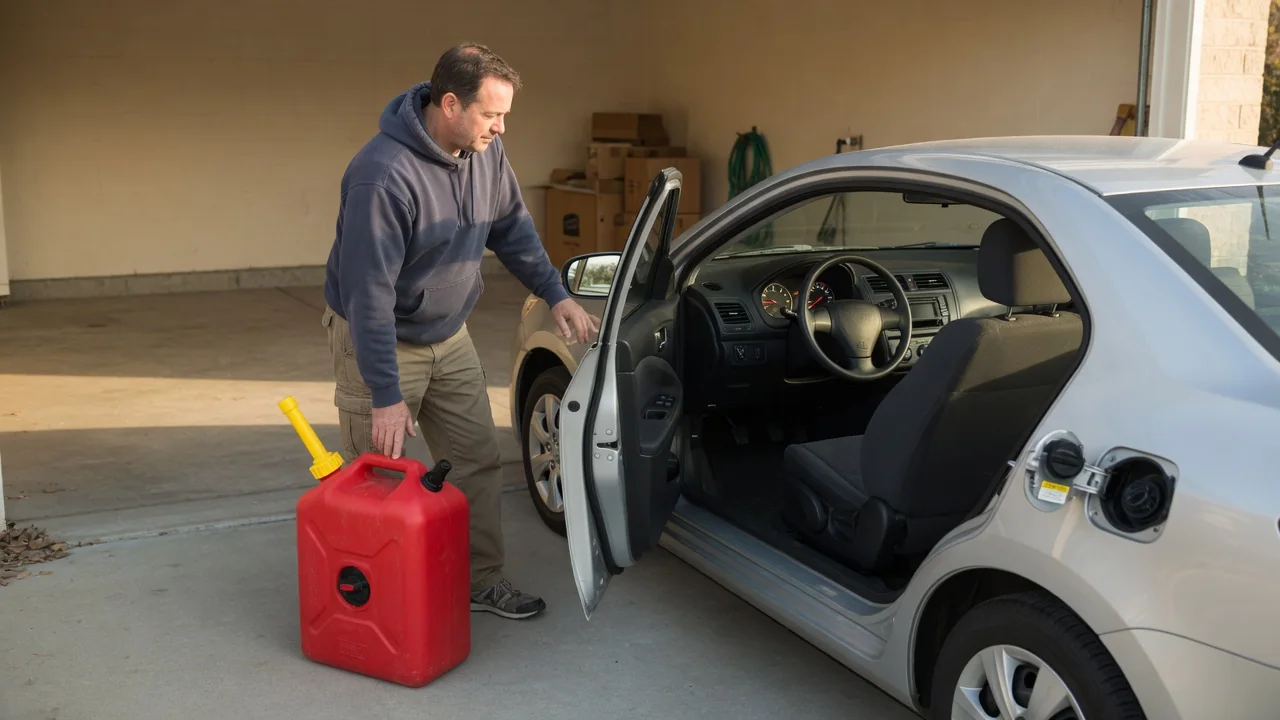
Fuel level is one of the easiest storage decisions to overlook, but it shapes how the fuel system ages while a car sits. The amount of fuel in the tank affects how much air and moisture the tank holds, how quickly fuel quality can decline, and how smoothly the engine restarts weeks or months later. Planning fuel level for car storage is less about a single magic number and more about matching the tank, the fuel, and the storage period to the vehicle's own guidance.
Tank conditions
Any space the fuel does not occupy is filled with air, and that air carries water vapor. As temperatures rise and fall between day and night or across seasons, the tank breathes through its venting and evaporative emissions system, and moisture can condense on cooler inner surfaces. A mostly empty tank exposes more surface area and more air volume to this cycle. In steel tanks, that moisture can contribute to internal corrosion. In any tank, it can end up mixed with the fuel. This is the main reason general storage advice usually favors a well-filled tank over a nearly empty one.
Fuel chemistry matters too. Gasoline is a blend of compounds. Some are volatile and evaporate over time, while others slowly oxidize and can form gums and varnish-like deposits. These deposits can affect injectors and fuel pump inlet screens, and on older vehicles they can clog carburetor passages. Ethanol-blended gasoline can absorb some water. If enough water accumulates, the ethanol and water can separate from the gasoline and settle at the bottom of the tank, which is where the fuel pickup draws from. Diesel has its own concerns. Water collecting in the tank can support microbial growth where fuel and water meet, and diesel can thicken or form wax in cold storage if it is not suited to the temperatures involved.
A full tank is not the same as an overfilled one. Fuel expands as it warms, and the vapor space and venting system are designed to handle that expansion. Topping off past the pump's automatic shutoff can push liquid fuel toward parts of the evaporative system meant only for vapor. When planning the fill, stop at the normal shutoff, and ideally fill up close to the storage location so the tank does not drop much on the way there.
Vehicle guidance
The owner's manual is the most reliable source for how a particular vehicle should be prepared for storage. Many manuals include a storage section covering fuel, battery care, tires, and other preparation steps. Some specify whether to fill the tank, whether to use a fuel stabilizer, and how long the vehicle can sit before additional steps are needed. Fuel systems differ in tank material, pump design, and emissions hardware, so where general advice and the manufacturer's instructions disagree, follow the manufacturer. If the manual says nothing on the subject, a dealer service department or a qualified technician familiar with the vehicle can clarify what applies.
If you use a stabilizer, the general practice is to add it to the tank before filling so the incoming fuel mixes it thoroughly. Then drive or run the vehicle long enough for treated fuel to reach the lines, pump, and injectors, because treating only the tank leaves untreated fuel in the rest of the system. The product label sets the dose and the storage period it is intended to cover, and the manual may say whether a given additive type is appropriate. Some owners also choose fresh fuel from a busy station and, where the vehicle permits it, gasoline without ethanol. Confirm these choices against the manual rather than treating them as universal rules.
Hybrids and plug-in hybrids deserve particular attention. A plug-in hybrid that is driven mostly on electricity can carry the same tank of gasoline for a long time even when it is not in storage, and some are designed with routines that manage aging fuel automatically. Storage preparation for these vehicles may also involve the high-voltage battery's state of charge, so their specific instructions take priority over generic fuel advice.
Restart
Fuel planning pays off when the car comes out of storage. Before starting, check under the vehicle and around the tank for signs of leaks or fuel odor, and look for damage to fuel lines, since stored vehicles can attract nesting animals. On many fuel-injected vehicles, switching the ignition on for a moment before cranking lets the electric fuel pump build pressure, which can make the first start easier. Avoid long continuous cranking; short attempts with pauses are gentler on the starter and battery. If the battery has discharged during storage, deal with that first, because low voltage can produce symptoms that look like fuel problems.
Once the engine is running, watch for rough idle, hesitation, stalling, or a check-engine light. These can point to degraded fuel, water contamination, or deposits. If the fuel has been stored for a long period, adding fresh fuel soon after restart dilutes what remains. A well-filled tank also means the car can be driven gently to a station right away instead of running its first miles on the small remainder most exposed to moisture. Diesel vehicles with a water separator may need it checked and drained according to the maintenance schedule. If symptoms persist, have the car diagnosed by a professional instead of trying additive after additive.
Practical implications and limits
Planning fuel level reduces risk but does not eliminate it. A full tank limits air space without removing it, so some condensation can still occur, and stabilizers slow fuel aging rather than stopping it. Storage conditions matter as much as fuel level: a building with large temperature swings or high humidity creates more opportunity for moisture than a stable, dry space. Filling or treating fuel that has already degraded will not restore it, which is why the fill should use fresh fuel at the start of the storage period.
Fuel level also interacts with other plans. Vehicle carriers often expect cars to arrive with only a small amount of fuel, so a car that will be transported before storage may need a different sequence, such as filling and treating after arrival. Local fire codes, lease terms, or insurance conditions may set rules for storing fueled vehicles in certain buildings, and those rules take precedence. For very long storage, some owners consider draining the fuel system instead. That means handling flammable liquid, so it is best left to a professional or done exactly as the manufacturer describes. In most cases, deciding on fuel level before the last drive is simply part of the storage checklist, alongside the battery, tires, and fluids.