How to Keep Moisture Out of a Stored Car
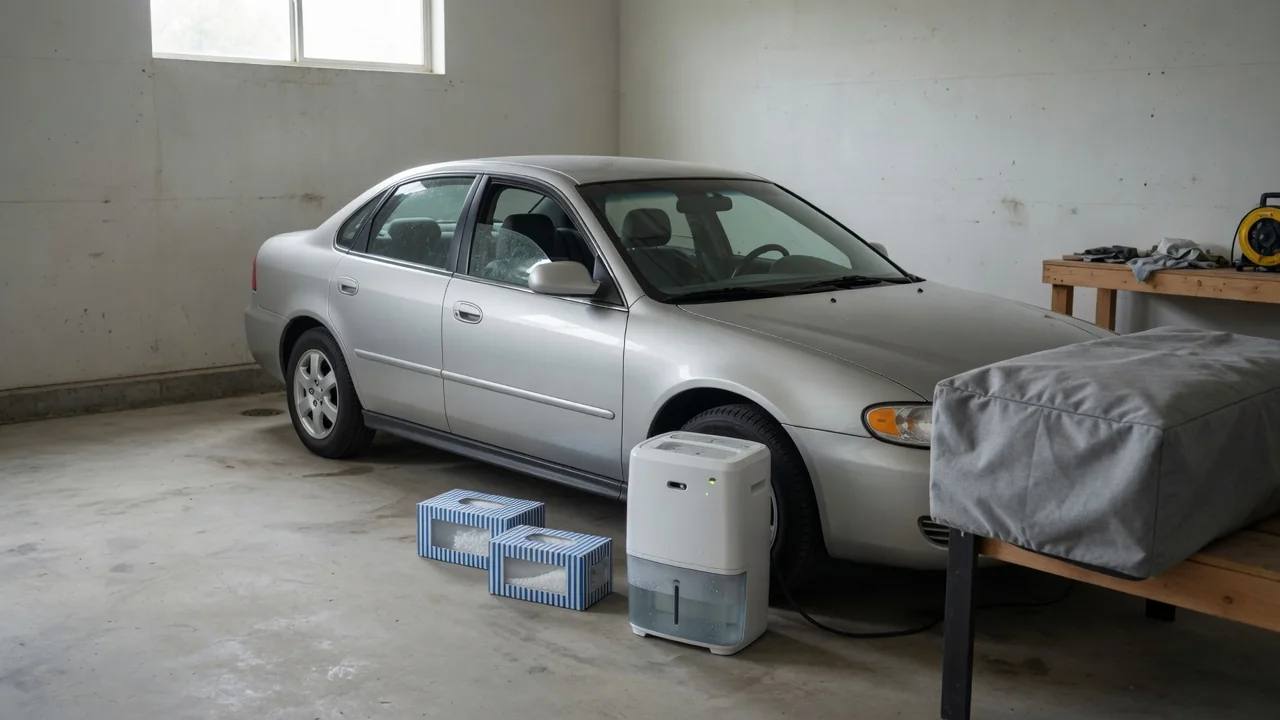
Moisture is a slow but persistent threat to a parked vehicle. Over weeks or months, small leaks, damp air, and trapped humidity can cause musty odors, mold on fabric, fogged glass, and corrosion on metal and electrical contacts. Keeping moisture out of a stored car comes down to three habits: making sure water cannot get in, starting with a dry cabin, and checking conditions regularly rather than assuming nothing has changed.
Seal checks
Rubber weatherstripping around the doors, trunk or hatch, and hood is the first barrier against water. Before storage, walk around the car and inspect each seal along its full length. Look for cracks, tears, flattened sections, or spots where the rubber has pulled away from its channel. Close each door on a strip of paper at several points. If the paper slides out with no resistance, that section may not be sealing well. Clean the seals and the surfaces they press against with mild soap and water, because grit and debris can hold a gap open. Some owners treat the rubber with a conditioner. Check the owner's manual for the products the manufacturer recommends.
Seals are only part of the system. Many vehicles rely on drains to route water away from the cabin. These include sunroof drain tubes, drain holes along the bottom edges of the doors, and channels in the cowl area below the windshield. When leaves, dirt, or pine needles block these paths, water can back up into the headliner, the footwells, or the trunk. Clear visible debris from the cowl and the door bottoms. If your car has a sunroof, confirm that its drains are not clogged. Drain locations and designs vary widely, so the service manual for your vehicle is the best guide.
Also look for signs of an existing leak: water stains on the headliner, damp carpet, a musty smell, or standing water in the spare tire well. A leak that seems minor during daily driving can do real damage while the car sits for months. Trace and repair it before the car goes into storage.
Dry interior
A car that goes into storage damp will stay damp, because a closed cabin has little air exchange to carry moisture away. Remove the floor mats and press a dry paper towel into the carpet underneath. Pay most attention to the footwells and the trunk, where water tends to collect. If anything feels wet, dry it fully before storage by opening the doors on a dry day or by using fans or a wet-dry vacuum. Let the mats dry separately rather than putting them back while damp.
Next, remove anything that holds or releases moisture, such as umbrellas, gym bags, towels, clothing, paper, food, and drink containers. Vacuum the interior and clean up any spills. Food residue matters for another reason too: it can attract rodents and insects to a car that sits undisturbed.
Moisture absorbers can manage the humidity that remains. Common options are containers of calcium chloride, which pull water from the air and collect it as liquid, and silica gel packs, some of which can be dried out and reused. Both have limited capacity, so check them over time and replace or recharge them as needed. Place the liquid-collecting type in a stable tray on the floor or in the trunk, so a spill cannot soak the upholstery or reach bare metal. Close the windows and sunroof fully. The exception is a secure, dry, indoor space where you have decided that a slight opening for ventilation is worth the risk of dust and pests.
Monitoring
Storage is not a one-time task. An inexpensive digital hygrometer placed inside the cabin gives you a reading you can compare from visit to visit. The trend is more useful than any single number. Humidity that climbs steadily between checks suggests that moisture is getting in or that the absorbers are saturated. You can also compare the cabin reading with the air in the storage space. This shows whether the car is simply reflecting its surroundings or has a problem of its own.
On each visit, use your senses as well as the meter. Open the doors and notice any musty or sour smell. Look for condensation on the inside of the glass and for fuzzy or discolored spots on the seats, carpet, or seatbelts. Check for moisture under the floor mats and in the spare tire well, and note how quickly the absorbers are filling. Check more closely after heavy rain, water entering the storage area, or a sharp temperature swing. Condensation forms when warm, humid air meets cooler surfaces such as glass and metal.
A short written log makes these checks more useful. Record the date, the hygrometer reading, the condition of the absorbers, and anything unusual. Over a season, the log helps you tell normal weather-related changes apart from a leak or seal problem that needs attention.
Practical implications and limits
The environment around the car limits what any in-car measure can achieve. Desiccant containers are sized for a cabin, not a garage. A car parked in a damp building, on a bare dirt floor, or in a poorly ventilated space will keep drawing in moisture. In those cases, improving the space itself does more than adding absorbers to the car. Options include better ventilation, a dehumidifier sized for the room, or a vapor barrier over the floor. The same logic applies to covers. A breathable car cover keeps dust off while letting moisture escape, whereas a plastic sheet can trap condensation against the paint.
These steps focus on the body and cabin. They do not cover every way moisture affects a parked vehicle, such as surface rust on brake rotors or moisture that certain fluids absorb over time. Those belong to general storage preparation and the manufacturer's maintenance schedule. Seal designs, drain routes, and interior materials also differ from one vehicle to another, so the owner's manual and service information remain the reference for anything specific to your car. If mold has already spread into padding or the headliner, surface cleaning may not be enough, and professional interior cleaning may be the safer route. For long term car storage, moisture control works best as a routine: prepare the car carefully, then keep checking it.