Why Does Snow Pack Around Car Sensors? Locations, Warnings and Cleaning
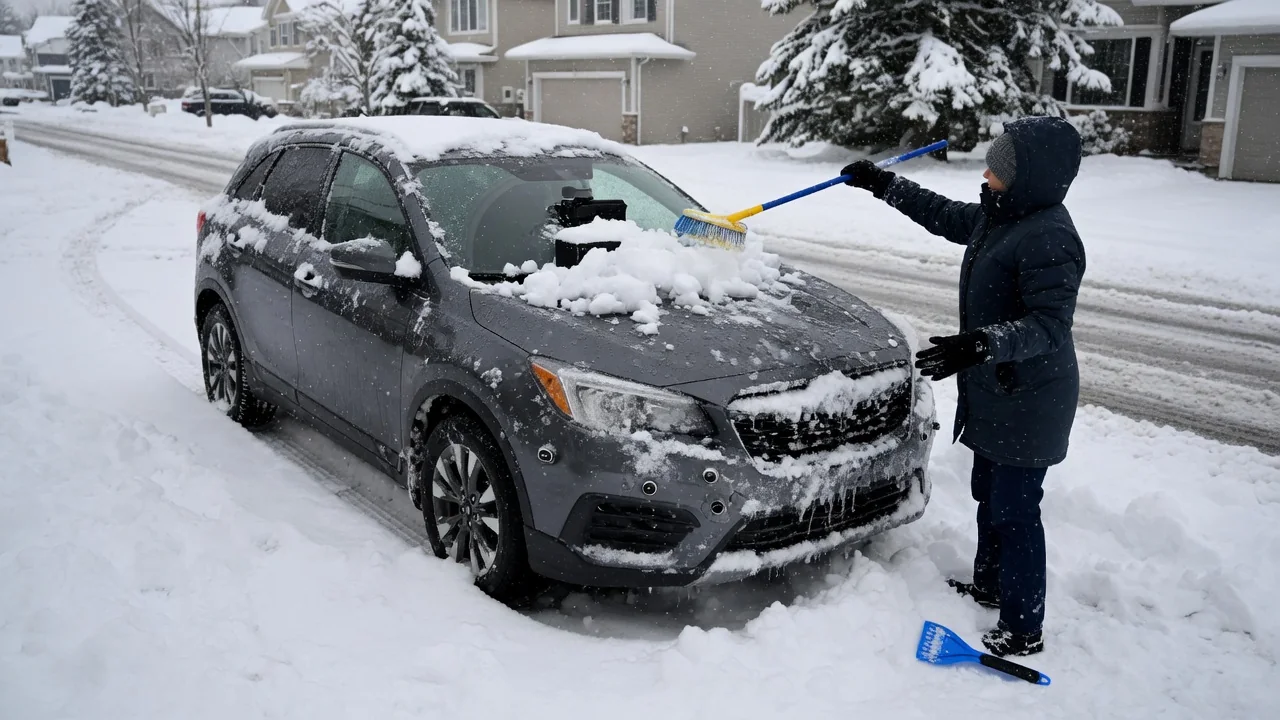
Snow packs around car sensors because those sensors sit exactly where moving air, road spray and slush hit the vehicle hardest. Front bumpers, grilles, rear bumpers and tailgates collect wet snow that sticks, partly melts and refreezes, sealing over the small surfaces that parking aids, cameras and radar depend on. Knowing where these sensors are, what the dashboard means when they are covered, and how to clear them safely makes winter driving with driver assistance far less frustrating.
Sensor locations and why snow collects there
Most driver assistance hardware is placed low and at the outer edges of the body, because that is where it has the clearest view of the surroundings. Ultrasonic parking sensors usually appear as small round discs set into the front and rear bumper covers. Forward radar for adaptive cruise control and collision warning is commonly mounted behind the grille, a flat emblem or a section of the lower bumper. Corner radars used for blind spot monitoring and rear cross traffic alerts are often hidden behind the rear bumper corners. Cameras may sit behind the windshield near the rearview mirror, above the rear license plate, near the tailgate handle or under the side mirrors. Exact placement varies between manufacturers and even between trim levels, so the owner's manual is the reliable reference for a specific vehicle.
The front of a moving car is its leading surface, so falling snow and spray from vehicles ahead strike the bumper and grille directly. Air slows and piles up against these surfaces, and the snow it carries is pressed into recesses, emblem edges and the gaps around sensor bezels. Wet, heavy snow near the freezing point is especially sticky. Warmth from the engine bay, the headlights or the sun can soften the outer layer, and when the car is parked or the temperature drops, that slush refreezes into a hard crust that bonds to plastic and glass.
The rear of the vehicle has a different problem. As the body moves through the air, a low-pressure wake forms behind it and draws in fine snow and dirty mist kicked up by the tires. This is why tailgates, rear windows and rear cameras on boxy vehicles such as SUVs and vans often become coated even when the front stays relatively clear. Tires also throw slush outward into wheel arches and bumper corners, close to where corner radar and side-facing sensors are usually located.
Warning messages when snow blocks car sensors
When snow blocked car sensors can no longer measure reliably, the vehicle's software is generally designed to recognize the problem rather than guess. A radar unit may detect that its signal is being absorbed or reflected unusually close to its cover, a camera may register a blurred, dark or uniformly white image, and an ultrasonic sensor may receive no usable echo or a misleading one. The system then reports a fault condition instead of offering potentially wrong information.
The wording on the instrument cluster differs by manufacturer, but the messages tend to fall into a few types: a notice that a sensor or camera is blocked and should be cleaned, a statement that a specific feature such as adaptive cruise control, lane keeping assistance, automatic emergency braking or parking assistance is temporarily unavailable, or a general driver assistance warning with an indicator light. Some vehicles show a symbol of the affected area, while others display text only. These alerts are typically status information, not proof of a broken part.
Parking sensors can behave less obviously. Instead of an explicit message, a covered sensor may cause continuous beeping when nothing is nearby, or it may stay silent when it should warn. Because these behaviors vary, the vehicle-specific section of the owner's manual is the best way to learn which messages indicate blockage and which point to an actual fault.
Cleaning snow and ice from sensors safely
With the car safely parked, clear loose snow from the bumpers, grille, emblem, rear license plate area and windshield using a soft snow brush. Clear the whole area around each sensor rather than only its face, because a ridge of packed snow beside a radar cover or parking sensor can still interfere. For a windshield-mounted camera, the glass in front of it needs to be completely clear, and working defrosters and wipers help keep it that way once you are moving.
Hard ice needs patience. Avoid chipping at sensors, camera lenses or radar covers with an ice scraper, key or other tool, since scratches and gouges on these surfaces can distort what the sensor detects and the parts can be expensive to replace. Letting the engine and cabin warm up, using a de-icer that is safe for automotive paint and plastics, or pouring lukewarm water over the area can loosen ice. Very hot water is a poor choice on cold glass and lenses because sudden temperature changes can cause cracking. A soft cloth can finish the job once the ice has softened.
If you use a car wash or pressure washer to remove salty slush, keep the nozzle at a sensible distance and avoid aiming a concentrated jet directly at sensors, a caution commonly found in owner's manuals. After everything is clear, some systems recover right away, while others may need a short drive or an engine restart before the warning disappears.
Practical implications and limits
Cleaning before a trip does not guarantee clear sensors for the whole drive. In steady snowfall or on slushy highways, buildup can return within minutes, so assistance features may shut off partway through a journey. It is sensible to treat adaptive cruise control, lane keeping and parking aids as unreliable in heavy winter conditions and to be ready to drive without them. A sensor disabled by snow also cannot warn about obstacles, so the driver remains fully responsible for watching the surroundings, adjusting speed and leaving extra following distance.
Some vehicles have heated radar covers or camera washers that reduce buildup, but these features have limits in heavy, wet snow and are not fitted to every vehicle. Accessories can make the problem worse: thick license plate frames, bumper covers, grille blocks and other add-ons may trap snow near sensors or cover them directly. It is worth confirming that no accessory sits over a sensor or camera area shown in the manual.
A warning that persists after all snow and ice have been cleared should not be blamed on the weather. Damage from a minor impact, a misaligned radar bracket after bodywork, moisture inside a camera housing or an electrical fault can trigger similar messages. In that situation, a diagnostic check by a qualified shop or dealer is the appropriate next step, since driver assistance sensors often require calibration after repairs.