How Blind Spot Monitoring Works: Sensors, Alerts and Limits
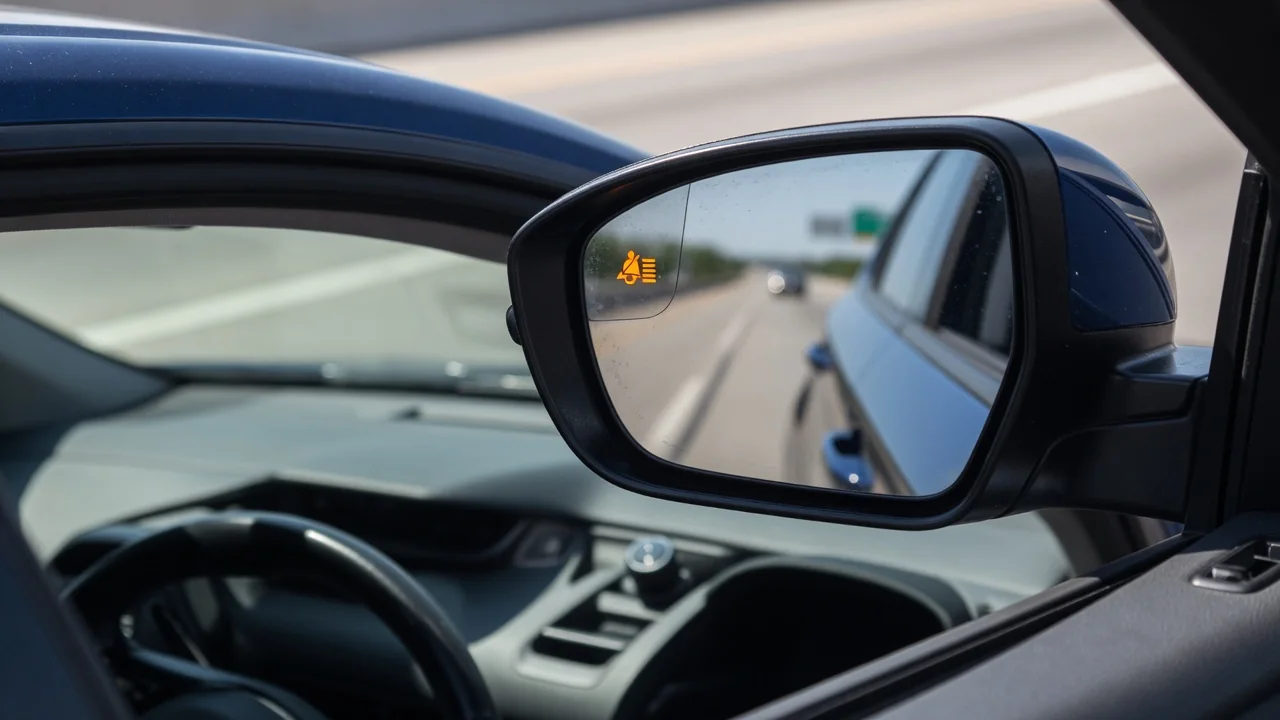
Blind spot monitoring is one of the most common advanced driver assistance systems. Even so, many drivers aren't sure what it watches, how it decides to warn them or where it falls short. This guide explains what blind spot monitoring is in cars and how its sensors work. It also covers how it pairs with rear cross traffic alert, which vehicles offer it, whether it is required and whether it can be added later.
What Blind Spot Monitoring Means and What BSM Does for Drivers
In plain terms, blind spot monitoring (BSM) is a driver aid that watches the blind zone beside and slightly behind the car, an area the mirrors may not show. When another vehicle enters that adjacent lane, the system usually lights an icon in or near the side mirror. That side mirror warning light is the main way blind spot monitoring systems help drivers. It points out a car that might otherwise be missed before a lane change.
Most systems escalate when the driver signals toward an occupied lane. Depending on the automaker, the mirror icon may flash, a chime may sound, or the seat or steering wheel may vibrate. Brands also give similar features different names, such as blind spot information or lane change assist, so the owner's manual is the reference for what a specific car does. Whatever the name, BSM supplements mirror checks and shoulder glances rather than replacing them, because no sensor sees everything.
How the System Detects Vehicles: Radar, Cameras and Processing
Most factory systems use rear corner radar sensors mounted behind the bumper cover. Radio waves pass through the plastic, so the sensors stay out of sight. Some vehicles use cameras instead, mounted in the mirrors or the body. Either way, the system estimates where nearby vehicles are and how quickly they are closing in. Software then compares that data with your own speed and turn signal use. It decides whether a vehicle is truly in, or about to enter, the adjacent lane and deserves a warning.
The 79GHz label seen on some sensors simply refers to a radar frequency band. Any claims about how well a sensor performs should come from that product's own documentation. Names like active blind spot monitoring or advanced blind spot monitoring are brand marketing terms. Some versions apply light steering or braking to help keep the car in its lane, while others only warn, so check exactly what your version does. Dual camera systems also vary, and how they actually behave depends on the specific product.
Blind Spot Monitoring With Rear Cross Traffic Alert
Blind spot monitoring with rear cross traffic alert is a common pairing because both features can share the same rear corner sensors. When you back out of a parking space, the radar looks left and right for approaching vehicles hidden behind neighboring cars. Typical alerts include a chime, flashing mirror lights, or arrows and icons on the backup camera screen that show which side the traffic is coming from.
Some packages, sometimes sold as advanced blind spot monitoring with rear cross traffic alert, can also brake automatically while reversing. Availability varies by make, model, year and trim. The limits matter here. A parked van, a wall or a sharp angle can block the sensors' view. Pedestrians, cyclists, shopping carts and other slow-moving objects may not be detected reliably. Backing up slowly while watching the camera and mirrors is still essential, even in vehicles with reverse braking.
Which Cars and SUVs Offer It and When It Became Common
Which cars have blind spot monitoring depends on make, model, year and trim. A single model name can have it standard on some trims and optional or missing on others. That applies to often-searched vehicles such as the Toyota 4Runner, VW Golf, VW Jetta, Jaguar F-Pace, Tesla Model Y and Suzuki Swift. It also applies to questions like which Hondas have it or which 4Runner model year added it. Instead of assuming, confirm the feature with the window sticker, the build sheet or a dealer VIN lookup.
Over time, the technology spread from luxury-brand option lists to many mainstream cars, SUVs and trucks. Claims about the first car with blind spot monitoring, or when it became standard, are worth checking against verified sources. On a used car, look for icons on the mirror glass, a BSM setting in the vehicle menus, or a description in the owner's manual. Midsize SUVs and pickups may benefit more than smaller cars, because tall bodies and thick roof pillars can create larger blind zones.
Is Blind Spot Monitoring Required, and Do You Need It?
Is blind spot monitoring required? Rules depend on the region and change over time, so check the current official regulations rather than relying on hearsay. In the US, you shouldn't assume it is federally mandated. It is also a separate topic from rear visibility rules, which led to backup cameras becoming standard on new light vehicles. Whether blind spot monitoring comes standard on a given car is usually a manufacturer and trim decision, not a legal requirement.
How important is blind spot monitoring for you? It tends to be most useful if you make frequent highway lane changes, drive in heavy multi-lane city traffic, tow, or drive a vehicle with poor rear visibility, such as a van or large SUV. Drivers who mostly use quiet roads may find it less necessary, though still helpful. Either way, aim the side mirrors at the lanes beside you rather than at your own car's sides, and keep shoulder checks a habit whether or not the car has BSM.
Adding Blind Spot Monitoring to a Car That Lacks It
Can blind spot monitoring be added? Often it can, with an aftermarket kit. Radar kits mount sensors behind the bumper. Camera kits, including dual camera designs from brands such as Brandmotion, show side views on a display. Universal systems are marketed as fitting many vehicles, but fit depends on the bumper and electrical system, so confirm with the installer. Adding factory BSM to an older car is often impractical because it involves wiring, mirrors, control modules and software, so ask a dealer or specialist about your vehicle.
The cost of a blind spot monitoring system depends on the kit type, the sensor technology, how the alerts connect to the mirrors or a display, and professional installation labor. Professional installation and calibration are worth paying for. Sensor position and bumper material affect detection, and wiring mistakes can interfere with lighting or other electronics. Before modifying the vehicle, check how an aftermarket blind spot kit might affect your warranty and whether your insurer needs to know about the change.
Turning It On, Reading Warnings and Knowing Its Limits
How you turn on blind spot monitoring varies by vehicle. It is usually a dashboard button or a setting in the infotainment screen or instrument cluster menu, and the owner's manual has the exact steps. A system unavailable message often means the sensors can't see clearly. Common causes include dirt, snow or ice on the bumper corners, heavy rain, towing a trailer, or recent bumper damage. Many of these messages clear once the cause is gone, such as after the bumper corners are cleaned.
Detection may be unreliable in some situations. A fast-approaching vehicle may close the gap before an alert appears, narrow motorcycles can be missed, and unusual lane layouts such as merges and sharp curves can confuse the system. If warnings continue after cleaning, or problems start after a collision or bumper repair, get a professional diagnosis and sensor calibration. A stored fault code is a clue to interpret, not proof that a sensor has failed, and many codes are specific to the manufacturer. Don't try to adjust or remove the sensors yourself.