Car front radar sensor
A car front radar sensor is a forward-facing electronic component that helps a vehicle detect objects, measure closing speed, and support driver-assist reactions. Owners often encounter this term when a warning appears, a sensor is damaged, or a system behaves unexpectedly. The sensor’s position behind the grille, bumper cover, or emblem affects how it reads road conditions, while debris, weather, mounting alignment, and calibration all shape performance. Understanding what the component does, where it sits, why it may report a fault, and how operating conditions create system limits provides a practical starting point before any repair or replacement decision.
Essential answer
A car front radar sensor is part of the vehicle’s forward sensing system. It typically emits radio-frequency signals and interprets the reflections to estimate the distance and relative speed of objects ahead. That data supports adaptive cruise control, forward collision warning, automatic emergency braking, and related features. The sensor is not a camera, although it often works alongside one. Its exact function depends on the vehicle specification and the specific driver-assist package installed, so the same warning can mean different things on different models.
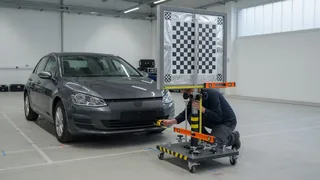
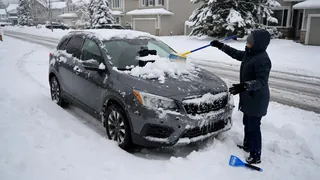
Identifying the sensor begins with its mounting location. On many vehicles it is positioned behind a smooth bumper cover area, inside the grille, or near the front emblem where it has a forward view. Because the cover is part of the sensing path, damage, repainting, heavy dirt, snow, or a misaligned bracket can change behavior. A stored fault code is evidence that the module has reported an implausible signal, blocked view, communication error, or calibration fault, but it does not by itself prove the sensor has failed. Manufacturer-specific codes require confirmation for the exact vehicle before parts are replaced.