Why Must Radar Sensors Be Positioned Accurately?
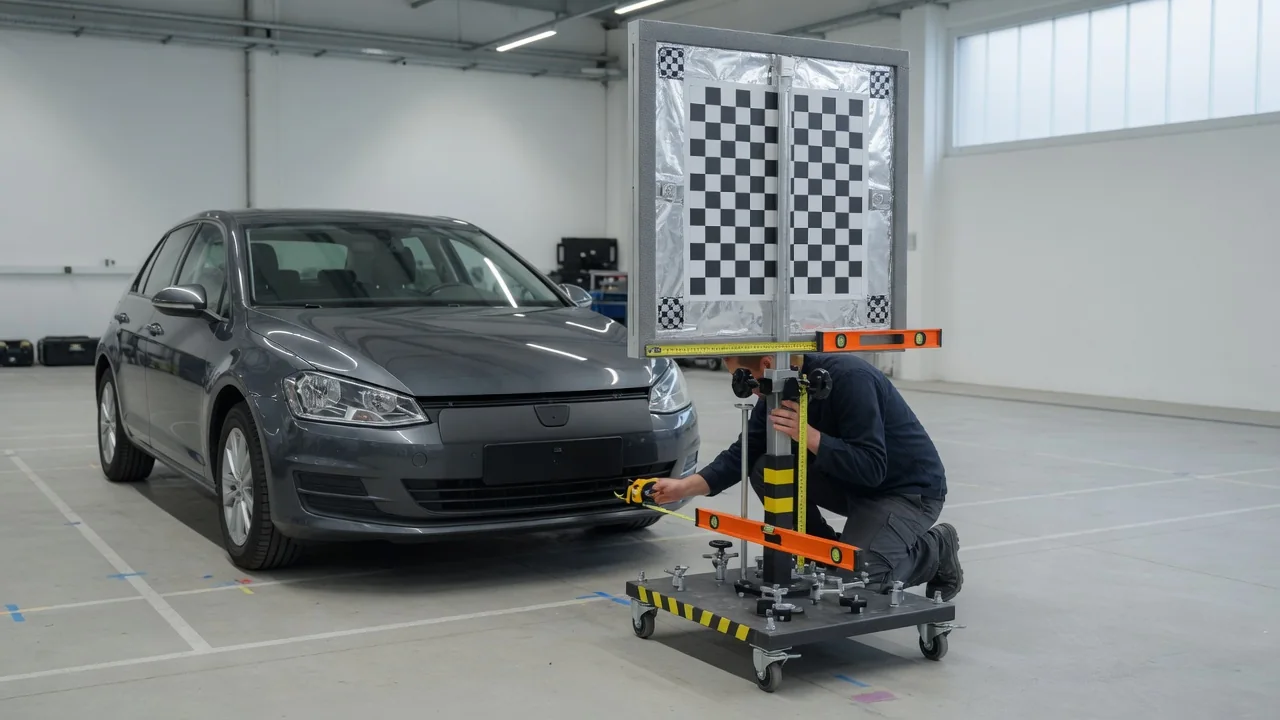
Vehicle radar sensors feed driver-assistance features such as adaptive cruise control, forward collision warning, automatic emergency braking and blind-spot monitoring. Each of these features depends on the system knowing exactly where a detected object sits relative to the car. That knowledge is only as good as the sensor's physical position. A radar unit that is tilted, shifted or mounted on a bent bracket can report objects in the wrong place, and the functions built on that data may react late, early or not at all.
Beam direction: why a small angle matters
An automotive radar transmits radio waves in a defined pattern and measures the reflections that return from objects ahead, behind or beside the vehicle. From those echoes it calculates range, relative speed and angle. Range and speed come largely from signal timing and frequency changes, but angle is interpreted relative to the sensor's own reference axis. The control software assumes that axis points in a specific direction relative to the vehicle's centerline and direction of travel. If the sensor is physically rotated, every angle it reports is offset by the same amount, and the system cannot know about that offset unless it has been taught or can detect it.
Because the error is angular, its effect grows with distance. A misalignment that looks negligible at the bumper becomes a much larger sideways error far down the road. A forward radar aimed slightly to one side may place a car from the next lane inside the driver's own lane, or place a car directly ahead partly outside it. For adaptive cruise control and emergency braking, that difference decides whether a vehicle is treated as a relevant target.
Vertical aim matters as well. A sensor tilted down directs more energy toward the road surface and may lose useful range, while one tilted up may pass over low objects or pick up reflections from overhead signs and bridges. Rear and corner radars used for blind-spot and cross-traffic alerts face the same geometry: their coverage zones assume the sensor faces a known direction, so a shifted unit can leave gaps or flag vehicles outside the monitored area.
Calibration: teaching the system where the sensor points
Mechanical mounting alone rarely achieves the precision the software expects, so radar systems generally rely on calibration, often described as aiming or vehicle radar alignment. Calibration measures the actual orientation of the installed sensor and either guides a technician to adjust it physically or stores a correction value that the software applies to its measurements. Depending on the vehicle, the procedure may be static, dynamic or a combination of both, and the manufacturer's service information specifies which applies.
A static calibration is performed in a workshop with the vehicle stationary. It typically uses a target or reflector placed at a prescribed distance and position relative to the vehicle, together with a diagnostic scan tool that runs the calibration routine. A level floor, clear surrounding space, correct tire pressures and an unloaded vehicle are common preconditions, because anything that changes the car's stance changes how the sensor sits relative to the target. A dynamic calibration is done by driving under conditions defined by the manufacturer, such as certain speeds and roads with enough stationary roadside objects, while the system learns its offset from real-world reflections.
Calibration is referenced to the vehicle, not just to the panel the sensor is attached to. Many procedures use the vehicle centerline or the thrust line of the rear axle as the reference, which is why wheel alignment and ride height can affect the result. If the rear axle steers the car slightly away from its centerline, the direction the vehicle actually travels differs from where the radar was aimed, and the sensor can disagree with the real path of travel.
Repair: when position and calibration need attention
Radar sensors are usually mounted behind bumper covers, grilles or emblems, or in the corners of the rear bumper. These are the areas most likely to be damaged in minor collisions and parking contacts. Even when the sensor itself survives, its bracket, mounting tabs or the reinforcement behind the bumper can be bent, moving the unit out of its intended orientation. A deviation large enough to matter to the radar can be too small to notice by eye.
Situations that typically call for an alignment check or calibration include replacing the sensor or removing and reinstalling it, replacing its bracket, repairing or replacing the bumper or grille that holds it, structural repairs near the mounting area, and changes to suspension or ride height. On vehicles where the radar references the thrust line, service procedures may also call for a check after wheel alignment work. The exact list of triggers varies between manufacturers and should be taken from the service information for the specific vehicle.
The material in front of the sensor is part of the repair picture too. Bumper covers and emblems in the radar's path are designed to let the signal pass with minimal distortion. Thick or repeated paint layers, body filler, aftermarket covers, license plate frames or accessories placed in the beam path can weaken or bend the signal. A correctly positioned sensor can still underperform if what sits in front of it has been altered, so repairers generally follow manufacturer guidance for these areas.
Practical implications and limits
For owners, a misaligned radar may show up as a warning message, a stored diagnostic trouble code, or driver-assistance features that become unavailable. Many systems check the plausibility of their own data and switch off a function when the measurements no longer make sense, which is safe but inconvenient. Less obvious signs can include adaptive cruise control reacting to vehicles in adjacent lanes, hesitating to recognize a car directly ahead, or inconsistent blind-spot alerts. None of these is unique to misalignment: dirt, snow, ice, heavy rain and electrical faults can cause similar behavior, so the cause should be diagnosed rather than assumed.
Self-monitoring has limits. Small offsets may stay within what the software tolerates without triggering a warning, yet still shift where the system places objects. Some vehicles can learn and compensate for minor drift during normal driving, while others require a workshop procedure. The absence of a warning light therefore does not prove the sensor is aimed correctly, especially after any contact with the area around it.
Calibration also has practical requirements that limit where it can be done. Static procedures need suitable targets, space, level floors and compatible diagnostic software, and dynamic procedures depend on appropriate roads and conditions. After a repair, it is reasonable to ask whether radar calibration was performed and whether the system reported a successful result. The owner's manual explains how the assistance features should behave and what their warnings mean.