Why Does Matte Car Paint Need Different Care?
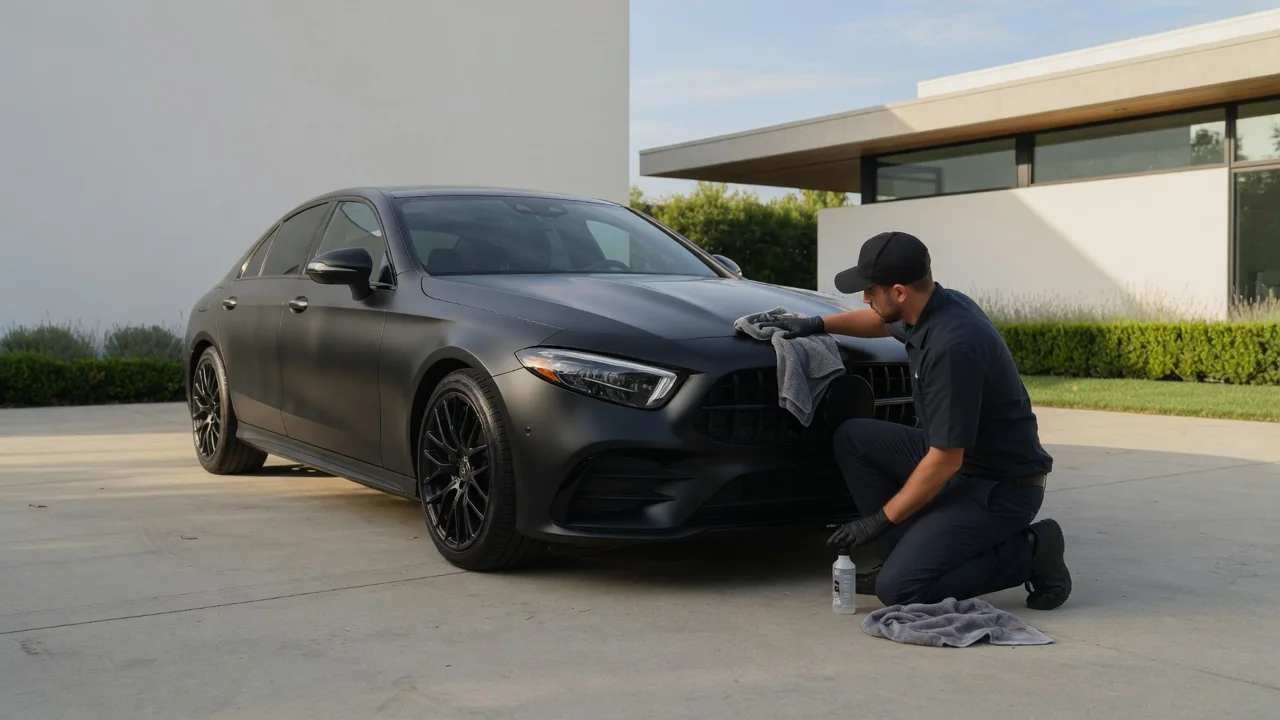
Matte car paint looks soft and flat because it is built to scatter light, not reflect it. That same quality is why matte car paint maintenance follows different rules from gloss paint. Products and techniques that improve a glossy finish can permanently change a matte one, and many minor defects cannot be fixed the usual way. Knowing how the surface works explains why matte paint needs different care and where its practical limits lie.
Surface texture
On a conventional gloss finish, the clear coat cures into a very smooth layer. Light hitting it reflects at a consistent angle, which is why you see sharp reflections and deep shine. Matte and satin finishes are typically made by changing the top layer so that it is not optically smooth. Manufacturers and refinishers generally do this with flattening or matting agents in the clear coat, which create a microscopically uneven surface as it cures. Incoming light is scattered in many directions, so the eye sees a low, even sheen instead of mirror-like reflections. Some matte looks come from vinyl wraps or protective films rather than paint, and those materials have their own care requirements.
The appearance depends on that texture staying intact. Anything that flattens the tiny peaks, fills the valleys, or leaves a residue on top changes how light behaves on the surface. Abrasion smooths the texture and creates shiny patches. Waxes, glazes, and filler-heavy products settle into the low spots and add gloss. Because the finish has no spare texture to sacrifice, these changes usually cannot be reversed with ordinary detailing. Gloss paint can often be restored by leveling its surface, but matte paint loses its character when it is leveled.
Washing choices
Because friction and fillers are the main threats, washing a matte car comes down to cleaning effectively while touching the surface as little and as gently as possible. A common approach starts with a pre-rinse to remove loose grit. That is followed by a hand wash using a clean wash mitt and the two-bucket method, so dirt is rinsed off the mitt instead of being dragged back across the panels. Light, straight-line passes with minimal pressure are generally preferred over scrubbing. Concentrated rubbing in one spot can burnish the texture and leave a visibly shinier area.
Product choice matters as much as technique. Shampoos made for matte finishes are formulated without waxes, gloss enhancers, or polymers meant to add shine. Many general-purpose car soaps contain such additives, and wash-and-wax products always do. Quick detailers, spray waxes, and tire shine overspray can also leave uneven gloss. Automatic car washes with rotating brushes are usually avoided because of the abrasion. The hot-wax or shine cycles offered at many washes deposit exactly the coatings matte paint does not want. Touchless washes are less abrasive, but their detergents and add-on cycles vary, so they are not automatically safe.
Drying and spot cleaning follow the same logic. Blotting with a clean microfiber towel or using filtered air causes less friction than wiping. Drying promptly also limits water spots, which cannot simply be polished away. Bird droppings, insect remains, tree sap, and fuel spills are worth removing quickly with a matte-safe cleaner, because etching or staining on a textured surface can be harder to correct than on gloss. Some sealants and coatings are designed for matte finishes and aim to add protection without adding shine. General-purpose wax does not serve that role.
Repair limits
The biggest practical difference shows up when the finish is damaged. On gloss paint, light scratches, swirl marks, and many stains in the clear coat can often be reduced by polishing or compounding, which removes a thin layer and levels the surface. That method does not work on matte paint. Polishing smooths the texture that creates the matte look, so the corrected area usually ends up glossier than its surroundings and stands out. Clay bars and aggressive cleaners can have a similar effect. As a result, many defects that are routine detailing jobs on a gloss car have no quick fix on a matte one.
Bodywork and refinishing are also more demanding. Matching a matte finish means matching not only the color but also the degree of flatness. That depends on the specific product, the mixing, the application, and the curing conditions. Small spot repairs and blends into adjacent paint are difficult because any difference in sheen is easy to see. For that reason, refinishers often recommend repainting whole panels to a natural break line. Whether a given repair is feasible depends on the vehicle's original finish, the materials available for it, and the shop's experience with matte systems. Damage to a matte wrap or film is a different case and is usually handled by replacing the affected section rather than repairing paint.
Practical implications and limits
For owners, these mechanisms translate into a few routine habits and some realistic expectations. Matte finishes reward preventive care. That means keeping the car reasonably clean, parking away from heavy tree sap and bird activity when possible, and carrying a matte-safe cleaner to remove contaminants quickly. Before any car wash, detailer, or body shop starts work, tell them the finish is matte, since a well-meaning polish or wax can cause the very damage you are trying to avoid. Check the owner's manual or the manufacturer's care guidance as well, because recommendations for factory matte paint, dealer-applied films, and aftermarket wraps are not interchangeable.
Careful maintenance also has limits. Gentle washing lowers the risk of shiny spots but cannot make the surface immune to wear. Matte paint may develop uneven sheen over time in high-contact areas such as door handles or around the fuel filler. Some damage cannot be undone without refinishing, and the cost and availability of that work vary by vehicle, finish, and region. This guide describes general mechanisms rather than the behavior of any particular model or product. For specific situations, the vehicle's own documentation and a qualified refinisher remain the best references.