What Is a Satin Car Paint Finish? Sheen, Cleaning, and Repair Explained
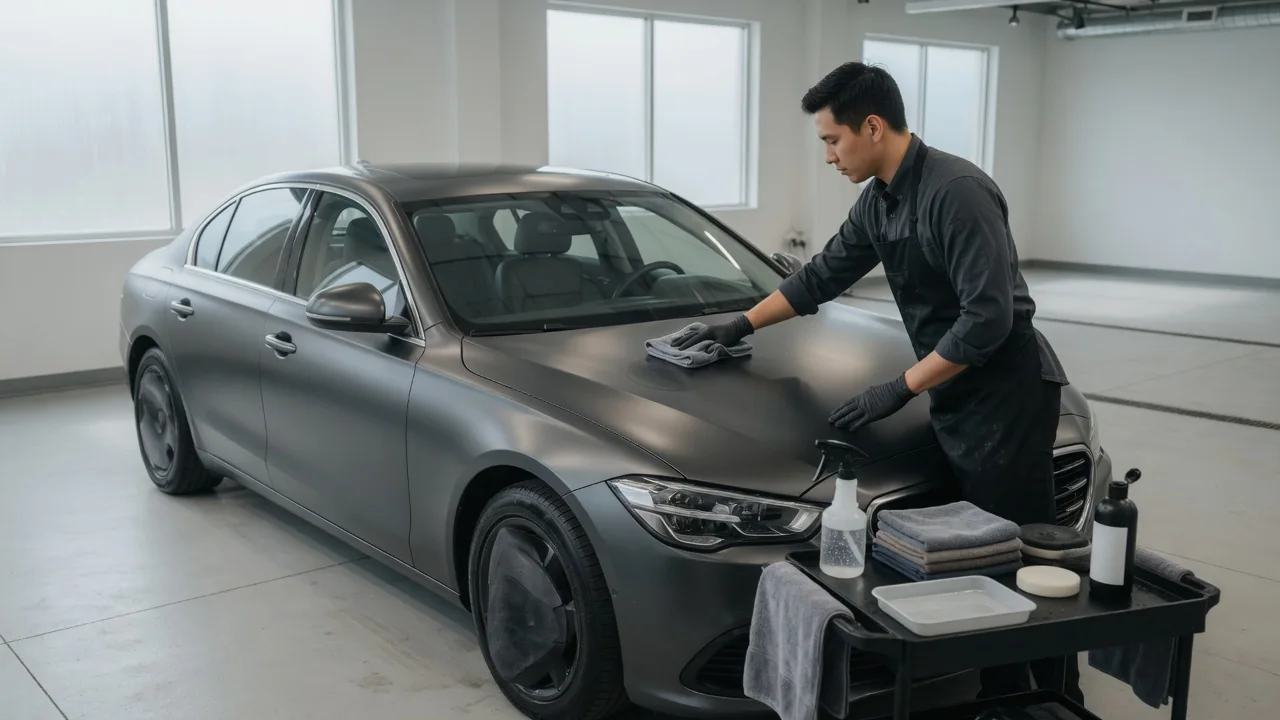
A satin car paint finish sits between a high-gloss clear coat and a flat matte surface. It reflects some light, so color and body lines stay visible, but it does not produce sharp, mirror-like reflections. That soft, low-sheen look is what most people mean by satin automotive paint appearance. Knowing how the finish creates its look explains why it needs different washing habits, and why scratches and chips are handled differently than on conventional glossy paint.
Sheen level: where satin sits between gloss and matte
Sheen describes how a surface splits reflected light between a mirror-like direction and a scattered, diffuse spread. A conventional gloss clear coat is very smooth at the microscopic level, so most light bounces off at a consistent angle and you see crisp reflections of trees, buildings, and lights. A matte surface has a fine microscopic texture that scatters most of the light, so reflections disappear and the panel looks flat. Satin uses an intermediate amount of texture: enough to blur reflections into a soft glow, but not so much that the paint looks chalky. The visual result is that highlights spread along curves and creases, the color reads as rich but subdued, and the shape of the body is emphasized more than the surroundings it reflects.
In paint, that texture is usually created in the topcoat or clear coat. Formulations for satin and matte finishes typically include flattening, or matting, agents: fine particles that disrupt the smoothness of the cured surface. The proportion of flattening agent, the thickness of the applied coat, the spray technique, and the drying and curing conditions all influence the final sheen. Not every satin car is actually painted satin, though. The same look can come from a satin vinyl wrap or a satin-finish paint protection film applied over ordinary gloss paint. Those materials behave differently when it comes to care and repair, so it is worth knowing which one is on a particular vehicle.
There is no single universal definition of satin. Paint suppliers measure gloss with instruments at specified viewing angles, but the boundaries between labels such as semi-gloss, satin, frozen, and matte depend on how each manufacturer or paint brand names its products. Two cars described as satin can look noticeably different side by side, and lighting changes perception as well: the same panel can look almost flat under overcast skies and distinctly lustrous in direct sun.
Cleaning a satin finish without changing its look
The guiding principle is simple: on satin paint, the microscopic texture is the finish. Anything that fills, smooths, or abrades that texture tends to raise the gloss, and usually unevenly. That is why conventional waxes, glazes, cleaner-waxes, and polishes are generally avoided. Products that rely on fillers or gloss enhancers can leave blotchy, shinier areas, while abrasive polishes physically level the surface texture. Filler residue may eventually wash away, but texture that has been abraded flat cannot be restored by cleaning.
A careful hand wash suits the finish best. Rinse first to remove loose grit, then wash with a pH-balanced car shampoo that does not contain wax or gloss additives. Products labeled for matte and satin finishes are formulated to clean without adding shine. A soft, clean wash mitt, a two-bucket method to keep grit away from the paint, light pressure, and straight-line passes reduce the risk of burnishing. Rinse thoroughly so no soap film dries on the surface, then dry with a clean microfiber towel using a blotting motion, or with filtered air. Automatic washes with brushes are best avoided, and touchless washes deserve a check too, since many apply spray wax or gloss-enhancing rinse cycles by default.
Contaminants such as bird droppings, insect residue, tree sap, and fuel spills should be removed promptly. Left in place, they may etch the surface or require hard scrubbing later, and aggressive spot-rubbing is exactly what creates shiny patches. Soften the deposit with water or a suitable satin-safe cleaner and lift it gently rather than scrubbing. Repeated contact can also add sheen over time, so areas around door handles and the trunk lid may need slightly more attention. For protection, sealants and ceramic coatings made specifically for matte and satin finishes exist, while products designed for gloss paint may increase sheen. When the vehicle manufacturer provides care instructions in the owner's manual, those take priority.
Repair: why satin paint is harder to fix
On glossy paint, light scratches and swirl marks in the clear coat are often corrected by machine polishing, which removes a very thin layer of clear to level the edges of the defect. On satin paint, this approach backfires. Polishing may remove the visible scratch, but it also smooths the surrounding texture and leaves a glossier spot that stands out from the rest of the panel. Compounding and wet sanding have the same effect. As a result, many minor defects that would be routine paint correction on a gloss finish cannot simply be buffed away.
When a body shop refinishes satin paint, it has to reproduce both the color and the sheen. Because sheen depends on the flattening agent ratio, film thickness, application technique, and curing conditions, matching it consistently is demanding. Blending new paint into an adjacent area, a common technique on gloss finishes, is harder with satin because a change in sheen across the blend zone can remain visible. Shops therefore often refinish an entire panel up to a natural break line. The vehicle's paint code identifies the color but may not fully describe the finish, so a shop may also need the manufacturer's repair information or the specified paint system to get a close match.
For small stone chips, touch-up paint still has a role: sealing exposed primer or bare metal helps prevent corrosion, which matters more than appearance. Expect touch-up products to dry with a sheen that may not match, unless a satin or matte touch-up clear is available for that paint. If the satin look comes from a wrap or protection film, a damaged section is usually replaced rather than repaired, and the paint underneath is typically unaffected if the film is removed correctly.
Practical implications and limits of owning a satin finish
In daily use, a satin finish changes tradeoffs more than it makes a car fragile. Diffuse reflections can make fine wash marks less obvious than on dark gloss paint, but the finish is more revealing of uneven sheen, oily residue, and fingerprints. Convenience options shrink: brush car washes, quick wax sprays, and casual buffing of a scuff are no longer safe choices. Owners who park under trees, drive frequently through insect-heavy areas, or rely on automated washing should expect more hands-on cleaning. A garage or covered parking reduces how often contaminants need urgent attention.
The explanations here describe general mechanisms, not the behavior of any specific vehicle or product. Durability and approved care methods vary between paint systems, between factory and aftermarket finishes, and between coated and uncoated surfaces, so the manufacturer's instructions should override general advice. Because damage often leads to full-panel refinishing, repairs can take longer and cost more than comparable work on gloss paint, and it is reasonable to ask a body shop about its experience with satin finishes before authorizing work.
When evaluating a used car with satin paint, inspect each panel from several angles and in different lighting. Patches of higher gloss can point to past polishing, aggressive cleaning, or a repair with an imperfect sheen match. For drivers who like the look but want an exit option, a satin wrap or film over gloss paint offers a reversible alternative, with its own lifespan and replacement considerations.