Why Does a Steering Wheel Return Toward Center?
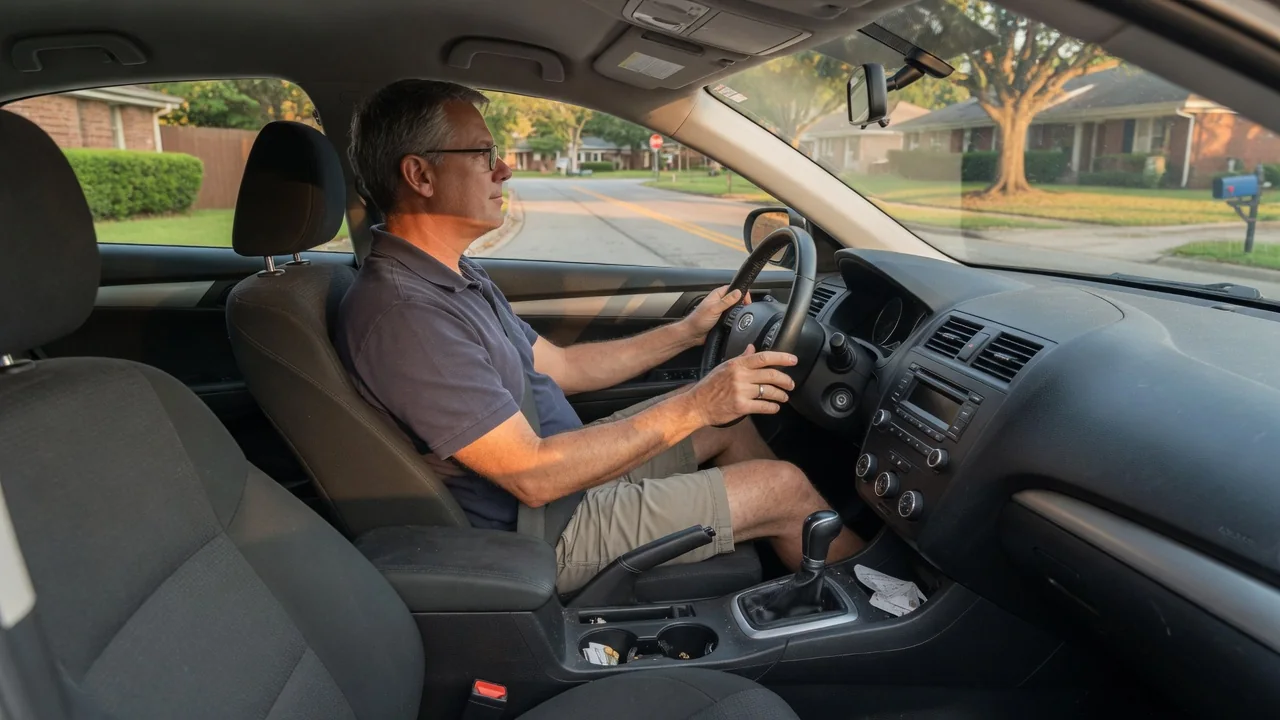
Release the wheel while rolling out of a corner and it unwinds on its own. Anyone asking why does a steering wheel return toward center is really asking about two things working together: the angles built into the front suspension and the forces generated where each tire meets the road. Understanding both makes it easier to tell normal behavior from a developing problem.
Caster concept
Caster is the tilt of the steering axis when viewed from the side of the vehicle. On most road cars the axis leans rearward at the top, which is called positive caster. Extend that tilted line down to the pavement and it lands ahead of the center of the tire's footprint. The tire therefore trails behind the point it pivots around, much like the wheel on a shopping cart follows its swivel. Any time the wheel is steered away from straight, road forces act on that trailing distance and pull it back in line.
A second geometric effect adds to this. Because the steering axis is also inclined inward at the top, turning the wheels slightly raises the front of the vehicle. The weight of the car then pushes the steering back toward the lowest position, which is straight ahead. This contribution is most noticeable at parking speeds, while the trailing effect of caster grows as speed increases. Manufacturers choose different caster and inclination values, so a heavy truck, a sports sedan and a compact hatchback will each self-center with a different strength and feel.
Tire contact
Geometry is only half of the answer; the tire itself produces a centering force. When a rolling tire is steered, the rubber in its footprint deforms sideways as it grips the road. That deformation builds progressively from the front of the contact patch to the rear, so the sideways force acts behind the center of the footprint rather than directly under it. The distance between the two is called pneumatic trail, and the twisting force it creates is known as self-aligning torque. It tries to turn the tire back toward its direction of travel.
This torque is much of what a driver feels as steering weight in a corner. It rises as cornering load builds, then fades as the tire approaches the limit of grip, which is why the wheel can go light just before the front end starts to slide. Tire pressure, tread width, sidewall stiffness and wear all change the shape of the contact patch, so a new set of tires or a few pounds of pressure difference can noticeably alter how firmly the wheel returns. Wet or icy surfaces reduce the effect because less grip is available.
Fault clues
When the wheel stops returning as it used to, the change itself is the clue. Sluggish or incomplete return, where the wheel stays partly turned after a corner, can point toward something binding in the steering or suspension, such as stiff pivot joints, a tight strut top bearing, a dragging steering column joint or a problem within the steering gear. It can also follow an alignment that left caster lower than intended, or tires that are underinflated. None of these is confirmed by the symptom alone; each needs inspection to separate one cause from another.
Return that differs from left to right is another useful observation. If the wheel unwinds readily from one direction and lazily from the other, caster may be uneven side to side, which can result from a curb strike, a bent component or worn mounting bushings. Vehicles with electric power steering may also store fault codes if a torque or angle sensor is misbehaving, but a code is evidence to interpret alongside a physical inspection, not proof that a specific part has failed. Manufacturer-specific codes require confirmation against information for that exact vehicle.
Everyday Use and Observations
In daily driving the centering action shows up in small ways. Leaving a junction, the wheel slides back through loosely held hands as the car straightens. On the highway, the same forces keep the car tracking straight with little correction and give the wheel a gentle resistance when moved off center. In a parking lot at walking pace the return is weak, because tire forces are small and friction in the system is proportionally larger. That contrast between low and high speed is normal and does not by itself indicate a fault.
Steering assistance shapes what the driver perceives. Hydraulic systems tend to pass the tire's aligning torque through fairly directly, while many electric systems add a programmed return function that helps the wheel back to center, and some vary it with drive mode. Front-wheel-drive cars may feel different under acceleration, since drive forces act through the steered wheels. Road crown also matters: a car will drift gently toward the low side of a sloped lane, which can be mistaken for a pull. Comparing behavior on a flat, empty stretch gives a fairer picture.
Limits and Next Steps
Self-centering is an aid, not a substitute for steering the car. It depends on grip, so it weakens on loose or slippery surfaces, and it can be masked by heavy loads, towing or modified suspension. Changing ride height, fitting much wider tires or altering wheel offset moves the relationship between the steering axis and the contact patch, which can make the wheel heavier, lighter or more prone to following ruts. Because targets differ by model, the right alignment figures must come from specifications for the specific vehicle rather than from general rules.
If the return has changed, begin with what is simple and safe to check: tire pressures against the placard on the vehicle, matching tire sizes and types across the axle, and any obvious uneven wear. Note whether the change followed a pothole impact, new tires or recent suspension work, since that history helps a technician. Beyond that, a professional alignment check with a printed measurement of caster, camber and toe, together with an inspection of joints and steering components, is the reliable next step. Steering that binds, sticks or suddenly feels different deserves prompt attention.