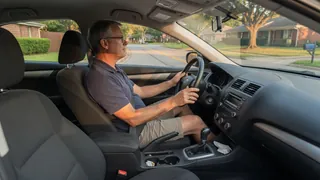
Drive toward oncoming traffic
A vehicle drifting across the centerline is one of the most urgent cues a driver can face. The situation usually develops quickly, leaving little margin for hesitation. Understanding why a car may be driving towards oncoming traffic helps a motorist separate a momentary lane-position error from a more serious control or judgment problem. Visibility, road markings, right of way, following distance, road conditions, and driver attention all shape how the hazard appears and how it should be handled. The essential answer below explains the meaning of this scenario and the practical reasoning that should guide a response.
Essential answer
Driving towards oncoming traffic means a vehicle is moving in the wrong direction relative to the lawful or expected flow on that side of the road. It may occur because a driver crossed a centerline, entered a one-way street in reverse direction, or drifted out of a lane on an undivided highway. The key distinction is not why the vehicle ended up there, but that its path now places it head-on against vehicles traveling legally in the opposite direction. For the observing driver, this is a closing-speed hazard rather than a routine passing or turning event.
The correct initial response is to create space and reduce conflict without making an unpredictable maneuver. A driver who sees an oncoming vehicle in the wrong lane should ease off the accelerator, check mirrors, and move toward the right edge of the roadway when it is clear and safe. Flashing headlights or a brief horn may help alert a distracted driver, but the closer priority is separating the two travel paths. Swerving across other lanes can replace one head-on risk with a side-impact or run-off-road risk.