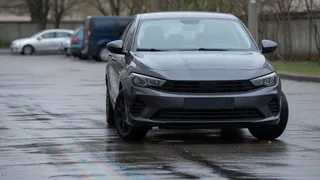
What an oncoming vehicle is
An oncoming vehicle is any car, truck, motorcycle, or other road user traveling toward you from the opposite direction in an adjacent lane. Recognizing one is a core part of managing right of way and maintaining driver attention, because closing speed shortens available decision time. Whether the approach happens on a two-lane road, at an intersection, or during a passing scenario, early identification helps you judge gaps, adjust lane position, and anticipate the other driver’s path before a hazard develops.
Essential answer
In everyday driving, an oncoming vehicle is simply traffic moving in the lane or lanes reserved for the opposite direction. The distinction matters most where opposing flows are close together, such as an undivided rural highway or a narrow residential street. Here, road markings and the centerline define which side of the roadway each driver should occupy, but a vehicle can become an oncoming hazard if it drifts across that boundary or enters your path during a turn.
The term also applies in situations that are not strictly head-on. A vehicle waiting to turn left across your lane is oncoming from your perspective, even if it is initially stopped. Likewise, a car approaching from the opposite direction on a divided road is technically separated by a median but still informs how you read visibility, following distance, and escape space. The practical meaning is contextual: any road user whose path could intersect yours from the opposite travel direction deserves the same forward planning.
How it works
Judging an oncoming vehicle requires understanding closing speed, which is the sum of your speed and the other vehicle’s speed. At a combined 100 mph, two vehicles erase roughly 147 feet of separation every second. That is why a distant approaching car can seem harmless for a moment and then become an immediate right-of-way conflict. Your eyes estimate the rate at which the vehicle grows larger in the windshield, while road geometry and roadside cues help confirm whether its lane position is stable.
Road conditions change how you should interpret that approach. On a wet or gravel surface, an oncoming vehicle can lose traction mid-corner and cross the centerline without much warning. Reduced visibility from rain, fog, sun glare, or night driving delays recognition, so drivers often compensate by reducing speed and increasing lateral clearance. The operating principle is not complicated: identify the opposing vehicle early, predict its likely path, and preserve space or time to respond if that prediction turns out wrong.
Strengths, limitations and suitability
The main strength of understanding what counts as oncoming traffic is better gap selection. When you can accurately judge whether an approaching car is close enough to prevent a left turn, a pass, or a merge, you avoid forcing other drivers to brake. This skill also supports smoother rural driving, where passing zones are short and an oncoming vehicle may appear from beyond a crest or curve with very little warning.
The limitation is that perception can be fooled by speed, color, size, and background contrast. A small motorcycle closing at high speed may be mistaken for a slower car, while a large truck can appear closer than it is. Bright low sun or a dirty windshield degrades the subtle cues drivers use. Consequently, conservative drivers treat any uncertain approach as a reason to wait rather than commit to a maneuver. The technique suits everyday commuting and long-distance travel equally because it relies on judgment rather than specialized equipment.
Procedure
When you need to interact with an oncoming vehicle, begin by scanning far enough ahead to find it before it finds you. Look through the curve, over the hill, or past the intersection instead of focusing only on the car directly ahead. Check for visual clues such as headlight glow on a dark road, dust above a crest, or the glint of glass between trees. Establish where the opposing lane is and whether any center turn lane or wide shoulder can serve as an escape route.
As the vehicle closes distance, adjust your speed and lane position smoothly. Avoid staring at the oncoming headlights because that can disrupt your steering sense and delay recovery from glare. If there is any doubt about clearance for a turn or pass, delay the maneuver until the other vehicle has passed and you have verified the space beyond it. The completion check is straightforward: you should be able to continue without causing the other driver to change speed or direction, and you should still see clear pavement ahead.
Diagnosing a problem
A common concern is judging whether an oncoming vehicle is drifting into your lane. Start by comparing its position to fixed references such as the centerline, edge line, or roadside objects. If the gap between the vehicle and the centerline is shrinking, prepare to brake or move right, but do not assume the driver is impaired; a momentary distraction, sun glare, or a mechanical issue such as a deflated tire can cause a slight wander that corrects itself.
Another symptom drivers report is being unable to tell if an approaching car is moving or stopped at night. In that case, look for the separation between its headlights and the background, or watch whether the lights grow brighter and farther apart. A stationary vehicle will not increase in apparent size. Any situation where you cannot determine lane position or closure rate calls for reduced speed and increased following distance from traffic behind you. If an oncoming vehicle is fully in your lane and closing, use a controlled move to the right shoulder when available rather than steering into opposing traffic.